



2024 has so far started on a bullish note for the cryptocurrency market. For anyone to predict specific cryptocurrencies that will be outstanding in 2024 is highly speculative and subject to numerous variables. You might want to look at technological advancements, market trends, regulatory developments, and investor sentiment.
However, AI-related cryptocurrencies could potentially benefit from increased adoption of artificial intelligence technologies in various industries.
Some AI-related cryptocurrencies and projects that have garnered attention include:
1. Singularity NET (AGI)
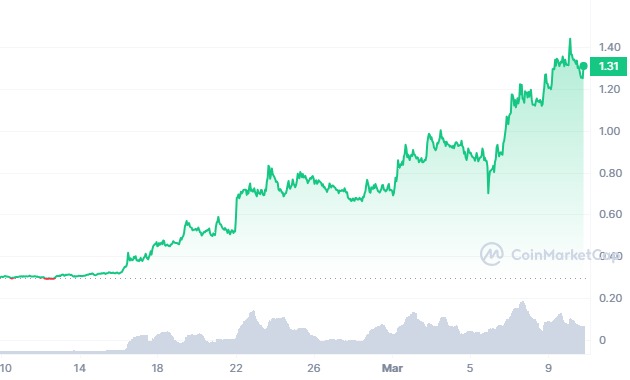
SingularityNET is a blockchain-based platform focused on democratizing artificial intelligence (AI) by creating a decentralized marketplace for AI services and algorithms. It aims to facilitate the exchange of AI capabilities and resources among developers, organizations, and AI agents, thus accelerating AI research, development, and deployment.
SingularityNET leverages blockchain technology to ensure transparency, security, and interoperability within the platform. Smart contracts govern transactions and agreements between users, while decentralized storage solutions safeguard data privacy and integrity.
Furthermore, SingularityNET incorporates mechanisms for reputation and trust scoring to enable users to assess the quality and reliability of AI services and providers.
At the core of SingularityNET is its native cryptocurrency, AGI token, which serves as the medium of exchange within the platform. AGI tokens enable users to purchase AI services, contribute algorithms, and receive rewards for their participation in the ecosystem.
Additionally, AGI tokens are used for governance, allowing token holders to participate in decision-making processes related to platform development and upgrades.
By providing a decentralized infrastructure for AI development and collaboration, SingularityNET aims to democratize access to AI technologies, foster innovation, and create a more inclusive and equitable AI ecosystem. It represents a novel approach to harnessing the potential of AI while addressing concerns related to centralization and monopolization in the AI industry.
2. Fetch.ai (FET)
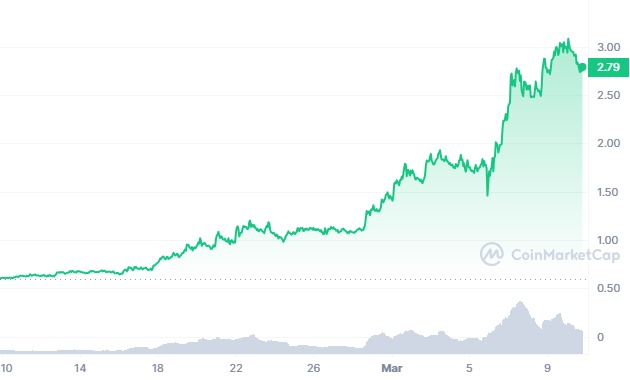
Fetch.ai is a blockchain project aiming to create a decentralized ecosystem for autonomous agents to perform tasks and exchange value efficiently. At its core, Fetch.ai combines blockchain technology with artificial intelligence (AI) to enable autonomous economic agents to interact with each other and with real-world data in a decentralized manner.
The Fetch.ai platform facilitates the creation of autonomous agents that can represent individuals, organizations, or devices. These agents can execute tasks, negotiate contracts, and exchange value autonomously, without the need for intermediaries. This decentralized approach aims to optimize resource allocation, improve efficiency, and enable new forms of economic activity.
Fetch.ai’s architecture is designed to be scalable and flexible, allowing for a wide range of use cases, including supply chain optimization, decentralized finance (DeFi), and Internet of Things (IoT) applications. The project also emphasizes privacy and security, ensuring that sensitive data remains protected throughout interactions.
Overall, Fetch.ai presents a promising vision for a decentralized future where autonomous agents collaborate seamlessly to solve complex problems and create value.
However, like any emerging technology, its success will depend on adoption, scalability, and the ability to address potential challenges and regulatory considerations in the evolving landscape of blockchain and AI integration.
3. Numerai (NMR)
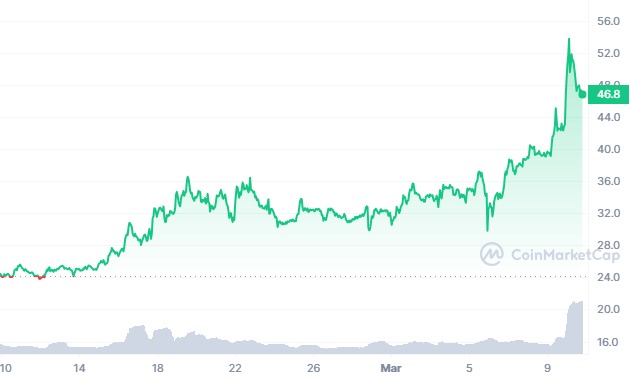
Numerai is a unique blockchain-based project that combines elements of data science, machine learning, and cryptocurrency.
The platform operates as a hedge fund that incentivizes data scientists to develop predictive models using financial data. Participants submit predictions to Numerai, which aggregates and anonymizes them before using them to make trading decisions in global financial markets.
Central to Numerai is its native cryptocurrency, Numerai (NMR). NMR serves multiple purposes within the ecosystem. Firstly, it acts as a reward mechanism for data scientists who contribute accurate predictions to the platform.
Secondly, NMR is staked by data scientists to signal confidence in their models, and successful predictions result in increased holdings of NMR. Lastly, NMR is used for governance, allowing token holders to participate in decision-making processes regarding platform upgrades and changes.
Numerai’s blockchain architecture ensures transparency, security, and decentralization. The platform leverages blockchain technology to manage transactions, distribute rewards, and maintain a record of participants’ contributions securely.
Read Also: It’s A Watershed Moment With US SEC Approving 11 Bitcoin Spot ETFs
By crowdsourcing predictive models from a global community of data scientists and utilizing a blockchain-based infrastructure, Numerai aims to create a more efficient and democratized approach to quantitative finance.
Overall, Numerai represents an innovative integration of blockchain, cryptocurrency, and data science, offering a novel solution to the challenges of traditional financial markets while incentivizing collaboration and rewarding accuracy in predictive modeling.
4. Ocean Protocol (OCEAN
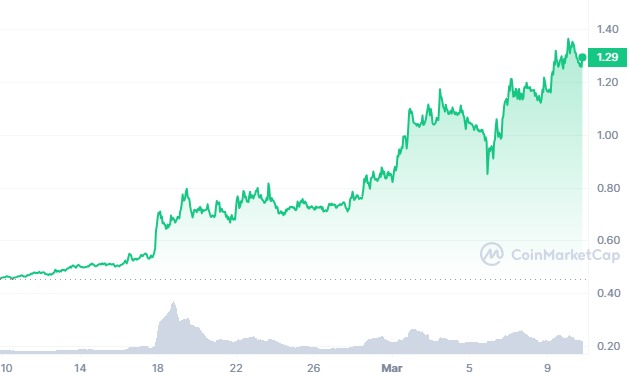
Ocean Protocol is a blockchain-based platform designed to facilitate the sharing, monetization, and consumption of data in a decentralized and privacy-preserving manner. It aims to address the challenges of data silos and data accessibility by creating a decentralized ecosystem where data providers can securely share their data, and consumers can access and purchase it using the native cryptocurrency, Ocean Token (OCEAN).
The protocol utilizes blockchain technology to provide transparency, immutability, and security to data transactions. Smart contracts govern the exchange of data, ensuring that data providers are fairly compensated for their contributions, while consumers can trust the integrity and provenance of the data they access.
Key components of Ocean Protocol include data marketplaces, where users can discover and access datasets, and compute-to-data services, which enable data analytics and processing without exposing the raw data itself.
Additionally, Ocean Protocol incorporates privacy-preserving technologies such as zero-knowledge proofs and federated learning to protect the privacy of sensitive data.
By enabling data sharing and monetization in a decentralized and privacy-preserving manner, Ocean Protocol aims to unlock the value of data, foster innovation, and empower individuals and organizations to leverage data assets more efficiently. It represents a promising solution to the challenges of data ownership, privacy, and accessibility in the digital economy.
Conclusion
These leading AI cryptocurrencies have identifiable use cases and have shown their relevance in the reception that they have enjoyed in the global marketplace. Their respective ROI and price performance looks promising.
Recommended: Crypto Spotlight: Dogecoin vs. dYdX

 Harrison Global Capital