The 9 Leading Factors Affecting The Price of Gold

Gold is highly-prized as a store of value. However,there are factors that leads to a drop or spike in its price. Let’s look at these closely.

Gold is used all over the world as a store of value. Gold price is oft referenced because it is continually traded, and this has been so for thousands of years. The spot price might fluctuate with market conditions, but it is judged as highly valuable

 Here, we are going to analyze the nine factors that affect the price of gold for for investors who might be interested in gold trading.

  • Global Crisis

Global economic and political factors affect the price of gold because it is considered the source of geopolitical and economic turmoil. When people lose confidence in their governments or market, the price of gold tends to rise, and the reassurance with their situation softens the market price.

  • Inflation

The prices of gold may fluctuate but what you can buy with it remains stable for a long time. Hence, holding gold is used as a hedge against currency devaluation and inflation. Investors buy gold for holding when they can project that the value of their paper money is going to decline.

  • Value of the U.S. Dollar

The U.S. dollar, one of the main currencies for international trade, has an inverse relation with the price of gold. When the gold is strong dollar is weak and vice versa.

  • Central Bank Instability

When the central banks and other dominant banks go through a deficit problem, the paper currency tends to lose its value. Therefore some investors see holding gold as a way to protect their wealth ,which invariably boosts the demand and price of gold.

  • Interest Rates

When the interest rates increase, people trade their gold to get funds for other investment opportunities. When the interest rates decrease, the gold price goes up again because of low opportunity cost in gold holding compared to other options.

  • Government Reserves

Central banks hold gold as a reserve currency along with their paper money. When they buy more gold than they are selling, this takes the prices of gold higher.

  • Jewelry and Industry

Not just a valuable investment but half of the demand for gold is for jewelry from around the world. India and China have huge gold reserves. About twelve percent of gold demand comes from its industrial application.

  • Gold Production

Annual gold production is about 2,500 metric tons while annual gold supply to the world is estimated to be 165,000 metric tons. The cost of production can influence the price of gold. When the production cost rises, miners sells out their gold to get the benefit.

  • Supply vs. Demand

By simple economic rule, when the demand for gold in the market increases the prices also rise high. However, unlike other currencies, the price of gold remains fairly stable for a long time and the fluctuations might be due to currency fluctuations or some uncertainties.

Conclusion

Gold will endure in the realm of men for a long time. With its value and occurrence remaining highly -prized, you can sure its worth will continue to soar.


Individual Retirement Accounts and Current Trends

IRAs are important as they undergird the future for the working class. What if your IRA company goes bankrupt? What will you do? Read on to find out more.

My Gold IRA company went bankrupt. What now?

It’s a nightmare scenario for most people, particularly those close to retirement: They’ve made investments all of their lives to secure a future, but suddenly the company keeping them says they have no money.

What happens now? Is everything going to be fine, or have you lost all your savings and have to start over again?

We’ll start with the good news: In most cases, your savings will be covered by government-mandated insurance.

Note how we say most.

How insurance works on IRAs

The US government mandates that all IRA accounts need to be covered for at least $250,000. This cover is expected to be used in cases of funds going missing, as could happened during massive disasters.

If your company closes and for some reason your investments aren’t there (but they’re in the books) you should be covered. You should also be covered if your company falls victim to a robbery that funnels its funds, including the retirement funds and investments of its clients.

The $250,000 number is also a baseline – many IRA companies have insurance for two, three, or even ten times that much. Even if it’s a gold IRA, that should cover your IRA savings. Plus, we have a small detail with gold bars: They’re physical, bullion bars that should still be there anyway.

How gold bars make it simple

Any decent IRA provider will also refuse to be the sole custodian. Instead, most gold bars are kept in secure locations under tight government regulation, such as the Delaware Depository.

As long as your gold IRA puts your bars there, you should still have your investment even if the company disappears. Gold, after all, isn’t liquid and can’t be spent by accident, nor would it be at all easy to funnel gold bars from the facilities where they’re stored.

In most cases, what would happen is that the government would contact you to arrange a transfer of funds towards different management. Another company would take over, and you would barely feel the change. Great, isn’t it?

Well, that’s only if the bankruptcy is due to lack of funds. Things can get much more complicated if there’s fraud involved.

What about IRA fraud?

Most people investing in their IRA never get to see their shares, valuables, or even savings in physical form. They just see numbers on a screen or paper representing them, and assume the company is keeping them safe.

In most cases, companies do keep those things safe and transparently. However, it’s not unheard of for the management of a company like these to get a little bit happy about how funds are managed and on occasion tap onto them. Sometimes, tapping onto them often enough to make the company go broke.

If that’s the case things get a bit more complicated, depending on your actual standing.

Is your IRA company legal?

This is the question that will drive what happens then. If your IRA company was legally registered with the IRS and followed with its regulations – that is, if the company was legal to the government’s eyes, – you’re in luck.

You should be able to retrieve your investments without more than a headache or two. If you’re a victim to IRA fraud in a company the government considered legal, government-backed insurance will kick in.

It’s more complicated if you put your money on an unregistered IRA.

Unregistered IRAs are by definition illegal, and therefore you won’t be covered by any laws that protect IRA customers in these cases. If you put your money on an unregistered IRA you have been the victim of fraud, as the money is gone and there’s no insurance to back it up – nor will there be trustable books to confirm what you had.

In this case, a very long investigation will likely take place, where the IRS will try to ascertain how much each of the victims had stolen from them and in what form. If you’re lucky, they’ll be able to salvage enough from the criminal’s assets to pay you back.

You’re not likely to get lucky.

In most cases, the criminal will have either already spent the money or funneled offshore into banks and investments that can’t be tracked or confiscated. In this case, it’s more likely than not that you will, in fact, have lost everything.

The takeaway: Avoid IRA fraud at all costs

One of the most important decisions you’ll make about your finances will be your IRA manager and custodian, precisely because of this. Your IRA money is only safe if your company is legal. As such, you must do your homework before signing up with anyone. Get references. Ask around. Investigate. Even calling the IRS to make sure the company is in the clear might be necessary.

Do all that, simply because that will give you peace of mind. Having a properly registered IRA manager will protect you against anything that could happen with that money. Don’t take risks with your future, and only put your investments in the hands of people who have the legal clearance to manage it.

Softbank Vision Fund: What you need to know

Venture Capitalists can make you dreams come true as a prospective entrepreneur. How different is SoftBank? Read on..

Enter SoftBank

The world of startups is full of pitfalls, but also filled with investors looking to help fund the next big thing. Over the last decade, a whole economy has been created around it – an economy that has produced many successful gadgets, but also many outright failures.

Softbank is one of the biggest players in this economy, its Vision Fund is one of the most coveted funding sources for startups.

The sheer size of the fund, valued at $100 billion, is said to be disrupting the whole venture capital industry by raising the prices on companies and investments. As such, it’s one of the big hitters these days, yet it’s difficult to understand just why it is so important.

Why is it necessary?

Startup companies, particularly in tech, often face a huge problem from the get-go: funding. It used to be, decades ago, that you could start producing whatever widget you wanted by hand, sell it locally, and slowly expand.

That won’t work today.

The global economy has shifted, and today, success in tech often requires having a wide reach and mass production. This means that any new venture needs prohibitive amounts of money to begin with, amounts of money regular people don’t really have.

Does it just give you money?

Of course not. While Vision Fund’s funds are big, it isn’t bottomless – and they aren’t a gift, either.

Vision Fund is an investment program, its core philosophy being that it’ll give entrepreneurs the money they need so they can focus on building a successful company without the financial issues they’d otherwise face.

Softbank is known for being a permissive investor, but it’s still a capitalist undertaking – which means a profit is eventually required.

Moreover, Softbank will naturally be entitled to a share of whatever profit your company makes.

You could, therefore, see this funding as a loan of sorts.

What if no profits are made?

One of the big problems of venture capitals is that many companies indeed never make a profit. This is pretty common when companies try to fix problems that aren’t there, thus failing to find a market.

The Venture Capital world is full of poorly planned, ill-conceived gadgets somebody somehow thought were the next big thing that led to millions of dollars wasted.

In theory, investors review proposals and choose those that are the most likely to succeed and help change our world.

In truth, venture capitals are often seen as a way for certain individuals to promise investors everything, deliver nothing, and live like millionaires.

Softbank’s Vision Fund, however, has a method to try and stop this.

Fighting mismanagement with clauses

As usual with venture capital contracts, if your project doesn’t take off, the investors lose their money. That’s also true of Softbank’s fund, and whatever money was spent on getting the company off the ground will be lost.

Just as well, if the company turns a profit first, then it stops doing so, the fund itself will take the hit.

That is true, however, only for the money that was actually spent on the company.

Softbank’s Vision Fund has a peculiar clause that hopes to fight against venture capital scammers, those who live like millionaires on investor money and then return nothing.

Money spent on management salaries and bonuses can be taken back if the company fails.This doesn’t only extend to the initial investment, but also earnings.

Earnings are divided between the company and Softbank, but if the company stop earning any money soon, managers are expected to pay back a part of the money they took to Softbank.

This makes keeping the company efficient a priority above all things, since results are not just encouraged but expected.

Is this really changing the landscape?

It’s still early to tell. Softbank works in a different way from other funds, since it requires entrepreneurs to have some skin in the game. They’ll fund projects, but they don’t take the full cost of a failure – meaning companies receiving funds need to plan around the idea of having to pay back a part of it.

While the logic is sound, it also means only people who can take a risk can participate – thus thinning the eligible startups and offering the services mostly to people who already have means to begin with and who can take the brunt of failure.

Still, in a world where venture capital is a thing, Softbank Vision Fund has caught many eyes and helped many companies, even when their tactics and clauses are often reviled by others.

Conclusion

The emergence of venture capitalists like SoftBank really makes the difference. With funding that can bring the entrepreneurs dream to reality, it is world heralding.

The Burgeoning World of Private Equity Firms: What You Need To Know

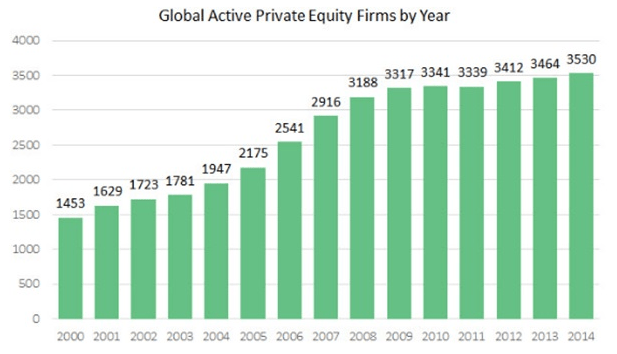
Private equity firms are growing by the numbers in today’s world. What do they do? How can they make a difference? Read on..

Private Equity Firms: What are they?

The investment market isn’t immune to trends. While most trends come in the form of specific stocks, values, or markets to invest in (for example, cryptocurrencies,) there are always outlier trends, trends that aren’t so much expectations about the market but tricks and methods to optimize investment.

Sometimes, these trends are sold as ways to make people rich quickly with a minimal amount of work.

Private equity firms are one of the trends we see currently. The concept itself has been in the news often, usually blaming them for people getting laid off or praising them for creating new jobs, with most people unable to understand just what equity firms do.

How do these firms work?

A private equity firm is, to put it simply, a conglomerate of investors who get together to purchase companies or businesses in a private manner – that is, outside the stock markets. The earnings these businesses receive (i.e., the equity) is then divided among those investors who chipped in to take over the company.

Although simplistic, that’s basically how it works: A bunch of people with money get together, pool their money into a private equity firm, and share both the risks and the proceeds of such venture.

Usually, this is done through already existing private equity firms, although it’s not uncommon for individuals to start their own.

Are they good or bad?

As with everything in business, this will depend on who you ask – and the specific private equity firm you look into. In theory, a private equity firm taking over shouldn’t be any different than having a new board of investors for publicly traded companies. After all, that’s literally what such takeovers mean.

However, the experience many workers have had with these firms is quite different. While it’s no secret that public investors often try to get the most money they can out of businesses, there are two sides to the stock market that keep these attitudes relatively in check.

First, who owns how much of each company is known. And second, the most valuable companies in the stock market (say, Amazon or Apple) are mainstays and it’s in the investors’ best interests to sacrifice short-term gain for long-term stability.

This is not necessarily true of private equity firms. The relative anonymity these firms give allows certain savagely capitalistic players to act in ways that, were they to be made public, would likely damage their images – and those of their companies.

Private equity firms effectively lessen this, because it’s often impossible to know who is behind the company.

There’s a second issue, although closely related. Private equity firms are known for often acting in extreme ways once they take over, sacrificing long-term stability for short-term earnings, often forcing companies to cannibalize themselves and their own market.

 This leads these companies that have been taken over to end up bankrupt, its employees laid off, all to fill the pockets of people who already had much more money than the company’s workers.

Is there an upside?

One might argue that the operating strategy that these firms use could lead to better economic development, as many of the pressures of public trading, such as stock price variations, don’t exist.

And that is true. A properly managed private equity firm can indeed help a company, or a whole industry, flourish under the guidance of leading experts.

However, this doesn’t always happen – partly because some of the biggest actors in the market are only in it for the money, with little interest in making things better.

Conclusion

The fact that some firms are there to drive companies to the ground doesn’t mean they all will. Some private equity firms will indeed act in ways that will better the market, and we can hope with time the good companies will outweigh the bad.

How To Optimize Your Self-Directed IRA

IRAs are gaining attention around the globe. How best can you optimize them? That is the subject of this guide.

Best Hacks On Self-Directed IRAs

In order to understand the basic misconceptions about the IRA, we first need to have a full grasp of what an IRA is, and what is the major difference between traditional and self-directed IRA.

An IRA or Individual Retirement Account is a way to save money for post-retirement with tax-free benefits. It is an investment option designed for building saving funds for the time of your retirement.

The concept of self-directed IRA has been introduced for quite a long time now, but people are still not comfortable with the idea and have various concerns about it.

 There are multiple misconceptions about the use of funds in self-directed IRA that should be clarified for the better understanding and benefit of common folks

Self-directed IRA is a magnificent financial tool that can help you to generate a huge amount of wealth easily and legally. It opens a huge range of investment options for you that can have huge valuations for your portfolio.

Traditional VS Self Directed IRAs

There is a very small but major difference between the two types of IRA. The difference is about the authority of the custodian about the investment restrictions in either type of IRA.

The custodian has a much more active role in traditional IRA, and it decides the investment direction of your funds. It usually allows people to invest only in areas like bonds, stocks, annuities, and mutual funds, and no other form of investment is welcomed.

Whereas, in self-directed IRA, the custodian doesn’t have that much active role in investment options. The custodian’s responsibilities are limited to mainly tax management and allow you to manage your investments as you desire.

Hence, for self-directed IRA, one can have multiple investment options, in addition to the traditional options, like real estate investment, new start-ups, cryptocurrency, etc.

Self-Directed IRA Misconceptions

Many people have certain misconceptions about the mechanism and processing of the self-directed IRA.

These misconceptions misguide them badly and lead to bad investment decisions and negative financial consequences. So, here we have enlisted all these major concerns to clarify them once and for all.

1. The first misconception is about investment options. As discussed above, traditional IRAs have a limited room for investment options. The reason for the fixed policy is that conventional markets are relatively easier to engage with and monitor compared to alternative options.

For example,cryptocurrency is a very risky investment option that can be unacceptable for traditional IRAs. On the other hand, the self-directed IRA has no such issues and are open to every kind of investment option.

2. The next misconception about self-directed IRAs is that these firms have absolute authority over the money. Whether traditional or self-directed, no IRA firm has any such authority. Their mere responsibility and control are about keeping your money safe.

They can’t invest your money without your permission, and even after investing, you have the authority to cancel their access to your funds.

3. Another common misunderstanding of people is that real estate investments in self-directed IRAs could be used personally. It is not true at all. The only purpose of the IRA-based real estate investment is to make a profit. You can’t use the property or live in it.

4. The biggest misconception of self-directed IRAs is about their legality. The non-traditional investments are generally considered illegal.

Cryptocurrencies, tax liens, venture capitalism, etc. all these are legal forms of investment, where markets are regulated by safety measures and laws.

Uncertainty is at the core of investment. Just because alternative investment options are not widely discussed doesn’t elevate them as riskier than traditional methods.

Real estate is the safest investment option while cryptocurrency is volatile but not overly risky.

 Even in traditional investment options like bonds and stock, uncertainty is inevitable. The more you concentrate on one specific market the higher the risk will be. In any investment market, the simple and best way to avoid risk is diversification.

Conclusion

The self-directed IRA makes you more empowered concerning your fund investment.

You have more liberty to make more money compared to traditional methods by adopting alternative ways.

Take advantage of the greater options and the possible gains available for you and get benefited excessively in your future.