Blog

How NFTs and Cryptocurrencies Are Making Inroads Globally

NFTs are making their mark around the globe alongside cryptocurrencies in a near-equal manner, traversing hitherto unexplored heights.

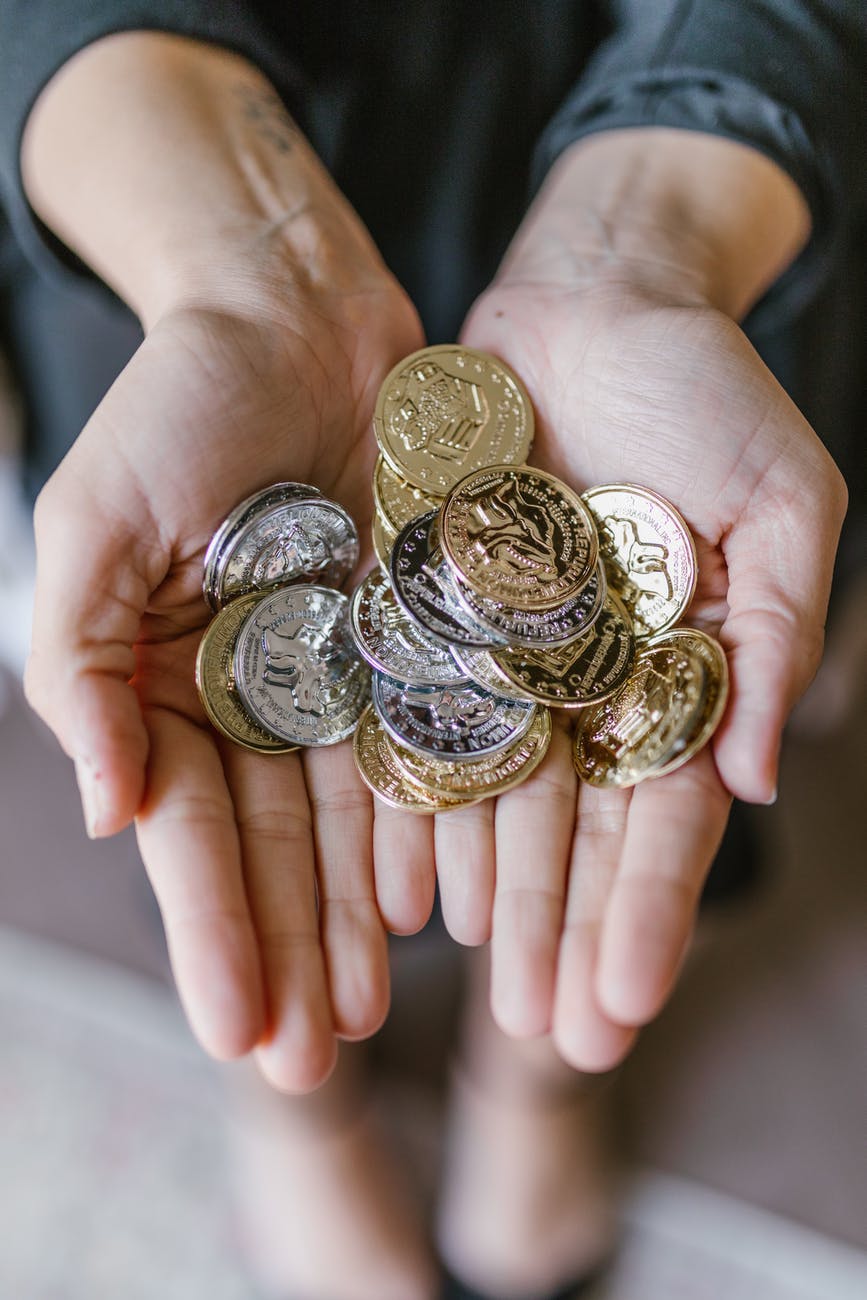
Photo by Karolina Grabowska on Pexels.com

NFT stands for non-fungible token. It’s generally built using the same kind of programming as cryptocurrency, like Bitcoin or Ethereum, but that’s where the similarity ends.

Physical money and cryptocurrencies are “fungible,” meaning they can be traded or exchanged for one another. They’re also equal in value—one dollar is always worth another dollar; one Bitcoin is always equal to another Bitcoin. Crypto’s fungibility makes it a trusted means of conducting transactions on the blockchain.

NFTs are different. Each has a digital signature that makes it impossible for NFTs to be exchanged for or equal to one another (hence, non-fungible). One NBA Top Shot clip, for example, is not equal to what is the norm; simply because they’re both NFTs. (One NBA Top Shot clip isn’t even necessarily equal to another NBA Top Shot clip, for that matter.)

To understand how creative works get tied to NFTs, one has to understand exactly how an NFT functions. NFTs are unique crypto tokens that are managed on a blockchain.

The blockchain acts as the decentralized ledger that tracks the ownership and transaction history of each NFT, which is coded to have a unique ID and other metadata that no other token can replicate. This process gives NFTs the attributes of originality and scarcity that makes them so attractive when coupled with digital media.

NFTs are coded with software code (called smart contracts) that governs aspects like verifying the ownership and managing the transferability of the NFTs. Like any software application, NFTs can be further programmed beyond the basics of ownership and transferability to also include a variety of other applications and functionality, including those linking the NFT to some other digital asset.

Read Also: How NFTs Fared in 2020 And All The Insights You Need To Know

For example, a smart contract could be written to automatically allocate a portion of the amounts paid for any subsequent sale of the NFT back to the original owner, thus giving the owner an ability to realize the benefits of the secondary marketplace. (For more information, see the proposed EIP-2981 standard for handling royalty payments for ERC-721 tokens.)

Thus, when someone makes (or “mints”) an NFT, they are writing the underlying smart contract code that governs the NFT’s qualities, which are added to the relevant blockchain where the NFT is managed.

Many blockchains can be used to manage NFTs, including Ethereum (with its long established ERC-721 and ERC-1155 smart contract standards), Flowchain, and Wax, all of which use a similar process. Notably, certain NFT marketplaces only function with certain blockchains, and so the choice of blockchain to use for an NFT can have real commercial implications for the seller

Creating an NFT

NFTs exist on a blockchain, which is a distributed public ledger that records transactions. You’re probably most familiar with blockchain as the underlying process that makes cryptocurrencies possible.

An NFT is created, or “minted” from digital objects that represent both tangible and intangible items, including:

  • Art
  • GIFs
  • Videos and sports highlights
  • Collectibles
  • Virtual avatars and video game skins
  • Designer sneakers
  • Music

Even tweets count. Twitter co-founder Jack Dorsey sold his first ever tweet as an NFT for more than $2.9 million.

Essentially, NFTs are like physical collector’s items, only digital. So instead of getting an actual oil painting to hang on the wall, the buyer gets a digital file instead.

They also get exclusive ownership rights. That’s right: NFTs can have only one owner at a time. NFTs’ unique data makes it easy to verify their ownership and transfer tokens between owners. The owner or creator can also store specific information inside them. For instance, artists can sign their artwork by including their signature in an NFT’s metadata.

Read: Cryptocurrencies, Ethereum and The Future

Putting NFTs To Work

Blockchain technology and NFTs afford artists and content creators a unique opportunity to monetize their wares. For example, artists no longer have to rely on galleries or auction houses to sell their art. Instead, the artist can sell it directly to the consumer as an NFT, which also lets them keep more of the profits.

In addition, artists can program in royalties so they’ll receive a percentage of sales whenever their art is sold to a new owner. This is an attractive feature as artists generally do not receive future proceeds after their art is first sold.

Art isn’t the only way to make money with NFTs. Brands like Charmin and Taco Bell have auctioned off themed NFT art to raise funds for charity. Charmin dubbed its offering “NFTP” (non-fungible toilet paper), and Taco Bell’s NFT art sold out in minutes, with the highest bids coming in at 1.5 wrapped ether (WETH)—equal to $3,723.83 at time of writing.

An NBA Top Shot generated more than $500 million in sales as of late March. A single LeBron James highlight NFT fetched more than $200,000.

Even celebrities like Snoop Dogg and Lindsay Lohan are jumping on the NFT bandwagon, releasing unique memories, artwork and moments as securitized NFTs.

How to Buy NFTs

If you’re keen to start your own NFT collection, you’ll need to acquire some key items:

First, you’ll need to get a digital wallet that allows you to store NFTs and cryptocurrencies. You’ll likely need to purchase some cryptocurrency, like Ether, depending on what currencies your NFT provider accepts.

You can buy crypto using a credit card on platforms like Coinbase, Kraken, eToro and even PayPal and Robinhood now. You’ll then be able to move it from the exchange to your wallet of choice.

You’ll want to keep fees in mind as you research options. Most exchanges charge at least a percentage of your transaction when you buy crypto.

Popular NFT Marketplaces

Once you’ve got your wallet set up and funded, there’s no shortage of NFT sites to shop. Currently, the largest NFT marketplaces are:

OpenSea.io: This peer-to-peer platform bills itself a purveyor of “rare digital items and collectibles.” To get started, all you need to do is create an account to browse NFT collections. You can also sort pieces by sales volume to discover new artists.

Rarible: Similar to OpenSea, Rarible is a democratic, open marketplace that allows artists and creators to issue and sell NFTs. RARI tokens issued on the platform enable holders to weigh in on features like fees and community rules.

Foundation: Here, artists must receive “upvotes” or an invitation from fellow creators to post their art. The community’s exclusivity and cost of entry—artists must also purchase “gas” to mint NFTs—means it may boast higher-caliber artwork.

For instance, Nyan Cat creator Chris Torres sold the NFT on the Foundation platform. It may also mean higher prices — not necessarily a bad thing for artists and collectors seeking to capitalize, assuming the demand for NFTs remains at current levels, or even increases over time.

Although these platforms and others are host to thousands of NFT creators and collectors, be sure you do your research carefully before buying. Some artists have fallen victim to impersonators who have listed and sold their work without their permission.

Last Words

The verification processes for creators and NFT listings aren’t consistent across platforms — some are more stringent than others. OpenSea and Rarible, for example, do not require owner verification for NFT listings.

Buyer protections appear to be sparse at best, so when shopping for NFTs, it may be best to keep the old adage “caveat emptor” (let the buyer beware) in mind.

Recommended: How Chainlink Connects Smart Contracts To The Real World And The Opportunities Therein

How MoonSwap Works

MoonSwap is hugging the headlines for providing transaction-free trading. It is one the leading DeFi movers at the moment, and carving a name for itself.

Photo by Pedro Figueras on Pexels.com

When thinking of an optimal viable liquidity product that provides a second layer solution, MoonSwap comes to mind. Introduced in September 2020, this automated market-making (AMM) DEX improves transaction speed at zero-Gas fees. It gives the likes of Uniswap (one of the top-leading exchanges) a run for their money.

Currently, there is a huge migration of liquidity providers (LPs) from Uniswap to MoonSwap. Trading cryptocurrencies has never been easier with MoonSwap as the DEX runs on the Conflux blockchain. The transaction process is entirely seamless thanks to the implementation of Conflux’s Tree Graph (GT) technology. With this tech in place, transactions are executed within 23 seconds or less. But that is not all.

Read Also: This Is How Binance Launchpad Works

MoonSwap’s Features

Here are some features that make MoonSwap a top-leading exchange, even overshadowing Uniswap. These amazing qualities are found in its blockchain and network security.

Blockchain

MoonSwap may share similarities with other AMM platforms, but there is one factor that makes it unique – Conflux. This innovative decentralized blockchain has a high throughput of up to 6,000 transactions per second (tps). Interestingly, it does not require an order book thanks to the presence of user-contributed liquidity pools.

Network Security

The Conflux network is a mining network based on proof-of-work (POW). As such, it protects the DEX and the entire blockchain from 51% and reentrancy attacks. With such high integrity, traders can conduct transactions on the network without fear. When it boils down to the exchange’s smart contracts, many third-party security companies carry out audits from time to time.

This security test is carried out to ensure that the exchange is free of vulnerabilities. KnownSec and Slowmist are two of some of the security companies that are behind these audits. The MoonSwap GitHub Repository has the smart contract framework for this project.

MoonSwap’s Rewards

MoonSwap gives traders the unhindered platform to contribute to LP pools via their conflux-based assets and even create new ones to maximize profits. The Chinese-state-backed network caters to that coupled with fewer to no slippages, which makes the decentralized app (DApp) a go-to liquidity exchange for cryptocurrency traders.

Some of the rewards available for liquidity providers (LPs) include the following:

  • Transaction fees
  • MOON token rewards (ERC20 assets)
  • Conflux tokens (FC)
  • Airdrop rewards

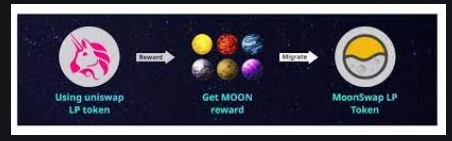
Individuals who migrate their assets to MoonSwap before January 2021 can receive Dragon non-fungible tokens (NFTs). With these tokens, they can enjoy the ConDragon DeFi RPG game better. With MoonSwap’s one-click process, LPs on the network can obtain Moon LP tokens.

Must-Read: How Chainlink Connects Smart Contracts To The Real World And The Opportunities Therein

MoonSwap’s Fees

As highlighted before, there is a zero-Gas fee for every trade execution. Even when migrating your asset to MoonSwap, especially Ethereum-based-asset holders, you have zero Gas to pay in fees, compared to other exchanges. As such you can convert your ETH into Conflux cross-chain assets. At that point, your ETH becomes cETH.

Number of $MOON in Circulation

The Swap Process

$MOON is the token earned on MoonSwap. Out of a total stock of 100 million $MOON tokens, just under 10.65 million was in circulation as of December 2020. Liquidity Providers share 90% of newly mined tokens distributed. The remaining goes to the MoonSwap Team. The $MOON token would take 7.6 years to achieve its total circulation supply, a statement made on the exchange’s FAQ section.

Every 1.9 years, the amount of token mined would halve, with its initial phase at 10 MOON/block in stage 1, and ending phase at 1.25 MOON/block in stage 4. The liquidity mining operation would disperse 98.75% of the overall $MOON supply. The remaining was originally reserved for the Moon-EcoGrantsFund (MEGFI). However, the MoonSwap community called the shots on “burning” it.

Where to Purchase MoonSwap Tokens

It is worth noting that no third-party trading platform offers $MOON on sale, except Uniswap, and this is as of December 2020. However, holders can exchange cMOON tokens for any Conflux blockchain-based token. You cannot purchase $MOON tokens directly with fiat currencies as well. However, you can buy other cryptos via fiat and later swap them for MoonSwap tokens using the MoonSwap exchange.

MoonSwap’s MarketPlace Value

The MoonSwap token (MOON) ranks #836 on CoinMarketCap at the time of this documentation. It also has a market cap of $20,671,067 (13.58% increase in the last 24 hours), a diluted market cap of $20,694,293 (same as the market cap), and a MoonSwap price of $1.13. This token is available on specific exchanges. You can find respective contracts here:

  • 0x68a3637bA6E75c0f66B61A42639c4e9fCD3D4824 (Ethereum)
  • 0x5b917D4fb9B27591353211c32F1552A527987AFC (Xdai chain)

How to Buy MoonSwap Tokens

If you are new to MoonSwap DEX, $MOON token, and the Conflux network, this section will show you how to purchase $MOON.

Purchase a Major Crypto

Since you cannot buy $MOON directly with fiat currency, you have to purchase a major cryptocurrency via an exchange. Ideally, this can either be Bitcoin (BTC) or Ethereum (ETH). One top-leading exchange to trust with such transactions is Coinbase. This exchange accepts and processes fiat deposits. If you don’t have a wallet with this exchange, kindly register to create one. Once you have completed the KYC process, select a payment method, either with a debit card, credit card, eWallet, or bank transfer.

Kindly note that using cards come with higher fees. However, the process is instant. Bank transfers are the cheapest to conduct, but they also come with slow transaction processes. understand that your deposit process depends on your country of residence. So, choose that which suits you best. Once done, confirm the crypto you want to buy to convert your fiat immediately.

Recommended: How JustSwap Works

Convert Your Crypto to $MOON

Move your crypto to an altcoin exchange as $MOON is an altcoin. Your ideal bet is MoonSwap. You can also buy the token on other exchanges as well, including Uniswap (V2), Sushiswap, Hotbit, and Biki. They also provide trading opportunities for crypto traders. Having created an account on any of these exchanges, you have to deposit your cryptocurrency from your crypto exchange, whether it is Bitcoin, Ethereum or Tether.

You can also sell your accumulated coins from the LP pool on these marketplaces, at any time. They have decent daily trading volumes and large client bases. Additionally, register on these exchanges to harness vast trading opportunities.

The Bottom Line

Having covered all aspects of MoonSwap, it is no doubt that this AMM DEX provides amazing opportunities for holders and traders. Its Conflux backbone makes it stand out from other liquidity exchanges. Transactions on the network are free and fast. So, what are you waiting for? It is time to get started with MoonSwap!

The Spartan Protocol Explained

Spartan Swap holds a promise as the DeFi boom continues to defy all odds. Here is what the project is all about.

One of the latest developments in the world of cryptocurrencies has to do with the deepening of the DeFi markets. The introduction of liquidity pools alongside yield farming, and fast access to funds has opened up a new frontier of possibilities that many investors are still exploring at the moment. Spartan Protocol provides an opportunity to access liquidity pools and experience decentralized finance in all possible areas of use.

What is Spartan Protocol 

Spartan Protocol is geared towards the enablement of deepened capital formation through the provision of incentives for participation in liquidity pools. The platform supports the creation of various synthetic assets in a safe manner, adding value and advancing the financial goals of investors. The project is described as a top performer in the ranking of liquidity projects hosted within the Binance Smart Chain.

Read Also: This Is How The Celsius Network Works

SpartanSwap

On the platform, there is the SpartanSwap, which is a native market maker (AMM) with automated functionality. It operates essentially with liquidity sensitive charges or fees.

SpartanLending

With DeFi leading right now in the area of lending, this feature allows for participants on the platform to lend assets or borrow synthetic and real tokens within the platform.

SpartanSynths

This operates within the platform as a tool for minting of synthetic assets. It is weighted to defined and flexible price feeds in order to create leverage and derivatives that are linked to other assets on Binance Smart Chain.

SpartanDAO

Like every DAO with a reward token in its ecosystem, within the Spartan Protocol, the means of governance is defined and using SPARTA, it is able to provide incentives for the lending of digital assets as well as to deepen capital formation. It is also used for rewarding miners on the ecosystem.

Similar Projects and Competition

Photo by RODNAE Productions on Pexels.com

There are several projects on the DeFi plane right now that compares substantially with Spartan Protocol. These are looked at a bit more closely below:

JustSwap

This project is native to Tron ecosystem and has the benefit of a huge base of users. However, the project only shares an aspect of Spartan Protocol in its SpartanSwap description. User loyalty would endear investors who are familiar with Tron to try out JustSwap. As much as possible, it is also okay to point out that the support of Binance Smart Chain for SpartanSwap makes it as credible as any other similar project.

Yearn Finance

Yearn Finance is a leading force in DeFi with its early head start as an aggregator explored by investors to maximize yield farming profits. Quite like Spartan Protocol, anyone investing in YFI is confident that the best yields will result for every token bought.  While YFI is marketed majorly as a token that presents the best gains, Spartan Protocol is yet far off from maturity and likely to provide a leap in capital gains going forward.

UniSwap

UniSwap operates an automated liquated pool much like the AMM of Spartan Protocol. Uniswap targets users of the platform to become liquidity providers so that funds are pooled to execute trades. The returns from trades completed and related contracts falls back to each liquidity provider as distributions and via the native UNI token. Much like Sparta, used to incentivize the Sparta ecosystem, UNI does essentially the same function, and is growing in market value.

 Why Use Sparta?

Like most newer projects with a real value addition potential, getting in early means the possibility of higher gains is possible as the project matures. With the known and leading names in DeFi at various levels of maturity, Sparta promises a rush of capital gains for token holders if the present momentum is sustained and not forgetting that is just about to be 6 months in existence by March 2021.

Sparta was given rise to when previously existing 30 projects on Binance Chain used their respective token burn to acquire Sparta. The effect of such combination is the large size of assets that underlie the platform at 300,000,000 tokens. This also enhances the liquidity position and tokens can be readily matched, open orders executed, and auto market maker functions facilitated for the credibility of the platform.

Participants on the platform are also encouraged by the large community of stakeholders, which arose from the other projects that merged into Sparta. The larger the governing community, the higher the chances of democratic norms and better accountability, at least in DeFi.

Price Possibilities 

In looking at the price possibilities for Sparta, a review of the historical position, possible trajectory to the future as well as future price potentials are considered.

Recommended: This Is How Binance Launchpad Works

This Is How The Celsius Network Works

Celsius Network offers investors an opening for a decent ROI with the performance of CEL beating several competitors.

Photo by Roger Brown on Pexels.com

CELSIUS NETWORK REVIEW

There are many platforms available for crypto transactions. Most times, these platforms do not meet your needs. Let us look at one of the leading platforms you can use.

The CELSIUS NETWORK is a modern advanced crypto platform that deals with all cryptocurrency-based transactions. Celsius Network has been in existence for years now with appreciable transaction rate and recommendations from high profile companies and individuals. The platform provides an opportunity to keep and invest your crypto assets in addition to collateral-backed loans.

Compared to big competitors in the cryptocurrency market, there is an appreciable increase in the market price of Celsius token (denoted as CEL), this is due to an enhanced ROI as well as volatility, which provides every investor enough opportunity for profits and little or no losses.

HOW THE CELSIUS NETWORK SYSTEM WORKS

The basic thing to do after registering on this platform is to purchase the token (CEL) and trade your positions. Purchasing the token alone does not guarantee maximal output.

This network system allows any form of investment and guarantees an adequate rate for compensation. Every investor is entitled to certain berth of  opportunities depending on investment made.

Investors with less than 5% investment of their assets are not entitled to any bonus profit and discount or loan interest.  They simply earn what they have invested and nothing else in addition.

However, those who invest about 10% of their capital and assets in Celsius Tokens will earn a bonus of about 10% interest and a loan discount. For investors with about 15% CEL Tokens investment, they earn about 20% interest on both bonus and loan.

The highest investors with over 15% of their capital and assets in CEL tokens earn the highest bonus interest of about 35% and discount 30% loan interest.

This is no doubt a great and rare opportunity for everyone, one that is not available on other cryptocurrency platforms.

Read Also: This Is How Binance Launchpad Works

HOW CELSIUS TOKENS WORKS

Generally, all transactions on the Celsius network are done in CEL Tokens, which is the unit for all transactions. This is to ensure equal opportunity and interest for all regardless of currency and asset. The Celsius tokens are used for all withdrawal and deposit transactions. It also makes you as an investor entitled to bonuses and interest. You need to stake and invest with CEL tokens, to enjoy more benefits.

HOW TO EARN PROFIT THROUGH CELSIUS NETWORK

Earning profits has never been easier with any other cryptocurrency platform than the Celsius network. Celsius network gives you a certain interest as profit on every deposit you make into its platform. Unlike other networks, it charges no extra fee for withdrawal or deposit. Those with over 15% investment earn more profits. Quite an incentive for you to open a new account today.

COLLECTING LOAN ON CELSIUS NETWORK

The platform  provide loans of any value to all their customers as long as the corresponding value of collateral in form of cryptocurrency is met. The CEL tokens allow good rates for loans on the system.

HOW CELSIUS NETWORK DETERMINE SERVICE RATES

Due to regular increases and competition in the markets, the Celsius network adjusts service rate weekly. Most of these profits are returned to the market to trade.

MERITS AND DEMERITS OF USING THE CELSIUS NETWORK

Their major aim and objective are to provide an equal financial opportunity for all in the crypto world.

       Merits of Celsius Network

  • Deposits and withdrawal are not limited to this platform, without charging extra fees for them.
  • It gives regular interest rate pay-out to all investors.
  • This network provides an opportunity to transact with other cryptocurrencies without extra charges or issues.
  • The customer support service is available 24/7, and are easily contacted for any support.
  • The platform is available in many countries.

 Demerits of Celsius Network

  • Transactions must be made in CEL tokens before a user can earn interest and bonus.
  • As an investor, you are only allowed to own one crypto wallet address for all your transactions. If you wish to change your wallet address, it takes about 24hrs for a complete activation.
  • To register, all your necessary means of identification and details must be completely verified.

All these are what makes Celsius Network stand out in the cryptocurrency market along with its cons which are attempts to provide maximum protection and satisfaction for all investors and to avoid dubious acts. 

FREQUENTLY ASKED QUESTIONS ABOUT CELSIUS NETWORK

  • Q: Is it safe to trust the Celsius network?

After many years in the market with good recommendations and quality service, it is arguably the best and safest cryptocurrency platform for all investors at all levels. The platform protects against cyber threats. The system provides a 2-way verification method for maximum security.

  • Q: How to get a loan with Celsius Network?

Celsius network gives loans to all investors as long as they own a CEL token. Customers are even give discounts on all loans.

Recommended: How Chainlink Connects Smart Contracts To The Real World And The Opportunities Therein
This Is How Binance Launchpad Works

Binance launchpad is the platform for new tokens to come on stream while Binance launchpool helps investors get on to earn some more on new projects. This is how it works.

Photo by Worldspectrum on Pexels.com

Binance Launchpad

Binance is  one of the largest cryptocurrency exchanges in the world by traded volume, and it  announced in January 2020, that it would launch a new token fundraising event every month through its Binance Launchpad platform. Binance Launchpool and Launchpad are platforms that advise and help project teams on how to best launch and issue their token.

Binance Launchpool lets you use your token to earn or farm a new token free of charge. Each day, tokens earned are proportional to the tokens subscribed to a pool. In a total of 30 days, you earn a new token. Within the first seven days, before the token is listed on Binanace.com, you can trade any token you earn.

Daily, the token you earn are distributed. You also get the luxury to add or remove tokens if you so desire to the eligible pools any time.  The idea is that you can compile new coins after and before a guaranteed listing free of charge.

What’s next- if you got your token and you are ready to farm? Well, getting started is the next agenda. Check out the guide below on how to get started with Binance Launchpool for both web and on mobile app.

Recommended: How Chainlink Connects Smart Contracts To The Real World And The Opportunities Therein
How to get started with Binance Launchpool

Web-version

  1. Log into your Binance account and go to their savings page.
  2. To choose the token you want to use to subscribe, click “Transfer” on the right-hand side of your screen.
  3. Enter the desired amount of token you would like to subscribe to.
  4. Confirm the transfer by clicking on “Transfer confirmed” at the bottom right-hand side of your screen.
  5. Done!

Read Also: Cryptocurrencies, Ethereum and The Future

App version

  1. Open the app and locate the “Savings” icon.
  2. On the token, you wish to subscribe with, click “Subscribe.”
  3. Enter the amount of token you wish to subscribe to.
  4. Read the “Binance Savings Agreement” and then click on the box
  5. Click “Confirm Purchase.”
  6. Done!

FAQs

1.      Who can participate in Binance Launchpool?

Provided you have a binance account, you can participate in Binance Launchpool. If you don’t have an account, register for one here

2.  What is needed to participate in Binance Launchpool?

You need to have at least 0.1 BNB or other equivalent tokens supported in a pool to participate in Binance Lauchpool.

3.      Which pools do Binance support?

Pools supported for each project will vary, but as a rule of thumb, you can find the list of supported pools on the Binance Launchpad page.

4.      Are there any token limits?

Well, as for limit to how much you can stake, there are none, which means you can stake as high as you like. But you need a minimum of 0.1 token to be able to stake.

5.      What happens if I already have my tokens subscribed to flexible savings?

If you subscribed your token to a flexible saving before the activity period beginning then you’ll need to make an additional subscription of 0.1 or more to qualify to earn Lauchpool rewards.

6.      When do I get the tokens I have farmed?

Tokens are distributed everyday between 00:00 AM and 1:00 AM (UTC).

7.      In each pool, how do I see the Annual Percentage Yield (APY)?

Once trading opens, the APY of each pool will become visible.

8.      Is it possible to trade farmed tokens immediately?

You can’t trade tokens earned in the first seven days until the project has been listed on Binance.com. As soon as the trade is live from the 8th day onwards, you can trade any token you earn as you get them.

9.      Has Binance Lauchpool replaced Launchpad?

No. Launchpool is a new initiative that helps you safely farm new coins from existing assets. Sometimes, you can even run both Launchpool and Launchpad concurrently.

10. How to view your average BNB holdings?

On your project dedicated Launchpad page, you can view your average BNB holdings after the staking calculation period starts.

11. Will the BNB I used to subscribe to Binance Launchpool be counted for Launchpad and any other airdrops etc?

Yes, you will still qualify for VIP benefits, Launchpad eligibility, airdrops, etc.

12. Are the tokens I subscribed to Launchpool locked for 30 days?

No, you can withdraw some or all the tokens you used to subscribe whenever you like. At the same time, you can add to the amount of token you subscribe at any time.

13. Where do I learn more about Binance Launchpool projects?

Binance Research publishes reports on each project hosted on Launchpool. So, you can learn all you need to know there.

Hopefully, this article covers most of the questions that you have. If you have any other questions, feel free to reach out to us.

Read More: How JustSwap Works