
These Are Four of The Most Promising AI Cryptocurrencies in 2024

Predicting specific cryptocurrencies that will be bullish in 2024 is highly speculative due to various factors. AI-related cryptocurrencies, such as SingularityNET (AGI), Fetch.ai (FET), Numerai (NMR), and Ocean Protocol (OCEAN), aim to democratize AI, enable autonomous economic agents, incentivize predictive models, and facilitate decentralized data sharing. These projects represent innovative integrations of blockchain, cryptocurrency, and AI technologies, offering promising solutions to industry challenges.

Photo by Negative Space on Pexels.com

2024 has so far started on a bullish note for the cryptocurrency market. For anyone to predict specific cryptocurrencies that will be outstanding in 2024 is highly speculative and subject to numerous variables. You might want to look at technological advancements, market trends, regulatory developments, and investor sentiment.

However, AI-related cryptocurrencies could potentially benefit from increased adoption of artificial intelligence technologies in various industries.

Some AI-related cryptocurrencies and projects that have garnered attention include:

1. Singularity NET (AGI)
SingularityNET is a blockchain-based platform focused on democratizing artificial intelligence (AI) by creating a decentralized marketplace for AI services and algorithms. It aims to facilitate the exchange of AI capabilities and resources among developers, organizations, and AI agents, thus accelerating AI research, development, and deployment.

SingularityNET leverages blockchain technology to ensure transparency, security, and interoperability within the platform. Smart contracts govern transactions and agreements between users, while decentralized storage solutions safeguard data privacy and integrity.

Furthermore, SingularityNET incorporates mechanisms for reputation and trust scoring to enable users to assess the quality and reliability of AI services and providers.

At the core of SingularityNET is its native cryptocurrency, AGI token, which serves as the medium of exchange within the platform. AGI tokens enable users to purchase AI services, contribute algorithms, and receive rewards for their participation in the ecosystem.

Additionally, AGI tokens are used for governance, allowing token holders to participate in decision-making processes related to platform development and upgrades.

By providing a decentralized infrastructure for AI development and collaboration, SingularityNET aims to democratize access to AI technologies, foster innovation, and create a more inclusive and equitable AI ecosystem. It represents a novel approach to harnessing the potential of AI while addressing concerns related to centralization and monopolization in the AI industry.

2. Fetch.ai (FET)
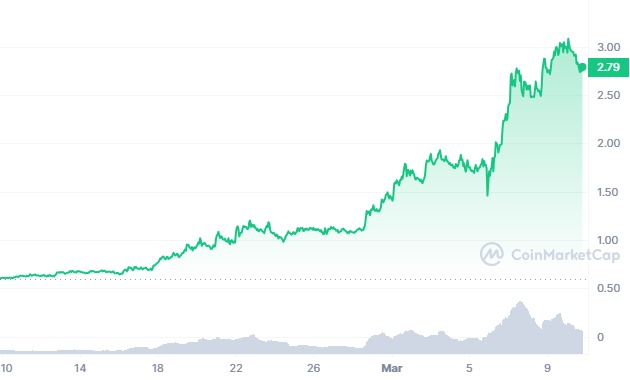

Fetch.ai is a blockchain project aiming to create a decentralized ecosystem for autonomous agents to perform tasks and exchange value efficiently. At its core, Fetch.ai combines blockchain technology with artificial intelligence (AI) to enable autonomous economic agents to interact with each other and with real-world data in a decentralized manner.

The Fetch.ai platform facilitates the creation of autonomous agents that can represent individuals, organizations, or devices. These agents can execute tasks, negotiate contracts, and exchange value autonomously, without the need for intermediaries. This decentralized approach aims to optimize resource allocation, improve efficiency, and enable new forms of economic activity.

Fetch.ai’s architecture is designed to be scalable and flexible, allowing for a wide range of use cases, including supply chain optimization, decentralized finance (DeFi), and Internet of Things (IoT) applications. The project also emphasizes privacy and security, ensuring that sensitive data remains protected throughout interactions.

Overall, Fetch.ai presents a promising vision for a decentralized future where autonomous agents collaborate seamlessly to solve complex problems and create value.

However, like any emerging technology, its success will depend on adoption, scalability, and the ability to address potential challenges and regulatory considerations in the evolving landscape of blockchain and AI integration.

3. Numerai (NMR)
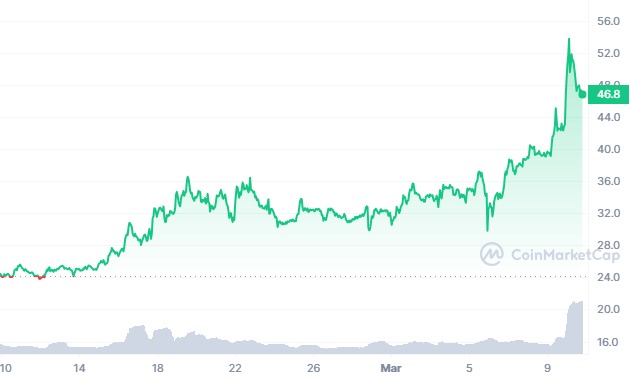
Numerai is a unique blockchain-based project that combines elements of data science, machine learning, and cryptocurrency.

The platform operates as a hedge fund that incentivizes data scientists to develop predictive models using financial data. Participants submit predictions to Numerai, which aggregates and anonymizes them before using them to make trading decisions in global financial markets.

Central to Numerai is its native cryptocurrency, Numerai (NMR). NMR serves multiple purposes within the ecosystem. Firstly, it acts as a reward mechanism for data scientists who contribute accurate predictions to the platform.

Secondly, NMR is staked by data scientists to signal confidence in their models, and successful predictions result in increased holdings of NMR. Lastly, NMR is used for governance, allowing token holders to participate in decision-making processes regarding platform upgrades and changes.

Numerai’s blockchain architecture ensures transparency, security, and decentralization. The platform leverages blockchain technology to manage transactions, distribute rewards, and maintain a record of participants’ contributions securely.

Read Also: It’s A Watershed Moment With US SEC Approving 11 Bitcoin Spot ETFs

By crowdsourcing predictive models from a global community of data scientists and utilizing a blockchain-based infrastructure, Numerai aims to create a more efficient and democratized approach to quantitative finance.

Overall, Numerai represents an innovative integration of blockchain, cryptocurrency, and data science, offering a novel solution to the challenges of traditional financial markets while incentivizing collaboration and rewarding accuracy in predictive modeling.

4. Ocean Protocol (OCEAN
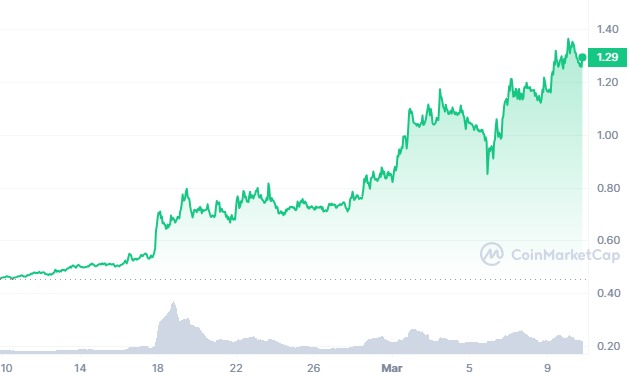
Ocean Protocol is a blockchain-based platform designed to facilitate the sharing, monetization, and consumption of data in a decentralized and privacy-preserving manner. It aims to address the challenges of data silos and data accessibility by creating a decentralized ecosystem where data providers can securely share their data, and consumers can access and purchase it using the native cryptocurrency, Ocean Token (OCEAN).

The protocol utilizes blockchain technology to provide transparency, immutability, and security to data transactions. Smart contracts govern the exchange of data, ensuring that data providers are fairly compensated for their contributions, while consumers can trust the integrity and provenance of the data they access.

Key components of Ocean Protocol include data marketplaces, where users can discover and access datasets, and compute-to-data services, which enable data analytics and processing without exposing the raw data itself.

Additionally, Ocean Protocol incorporates privacy-preserving technologies such as zero-knowledge proofs and federated learning to protect the privacy of sensitive data.

By enabling data sharing and monetization in a decentralized and privacy-preserving manner, Ocean Protocol aims to unlock the value of data, foster innovation, and empower individuals and organizations to leverage data assets more efficiently. It represents a promising solution to the challenges of data ownership, privacy, and accessibility in the digital economy.

Conclusion

These leading AI cryptocurrencies have identifiable use cases and have shown their relevance in the reception that they have enjoyed in the global marketplace. Their respective ROI and price performance looks promising.

Recommended: Crypto Spotlight: Dogecoin vs. dYdX

It’s A Watershed Moment With US SEC Approving 11 Bitcoin Spot ETFs

The approval of 11 Bitcoin Spot ETFs opens new possibilities for investors. Here are the implications.

Photo by Anna Nekrashevich on Pexels.com

Introduction

The approval of 11 Bitcoin spot ETF applications by the US Securities and Exchange Commission (SEC) is generating significant interest and speculation about its potential impact on the market. While opinions on the matter are mixed, it is important to consider various factors that could influence the market if the SEC approves a Bitcoin spot ETF.

Read Also: The Biggest Financial Market Events of 2023

Increased Institutional Investment

One potential effect of the approval of a Bitcoin spot ETF is the potential for increased institutional investment in the cryptocurrency market. Some implications are:

  • A spot Bitcoin ETF would allow institutional investors to gain exposure to Bitcoin without directly holding the asset.
  • This could attract more institutional investors who may have been hesitant to enter the market due to regulatory concerns or custody issues.
  • The approval of a Bitcoin spot ETF could provide a sense of security and regulatory oversight, encouraging wider adoption and potentially attracting significant investment

Market Volatility

The approval of a Bitcoin spot ETF could also impact market volatility. Some experts believe that the approval could lead to a Bitcoin rally, as investors anticipate increased demand for the cryptocurrency. However, it is also possible that the price of Bitcoin could experience a temporary dip as investors sell to collect profits. Bitcoin is known for its volatility, and the introduction of a spot ETF could introduce new dynamics to the market.

Market Size and Growth Potential

The approval of a Bitcoin spot ETF could have a significant impact on the size and growth potential of the market. Estimates suggest that the spot Bitcoin ETF market could grow to $100 billion over time.

 Financial services providers such as BlackRock and Fidelity are already preparing to offer spot Bitcoin ETFs, indicating the potential for substantial market growth. The approval of a Bitcoin spot ETF could attract more investors and increase liquidity in the market.

Regulatory Landscape and Investor Confidence

The approval of a Bitcoin spot ETF by the SEC would represent a significant milestone for the cryptocurrency industry.

  • It would provide institutional recognition of Bitcoin and could signal a shift in the regulatory landscape
  • The approval could also instill confidence in investors seeking institutional endorsement and encourage wider adoption of cryptocurrencies
  • However, it is important to note that the inherent risks associated with digital currencies, such as self-custody and third-party custody risks, should still be considered

Conclusion

In conclusion, the recent approval of these Bitcoin spot ETFs by the US SEC could have various effects on the market.

It could lead to increased institutional investment, impact market volatility, contribute to market growth, and influence the regulatory landscape and investor confidence. However, it is important to note that the actual impact will depend on various factors and market dynamics.

Recommended: This Is How Your Business Should Play The Global Markets Scenario in 2023 And Beyond

Bitcoin Market Summary for 2023: Navigating Volatility and Innovation

Bitcoin has witnessed a remarkable 2023 with its price surge drawing attention from global market experts. What is in store n 2024 for the crypto market leader?

Photo by Moose Photos on Pexels.com

The year 2023 has been marked by both challenges and opportunities for the Bitcoin market, reflecting the dynamic nature of the cryptocurrency space. As the flagship digital currency, Bitcoin has continued to capture attention from investors, institutions, and the broader public, playing a pivotal role in shaping the evolving landscape of decentralized finance.

Price Volatility: Bitcoin, known for its price volatility, has experienced fluctuations throughout 2023. Market sentiment has been influenced by a myriad of factors, including regulatory developments, macroeconomic trends, and technological advancements. The price has shown resilience amid uncertainties but has also faced periodic corrections, underscoring the inherent risk in the crypto market.

Bitcoin has doubled its price height of about $21,000 in 2022 to close the 2023 season at above $40,000. While some people point at the forthcoming halving coming up in April 2024, other events have played significant roles in the leading crypto price surge.

Photo by Tima Miroshnichenko on Pexels.com

The Trends for The Year

Institutional Adoption: One of the defining trends of 2023 has been the accelerated institutional adoption of Bitcoin. Major financial institutions and corporations have continued to express interest in incorporating Bitcoin into their portfolios. This growing acceptance has contributed to a more mature market, providing a degree of stability and legitimacy to the digital asset.

Regulatory Developments: Regulatory clarity remains a significant driver of market sentiment. Countries around the world have been working on establishing regulatory frameworks for cryptocurrencies, with some embracing the technology while others adopt a more cautious approach. Regulatory developments have had a dual impact, at times fostering confidence and, in other instances, leading to short-term market volatility as participants adjust to new guidelines.

Technological Innovations: Advancements in blockchain technology and layer-two solutions have played a crucial role in shaping the Bitcoin market in 2023. Layer-two scaling solutions, such as the Lightning Network, have aimed to address scalability issues, enhancing the speed and efficiency of Bitcoin transactions. These innovations have contributed to a more robust infrastructure, fostering broader adoption and use cases for Bitcoin.

Global Economic Factors: The global economic landscape has also influenced the trajectory of Bitcoin. Economic uncertainties, inflation concerns, and currency devaluation in some regions have prompted individuals and institutions to explore Bitcoin as a store of value and a hedge against traditional financial risks. This narrative has become increasingly prominent, especially in times of economic turbulence.

Environmental Concerns: Environmental considerations regarding the energy consumption of Bitcoin mining have persisted in 2023. The industry has responded with increased focus on sustainable mining practices and the exploration of alternative consensus mechanisms. The ongoing debate about the environmental impact of Bitcoin remains a significant aspect of discussions within the cryptocurrency community.

Read Also: Is There A Future For Stablecoins?

Is The Price Surge Sustainable?

The sustainability of a price increase in Bitcoin, or any other asset, depends on various factors including market demand, investor sentiment, macroeconomic conditions, regulatory developments, and technological advancements.

Bitcoin has reached the significant price  of  $43,000 in December 2023, although several factors would need to be considered to assess its sustainability.

First, it’s important to evaluate the reasons behind the price increase. If the surge is driven by increased adoption, positive regulatory developments, or growing institutional interest, it could potentially contribute to a more sustainable uptrend.

On the other hand, if the price rise is mainly speculative, driven by market hype or excessive leverage, it may be more susceptible to corrections. Cryptocurrency markets are known for their volatility, and rapid price movements can be followed by equally swift corrections.

Market sentiment plays a crucial role in the sustainability of price levels. Positive sentiment, supported by favorable news and developments, can attract more investors and sustain an upward trend. Conversely, negative sentiment or unexpected events can trigger sell-offs and lead to a decline in prices.

Regulatory factors also play a significant role. Clear regulatory frameworks can provide a sense of security to investors and contribute to the sustainability of a price level. Conversely, regulatory uncertainties or unfavorable developments may lead to increased volatility and downward pressure on prices.

Looking Ahead

In conclusion, the sustainability of Bitcoin topping  the $44,000 mark  in 2024 would depend on a complex interplay of various factors. A holistic analysis considering market fundamentals, investor sentiment, regulatory landscape, and broader economic conditions is essential to make informed predictions about the potential longevity of such price levels.

It’s also crucial for investors to exercise caution, conduct thorough research, and stay updated on market dynamics to navigate the inherent risks associated with cryptocurrency investments.

Recommended: 9 Reasons To Invest In Index Funds in 2023 and Beyond

Crypto Spotlight: Dogecoin vs. dYdX
Dogecoin and dYdX had mixed performances this past week in the crypto market. Here are the reasons why they could play big in the months to come.

Photo by Alesia Kozik on Pexels.com

The performance of Dogecoin (DOGE) and dYdX (DYDX) in recent weeks has been mixed amid steady, but low-price gains. On the brighter side, the prospect court win by Ripple XRP was a big plus that somewhat brought a ray of sunshine to the crypto market scene.

Read Also: HOW RIPPLE XRP BOUNCED BACK FROM SECURITIES AND EXCHANGE COMMISSION’S LITIGATION IN AUGUST 2023

For once, enthusiasts of digital currencies saw an opportunity to bask in the sun. whether this win will endure will only emerge in the months ahead.

In the last two weeks, some cryptocurrencies have shown some promise, and we consider two of these market leaders below;

Will Dogecoin (DOGE) Top the $0.08 Mark?

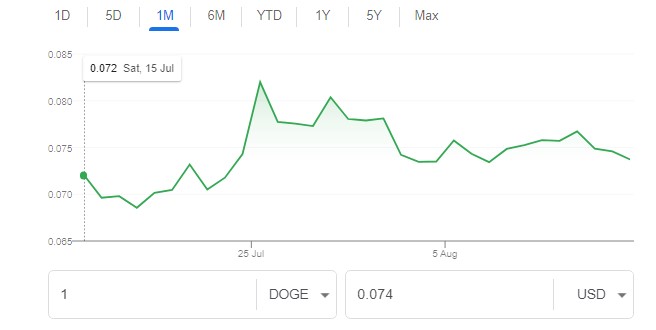
Dogecoin (DOGE) has gone past the $0.075 mark in the trading results of the last two days to peak at $0.077. The sideways movement in market price for Dogecoin (DOGE has been the norm in recent days for the meme coin. A whale sold off about $5 million worth of Dogecoin on 10th August 2023 and this could dampen the expectation of a price surge. 

Apart from the mixed feelings that theDogecoin (DOGE) sellof conveyed, there was a bright spot on 6th August 2023, when it was reported that Dogecoin could be used as a processor for Twitter payments. Elon Musk  has shown an abiding affinity for Dogecoin (DOGE). This hasn’t led to a price push as we head into a new week of trading.

Dogecoin (DOGE) has a supportive community and a price breakout at the $0.08 mark could open a new wave of demand that will benefit current Dogecoin (DOGE) holders. A price height of $0.10 for Dogecoin (DOGE) at the year-end  is realizable if the stated headwinds materialize.

Recommended: How Cryptocurrencies Finds Relevance in Islamic Banking

dYdX(DYDX) Rises By 5% in Seven Days

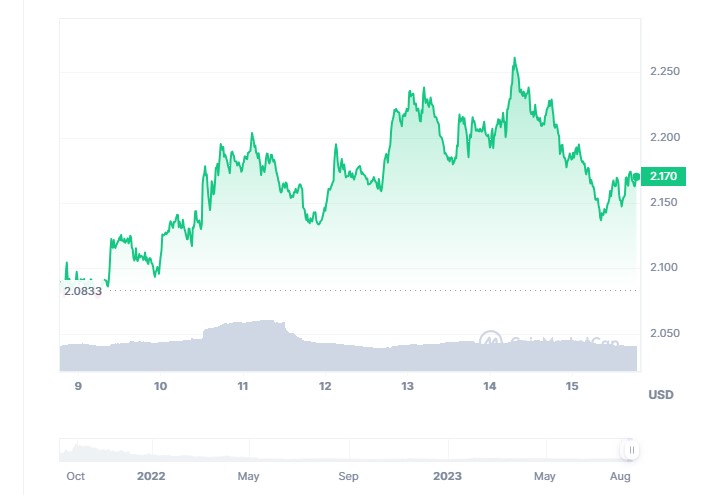
DYDX made the headlines when it rescheduled its Testnet launch for later in August 2023. The market price of DYDX has risen by 5.8% from $2.04 seven days ago to $2.20 in the last 24 hours with the new date appearing to be feasible.

When DYDX Testnet launch date was delayed on 3 August 2023, the token price plummeted to $1,92 from $2.02. The sentiments that a delay could mean something was wrong somewhere was evident with the price plunge. In the next couple of days, the market price of dYdX picked up again to hit the $2.08 mark as confidence in the token picked up again.

Ardent traders of DYDX are hoping that the expected launch will be successful so that its market price can appreciate. The promise of new features and markets for DYDX has given some crypto enthusiasts something to look out for in anticipating profit-taking.

Whether  DYDX will cross the  $2.10 mark after the testnet launch is a possibility that analysts expect in the coming weeks.

Looking Ahead

In the months to come, dYdX has the potential to make great progress stemming from its new testnet that could go full bloom as a blockchain. Dogecoin on the other hand, stands a chance to make progress as Twitter monetizes its platform, and Dogecoin will play a major role as a payment processor.

Must-Read: The Idea Behind Cryptocurrency Mining and the Current Trends That You Need to Know

HOW RIPPLE XRP BOUNCED BACK FROM SECURITIES AND EXCHANGE COMMISSION’S LITIGATION IN AUGUST 2023

XRP won the court case against it by SEC. So far, the market price of XRP has seen a 80 percent leap that has brought resounding cheers to the market.

Photo by Towfiqu barbhuiya on Pexels.com

The SEC VS Ripple XRP Court Case

XRP recently recorded a favorable court ruling against the U.S. Securities and Exchange Commission (SEC). This decision was highly anticipated by many in the crypto community as it could have major implications for how digital assets are regulated in America going forward.

The issue at stake is whether XRP should be classified as a security under U.S law, which would require it to comply with federal securities regulations like other stocks and bonds do.

The SEC harped on the sales of billions of tokens to investors over several years by XRP to investors, thereby contravening the securities’ act. On its part Ripple maintained that since XRP has been used primarily for payments rather than investments then it should not be subject to SEC regulation as a security but instead treated more like currency or commodities such as gold and oil.

Ultimately Judge Sarah Netburn ruled in favor of Ripple stating that “there is no reason why [XRPs] economic reality must align with [the SECs] definition” thus allowing them some breathing room from strict regulatory oversight while still being able to operate legally within US borders.

While this ruling may seem small now, it could potentially set precedent for future cases involving cryptocurrencies across America if similar decisions are made down the line by other courts when faced with similar questions regarding asset classification.

Who is Judge Netburn?

Judge Sarah Netburn is a United States District Judge who was assigned to preside over the ongoing Securities and Exchange Commission (SEC) vs Ripple (XRP) case. Her role is to oversee the legal proceedings and make a final judgment based on the evidence presented by both parties.

SEC’s Case Against Ripple XRP

In the ongoing XRP case, the SEC (U.S. Securities and Exchange Commission) has accused Ripple, the company behind XRP, of conducting an unregistered securities offering worth $1.3 billion. The SEC alleges that Ripple’s sale of XRP tokens constitutes an investment contract and therefore should have been registered with the agency.

The SEC also claims that Ripple’s executives, including CEO Brad Garlinghouse and co-founder Chris Larsen, personally profited from the sale of XRP. Ripple has denied the allegations and argues that XRP is a currency rather than a security. The case is currently being heard in court, with Judge Sarah Netburn presiding over the proceedings.

How Ripple Defended its Stance

Ripple’s defense in the XRP case is that XRP is not a security but rather a currency or digital asset. Ripple argues that XRP is not an investment contract and therefore not subject to the same regulations as securities.

Ripple also claims that the SEC did not provide clear guidance on the status of XRP as a security for many years, leading to confusion in the market. Additionally, Ripple claims that the SEC’s actions have caused harm to XRP holders and the market. The trial Judge has ruled in favor of XRP and SEC has now moved on to appeal the case.

Recommended: The Price Volatility of Bitcoin and Cryptocurrencies Explained

Ripple XRP Sees a new Price Rally

XRP price leapt by 80 percent in the wake of the recent court case against it by SEC. With the case outcome considered to be favorable by the market, the crypto looks set for a new high. Whether this will be sustained, is a different ballgame altogether.  

Factors that can drive a rice rally includes the following:

Market Sentiment: Positive news, developments, partnerships, or regulatory clarity can significantly influence market sentiment, leading to increased demand for a cryptocurrency.

Adoption and Use Cases: Increased adoption and real-world use cases can boost the value of a cryptocurrency. If XRP gains traction as a preferred means of cross-border payments and other financial services, its price could rise.

Technological Developments: Advances in the technology behind a cryptocurrency can enhance its utility and security, attracting more investors and users.

Market Speculation: Speculative trading can lead to rapid price increases. Traders looking to profit from short-term price movements can create volatility in the market.

Macroeconomic Factors: Economic events, such as inflation concerns, currency devaluation, or geopolitical tensions, can drive investors toward cryptocurrencies as alternative assets.

Impact of Price Rallies

The effect of a price rally on the prospects of a cryptocurrency like XRP depends on various factors:

Positive Effects: A price rally can attract more attention, new investors, and increased adoption. It can also validate the utility of the cryptocurrency’s technology and use cases.

Negative Effects: Rapid price increases can also lead to concerns about market manipulation, excessive speculation, and a potential bubble. If the rally is not supported by fundamental improvements in technology and adoption, it could lead to a sharp price correction.

Regulatory Impact: Some price rallies might prompt regulatory scrutiny, especially if the rally appears disconnected from the actual utility of the cryptocurrency. Regulatory actions could impact the cryptocurrency’s prospects.

Long-Term Viability: For sustainable growth, a cryptocurrency’s price should ideally be supported by its real-world use cases, technological advancements, and a strong community. Price volatility without underlying substance could hinder long-term prospects.

TAKEWAYS

Keep in mind that the cryptocurrency market is highly speculative and can be influenced by a wide range of factors. To understand the specific factors leading the new XRP price rally and its potential implications, it’s best to refer to the most current and credible sources of information, as a series of events are still unfolding.

Read Also: How Flare’s Smart Contract Possibilities is Giving XRP A New Marketplace Leap