The Golem Project: What is it, and why does it matter?

Golem blokchchain provides a better insight into cross-chain capabilities that can truly make a difference in our world.

The Golem Project Homepage

From the beginning, one of the main features of blockchain technology has been the capacity to use both the idle and active processing power of a blockchain’s nodes to create distributed supercomputers.

This power, which would make the likes of folding@home or seti@home seem primitive, has sadly not been fully used so far – with the vast majority of a blockchain’s processing power sadly going to meaningless “mining” activities that provide no service whatsoever other than wasted power and processing.

Over the last couple of years, however, several new projects have tried to take advantage of this, turning what used to be “mining” duties into essentially loaning your PC’s computing power in exchange for crypto. Golem is, as you probably expected, one of these.

Must-Read: How Flare’s Smart Contract Possibilities is Giving XRP A New Marketplace Leap

How is it different from usual blockchains?

Most blockchains in today’s world award cryptocurrencies in exchange for processing power. However, the processing power in most blockchains goes for transaction authentication and, for older blockchains, mining.

The mining process is perhaps the most famous blockchain-related activity – it’s been repeatedly hailed as the way many crypto millionaires became millionaires to begin with. While the profitability of this task these days can be argued against, it’s still a relatively common activity, and one that uses huge amounts of processing power.

One would think this processing power would be used for huge, difficult tasks the blockchain requires. And one would be partly right – it is indeed used for huge, difficult tasks, that aren’t at all necessary. Mining basically consists of brute-forcing a complex mathematical problem in order to determine who’ll get the crypto. Said problem isn’t at all relevant, and essentially all that processing power goes to waste.

The actual amount of processing power spent in order to authenticate transactions is, in fact, very small. Small enough that most current-day blockchains have migrated to a staking model – which doesn’t require large amounts of processing power and you can technically do from your phone.

So Golem sells processing power… How? And to whom?

Let’s start with the basics: Yes, they sell processing power. Your processing power. And they pay you for it with their own cryptocurrency.

The “how” part is much more complex, but it can be resumed in a phrase by saying the Golem blockchain is a massive, distributed supercomputer made up of every single node connected to it. Yes, that can be difficult to understand, but no, there aren’t many simpler ways of saying it.

Let’s think of every leaf from a tree as a computer. Your computer is just a leaf, one that’s potent enough for what you need. The Golem blockchain? The Golem blockchain is the tree connecting all the leaves. In fact, the Golem blockchain could be even bigger – an orchard.

The whole point is, Golem would connect all the leaves in a tree (ie, the computers of those lending their power) so that they all together can work on a much larger task.
Photo by Roger Brown on Pexels.com

As for who is the customer? Well, not you or I. That’s for sure.

Most people obviously don’t need a supercomputer. We have more than enough with our pcs, or laptops, or phones. However, there are tasks that go well beyond what any single computer can do.

Large simulation tasks, for example, are extremely tasking and can eat up all available resources even in workstations specially built for it. The same goes for large rendering tasks for architecture or video projects. Some security systems can even be quite processing hungry – plus being distributed can help in those tasks.

The companies working in those areas are the customers. Maybe some projects are too big and they need a boost. Maybe they want to get something done faster than their hardware would allow. Maybe they’re just getting started, and hiring processing power is cheaper than buying a workstation, at least while the company finds its footing.

It doesn’t matter. The point is: There are customers out there who would love to pay for your processing power. Golem makes that a possibility.

Recommended: How Cryptocurrency Investment Works With Grayscale Trust

How is Golem different from other blockchains that trade processing power?


There aren’t that many blockchains trading in processing power to begin with. Even then, the most common proposals for processing power trades using blockchain relate to inter-blockchain transactions and allowing users to exchange their cryptocurrency for another one without having to go through a middleman.

Other than that, most companies selling processing power do so on their own, without blockchains, and without getting you involved. In that regard, Golem is unique.

Will Golem change the blockchain world?

That’s still to be seen. It could be a great addition to the blockchain world – in fact, soon enough we might even see webservices that rely entirely, or almost entirely, on the Golem network, leading us closer to distributed internet.

The project might also fizzle, as many do.

The important part with Golem is that the project offers something new and not niche. Processing power is a commodity these days many companies need. There’s a client base out there for it. Making money out of our processing power is also something people like, as the millions of people mining cryptocurrencies show.

In Golem’s market, then, there’s both offer and demand. Golem is just trying to connect them together. This project is not creating a new market, just facilitating an existing one. Since the market is already there, then, Golem’s chances of success are quite good.
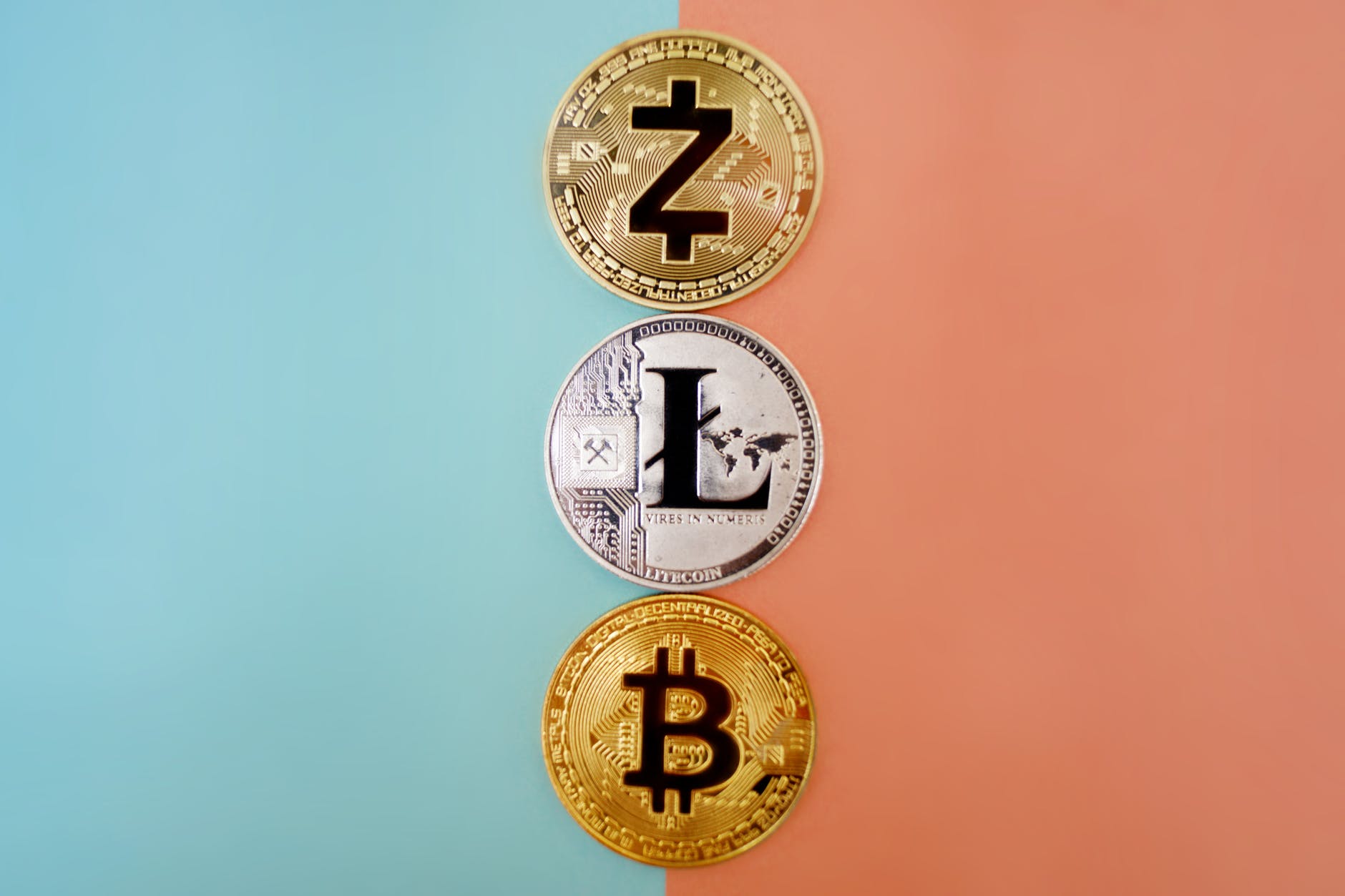

Read Also: In Rideshare Disruption, Here Is How Cryptocurrency Payments Can Boost Local Economies And Make The Greater Good Possible

How Flare’s Smart Contract Possibilities is Giving XRP A New Marketplace Leap

Flare Network is bringing smart contract functionality to the Ripple ecosystem. The knock-on effect is real as XRP takes a price leap.

Photo by Marta Branco on Pexels.com

For quite some time now, Ripple, a blockchain-based payment protocol, has been seeking out means to improve the applications and adoption of XRP. Xpring, the investment arm and technology incubator of Ripple, announced its strategic investment in Flare Networks – a smart-contract-based platform.

The Ripple-Flare collaboration promises to add utility, value and new applications for XRP and its connected components.Let’s delve deeper into how the integration of smart contracts will activate Ripple’s market sprint.

The flare network connection

What is the Flare Network?

Flare is an avant-garde blockchain network that feeds off a similar consensus as Stellar and Ripple – the Federated Byzantine Agreement (FBA) protocol. This consensus protocol adopted by the Flare Network has flexible trust and completely ordered, making the possibility of an attack on the order of transactions almost inexistent.

Some of the features of the Flare Network include:

It is completely permissionless, open and Turing-complete.

The overall safety of the network is not dependent on economic incentives.

Owning a token on the network does not grant power

An algorithmic stablecoin that’s generated by burning Ripple (XRP) in parts

Flare adopts XRP’s address schemes and encryption protocols so that both networks can utilize a single key while providing XRP users with a seamless experience

Flare is a useful tool for entrepreneurs and businesses because of the price stability of its token and low volatility. Regardless of the size of your business, even when it grows large, the safety of the Flare Network remains uncompromised. Importantly, this network provides easy and alternative ways for XRP users to explore interesting and complex things.

Also Read: How To Trade Leveraged Tokens on Binance Exchange

How Flare Will Work with Ripple

Late 2019, Flare Network reported its investment and partnership deal with Xpring. A moved poised at bringing partners and an avalanche of resources to expand and enhance the XRP, Xpring and Flare ecosystems. The process entails the integration of the ETH Virtual Machine to allow private and public networks to take maximum advantage of Turing-complete smart contract.

According to the Xpring team, Flare will leverage on Ripple’s encryption system and address to offer Ripple users seamless interfacing with smart contracts. This mechanism is targeted at ensuring that ripple users can explore a variety of use cases for the XPR ledger, such as the development of apps and settlement of contracts

At the launch of the network, a protocol built on Flare, FXRP, will safely activate the trustless distribution, redemption and usage of Ripple (XRP) on Flare. XRP will be trustlessly and safely converted to FXRP and secured by Spark, Flare’s token. Flare will facilitate the interoperability of XRP and other networks through protocols such as Polkadot and Cosmos or with ETH via a structured bridge protocol.

Must-Read: The Rise and Rise of DeFi, And All You Need To Know About The 3 Leading Yield Farming Global Platforms

What does this even mean? Basically, Flare can be utilized as a trustless and defined bridge between XRP and other networks, and more significantly, it can serve as XRP’s smart contract platform.

Furthermore, the Flare Protocol (FXRP) methodology could also be adopted by other non-flare tokens, as the means to determine suitable tokens is embedded into the system and its governance network.

Mechanism of the Flare Network and Ripple

FXRP grants holders of XRP (originators) the ability to transfer their asset to certain XRP Ledger (XPRL) addresses dubbed “agents.” In turn, originators get FXRP on a 1:1 conversion basis with XRP, of course, secured with Flare’s Spark. It is also possible for an FXRP holder (redeemers in this case) to redeem the equivalent worth of FXRP back in XRP.

All they need do is, transfer the FXRP back to Flare, and the agents will send the equivalent amount of XRP to the XPRL address of the redeemer; all facilitated by smart contracts. If for one reason or the other, the agent is unable to quickly see the redemption process through, the redeemer receives the equivalent value of FXRP in XRP and also compensation to cover transaction cost on the next XRP trade. Let’s take a typical illustration of the Flare-Ripple workflow.

“Say, Jake, for instance, wants to convert his XRP to FXRP on Flare; Jake is the originator. As already established, he’ll incur a transaction fee that’s a certain percentage of XRP. Jake specifies the volume to be converted and the FXRP system suggests the available agent (say Peter) on Flare and records the originator’s address on the XPRL.

If there exists an adequate volume of FXRP in the system, an escrow-like protocol locks the required volume of FXRP for some time, pending the authentication of Jake’s transaction. This means that James doesn’t have to contact Peter or even trust him.

Consequently, Peter’s address is generated by a set of algorithmic instructions and forwarded to Jake to fulfil his part of the transaction by transferring XRP to the XRPL, inclusive of transaction fees. The Flare system then mints FXRP and sends to Jake through his nominated address. If by any chance, the system does not have the desired volume FXRP, Jake is refunded his escrowed asset.”

The innovation in the mix

Ripple is in a league of its own for many reasons. It’s very unlike several other blockchain projects that just want to live up to BTC’s standards, without any particular use case or aim. Since its blowout in 2012, has always had the goal of using blockchain, XRP and the internet for cheap, cheap and reliable cross-border transfer of value.

In other words, Ripple hopes for banks and financial institutions to adopt its tech, but it’s been quite the opposite. Mainstream adoption has been a long-standing issue and Ripple resolved to delve into other use cases that will ignite the interest of the world. This concern is a contributing factor to the innovative collaboration with the Flare Network.

The ideology of the Flare-XRP collaboration was birthed to increase the use cases of the XPR token, promote platform interoperability and the utilization of XPRL. while also receiving massive representation in decentralized finance. It was only reasonable to have looked on to Flare Network, a new smart contracts platform for integration, although some enthusiasts disagree with Ripple’s move.

Conclusion

When you take a look at platforms that utilize the Proof-of-Work and Proof-of-Stake protocols, the security of such networks is mostly dictated by incentive given to nodes. In this case, Flare boasts an innovative security architecture that doesn’t survive on economic incentives. Also, the Flare-XRP collaboration has largely improved Ripple’s market performance and created avenues for more use cases.

Recommended: 2020 Has Been The Year of DeFi. Here’s How It Has Given Cryptocurrencies A New Lease of Life

How To Trade Leveraged Tokens on Binance Exchange

Binance exchange provides a remarkable experience with leveraged tokens. Here are the vital insights.

Photo by Giallo on Pexels.com

Margin trading is a risky business where profit margins are paper-thin. That’s a fact. While hundreds of thousands of people have dabbled into the market, be it via forex or cryptocurrencies, the truth still remains: Making a living out of regular margin trading can be extremely difficult, if not impossible. Moreover, a single mistake can completely destroy your position, sending you back weeks or months.

Due to the extremely thin profit margins, leverage trading is also a common practice: In this model, a user receives an amount of money for trading that’s several times higher (Usually 5x or 10x, though in some cases much larger) than the amount of money they have. They are then allowed to trade with that money, with the caveat that if they lose an amount of money equal to their initial amount (their leverage) they must immediately liquidate their position and pay back the loan.

Leveraged tokens are an attempt to help with this complicated process. Instead of having to ask for leverage and then invest using it, you just buy leveraged tokens. Leveraged tokens have their value semi-pegged to that of another crypto token… except their value changes at 2-3x the rate.

In other words, if you want to try leverage trading, using leveraged tokens make the process much easier by getting rid of the middleman and allowing you to multiply your gains (or losses) automatically.

How do Leveraged Tokens on Binance work?

First of all, not every token that’s traded on Binance works as a leveraged token. Not all tokens have a leveraged equivalent, either. As with other Binance programs, like pegged tokens, leveraged tokens are only offered for a handful of cryptocurrencies – naturally, the ones that see leverage trading more often, and thus where there’s a market.

An important thing to note is that a leveraged token isn’t equivalent to the actual token. A Binance Leveraged Bitcoin, for example, can’t be used to make Bitcoin purchases. They’re essentially a separate token, whose value is pegged to that of Bitcoin.

Read Also: How You Can Make Money On The 3 Leading Global DeFi Pools

Knowing that, the process is simple: You can buy or trade leveraged tokens on Binance in almost the same way you can buy or trade the actual tokens, with the only difference being that the leveraged token’s daily change will be steeper. For example, if the price of a Bitcoin goes up by $1,000 during a trading session, the price of a Bitcoin-based BLVT will go up by $2,000-$3,000.

Sounds like easy money… Where’s the catch?

There isn’t much of a catch in the sense that there’s no small print that will make you lose your money. However, one thing you’ll have to know is that leveraged trading tokens are rebalance every day to make sure the relative value to the base token holds.

What does this mean? Well, it’s simple. Say, a BTC leveraged token (we’ll call it BTCL) releases today, with the initial exchange being 1BCT = 1BTCL. At the end of the first day, BTC gains 10% of its value. Since BTCL was set to 3x leverage, that means that at the end of that day 1.3BTC = 1BTCL.

That works for a single day. However, as more days go on, problems start arising: First, because maintaining the same ratio over many trading sessions can get difficult – what started as a 3x leverage can easily balloon into much higher values after successive positive sessions, for example. But more importantly, because the exchange needs to have liquidity so they can perform token payouts.

This directly affects the value of the token, as one would expect. In many cases, this will make earnings somewhat smaller over a longer period than the actual accumulative. It can also make losses smaller over a longer period in the same way. Due to how the market and rebalancing works, it can also create losses even when the original token’s price variation evens out to 0% (that is, if price goes up, then down, over two separate sessions.)

Rebalancing is important to maintain liquidity and keep the reference existing, but you need to look into how your exchange does it to know exactly what to expect. For more information, see the “Volatility decay” section in Binance’s own website.

Alright. What else is there? Why should I trade on Binance and not elsewhere?

Your choice of trading company is entirely yours, and people tend to have vastly different preferences depending on their goals. However, Binance does offer a few things to their leverage traders that might sway your opinion:

Tiny trading fees. Binance leveraged tokens exist in Binance’s own blockchain – and, as usual for Binance operations, its own intra-blockchain trades have much smaller fees than extra-blockchain ones. Obtaining Binance Leveraged Tokens will result in a much lower fee than obtaining the tokens themselves, on top of the extra earnings.

Constant leverage rebalance. While other exchanges only rebalance the token value, Binance also changes the leverage for each trading session depending on how the token has been faring. Generally, this means the leverage will flow between 20 and 30% depending on the current market, but it can also go higher or lower at times.

High Market Liquidity. Binance is one of the crypto exchanges with the highest liquidity in the world – and thus they have enough crypto in storage to weather almost any market swings. This is important when the market is particularly volatile, since smaller exchanges with lower liquidity could run into issues if prices vary widely in an unexpected manner. For Binance, this shouldn’t be a problem.

Conclusion

The market depth of cryptocurrencies is improving and there are more ways to trade and explore digital currencies.

With Binance LVT, you can take more positions and reap rewards. As exciting as the crypto market might be, never forget that it is high risk, and only invest what you can lose and still be able to get a good night rest.

Recommended: How To Make Money In A Crypto Bull Run And The Vital Signs You Must Know

How Celsius Has Outperformed Bitcoin In 2020

The CEO of Celsius recently reported that the digital asset has outperformed Bitcoin so far this year up to tune of 2,000 percent. Here are the facts.

Photo by David McBee on Pexels.com

Crypto lending is fast becoming a trend in the crypto space with diverse platforms taking off in 2020. With already over $8 billion in value, the crypto lending market is expected to experience continual and somewhat steady growth.

The idea is to replace greedy intermediaries while also ensuring that users substantially earn passive income per week on their crypto holdings, especially in comparison to interest rates of fiat-based savings scheme. This birthed the slogan “Banking is an essential need of the world, but banks in itself are not needed.”

Read Also: How Cryptocurrency Investment Works With Grayscale Trust

According to expert, crypto loans and Bitcoin are championing the surge towards the massive adoption of cryptos due to the simplicity of investment. Several crypto start-ups such as Celsius are spearheading novel monetary policies in the digital asset space, with over $8.2 billion in processed loans.

Celsius Network (CEL) – A Quick Overview

Celsius is a democratized cryptocurrency savings platform that operates on the blockchain and offers lending and borrowing services “just like the big banks do with traditional assets,” but in a more structured manner, without holding on to all of the generated profits.  The entirety of the Celsius network is based on its CEL token, which can be used to take loans, send money P2P, get interests or even HODL if you like.

The Celsius network supports a wide range of cryptos, including Bitcoin (BTC), Ethereum (ETH), Litecoin (LTC) and other altcoins like Dash (DASH), Bitcoin Gold (BTG), EOS and Zcash (ZEC). In February 2020, the company began offering its liquidity providers compounding interest on cryptos deposited in its digital wallet.

Despite the instability and economic uncertainty induced by the COVID-19 pandemic, Alex Masinsky, the network’s CEO, has said that the use case of the digital asset has experienced massive growth and has continued so.

Celsius Performance Spurred by Decentralized Finance Protocols

Since the introduction of the Celsius token – CEL – in 2018, the crypto has experienced substantial soar in price and has leveraged on decentralized finance (DeFi) protocols to expand its userbase, most notably in the past few months in 2020.

The ripple effect of the DeFi integration has now seen CEL shoot more than 9 times its price in January 2020 and has continued on this path with a surge of over 1700% since the crypto market flash crash in March.

Currently, CEL is valued at over $1.35 per unit and hold its place among the top 50 crypto assets ranking 42 with a market cap of over $330 million, which is a 227% increase from what was recorded at the start of September 2020 (just over $100 million). 

Bitcoin Performance in 2020 So Far..

Photo by Pixabay on Pexels.com

The crypto flash crash of 2020Q1 spared no digital asset, not even Bitcoin (BTC). During the start of the year, Bitcoin took off at about $7,200, with a market cap of over $130 billion.

By the end of March, the market value of the world’s top-ranking digital asset had dropped to about $6,400 and a market cap of about $117.8 billion. The 11% drop in price and about 9.4% drop in market cap is attributable to the Coronavirus pandemic.

At the moment, BTC is valued at over $13,500 per unit, with a market cap of over $250 billion, and hold its place as world’s no. 1 crypto asset. Doing the mathematics, this leaves BTC at about 1.9x its price at the start of the year, and a surge of over 110% since the flash crash of March 2020. At the start of September 2020, BTC was valued at over $11,600, when juxtaposed with its current price, that’s about a 16% increase in market price.

What Is Driving the Performance of the Celsius Network?

The impressive growth experienced by the Celsius Network in the past few months of 2020 is attributable to the company’s policies and product offerings. Unlike banks which offer meagre interest rates to its users, Celsius distributes 80% of its rake-ins. 

Another important performance driver is the security architecture adopted by the company regarding its wallet. Celsius wallet is provided by PrimeTrust and FireBlocks, both with a crypto-insurance scheme that covers insider theft, external hacking and loss of private keys.

Who wouldn’t large interest rates and a multi-secured crypto lending platform, even in the middle of a pandemic! Thus far, it is reflected in the magic of DeFi

Final Thoughts

Although it is common knowledge that BTC is the world’s most accepted and recognized crypto asset, but it has been outclassed in terms of performance by several other assets such as the Celsius (CEL) Network. Based on the prices and market cap changes observed within the period of comparison, Celsius has clearly outperformed BTC by over 1000% in previous months, which is a remarkable achievement.

Recommended: Leading Reward Tokens That Rule The Crypto Space In 2020

How Cryptocurrency Investment Works With Grayscale Trust

Grayscale Trust made the headlines recently when it emerged that the firm was selling its ETH investment higher than the market price of retail ETH. Yes, it was for a good reason. Its trust has a ROI that beats the market. Here are more insights.

Photo by Worldspectrum on Pexels.com

How to invest in Grayscale Trust Crypto

The Grayscale Crypto Trust is the world’s largest and fastest-growing crypto and digital asset investment product, with $7.5 billion in managed assets as at the end of September 2020.

Grayscale offers investment exposures and well-researched market insights into developing crypto assets that enthusiasts and individual investors can purchase and sell off on their brokerage account.

The Grayscale Crypto trust portfolio offers several crypto products, with its Bitcoin Trust being the largest selected investment by far, accompanied by its Ethereum Trust. Other products include Litecoin Trust, Bitcoin Cash (BCH) Trust, Stellar Lumens Trust, ZCash Trust, Ethereum Classic Trust, Horizen Trust, XRP Trust, and Digital Large Cap Fund (holds multiple digital assets in one portfolio).

What does Grayscale Trust Crypto offer?

It is a portfolio of cryptos that provides alternate means of investment to specific investors, intending to secure their investments from market uncertainties, while precipitating positive yields regardless of market bias.

To better understand this subject, let’s take a quick look at Grayscale’s Investment Services. These services are categorized into Single-Asset and Diversified Products.

Single-Asset Grayscale Products

  1. Grayscale BTC Trust: This is a flagship product, and it’s symbolized as GBTC. It is exclusively invested in Bitcoin (BTC), and it lets investors gain insight into the price mechanics of BTC while eliminating the challenges associated with directly purchasing, storing and securing BTC.  
  2. Grayscale BCH Trust: Offers an alternative and effective approach for E-cash.
  3. Grayscale ETH Trust: Decentralized platform powered by smart contracts.
  4. Grayscale ETH Classic Trust: Flexible Currency for IOTs.
  5. Grayscale Horizen Trust: This product is a private and secure platform for media, messages and money.
  6. Grayscale Litecoin Trust: Crypto for quick low-cost payments.
  7. Grayscale Stellar Lumens Trust: This product connects people, banks and payment systems.
  8. Grayscale XRP Trust: Crypto for efficient worldwide enterprise payments.
  9. Grayscale Zcash Trust: A currency for the new age with enhanced privacy protocols.

Read Also: Leading Reward Tokens That Rule The Crypto Space In 2020

Diversified Products

Grayscale Digital Large Cap Fund: Open-ended and private investment vehicle that offers diversified insight and exposure to the leading digital assets via a cap-weighted market portfolio.

All investment products constitute about 80% of the total digital asset market cap, and they offer a holistic business solution for enthusiasts. Now, why should you invest in Grayscale Investment Vehicles?

Grayscale Investment Products – Why Invest!

Here are some of the benefits of investing in Grayscale’s Investment Products:

Titled Securities: Grayscale Trust Crypto share are titled securities, and are more or less like the common bonds and stock owned by investors. Titled securities are easily transferrable to beneficiaries and are well known by tax and financial advisors.

IRA-Eligible: Grayscale Trust Crypto Shares can be held certain 401ks, IRAs, and other investment and brokerage accounts.

Inherent Security and Storage systems: The underlying assets of each investment product is safeguarded by a robust security protocol that includes cold storage, 2FA, encrypted key shards, usernames and passwords.

Audited Financials: The financial statements of each investment product is audited yearly by Friedman LLP.

Stress-free Investment Model: Individuals and investors seeking to trade cryptos and other digital assets on their own will often have to transact through unregulated or insecure intermediates and unfamiliar exchanges. This puts the digital assets at additional risk as their private keys become susceptible to theft, thereby exposing an investor to total or partial loss.

With Grayscale Trust Crypto, investors do not have to worry about buying, storing or transferring digital assets, instead, Grayscale and each investment product service provider carries the burden without compromising investor’s exposure to the performance of assets. 

Must-Read: How Yield Farming Works On Uniswap

Seasoned Manager & Sponsor

Having considered why to subscribe to Grayscale’s investment vehicles, let’s delve into the “How”.

How to invest in Grayscale Trust Crypto

First, Grayscale Trust Crypto investment placements are only accessible by accredited and verified investors. In this case, an accredited investor will earn over $200K per year or $300K with spousal equivalents, possess a Series 7, 65 or 82 professional certification, and have over $1M in net worth as a standalone investor or with spousal equivalent.

Likewise, entities could also be considered as accredited investors if they have over $5M in liquid assets, or if each member of the entities is an accredited investor.

Secondly, you can either invest in-kind or through cash subscriptions. The amount of investment contributions you can make will fall in the following range:

  1. Less the $25K
  2. Between $25K – $100K
  3. Between $100K – $1M
  4. Between $1M – $5M
  5. Between $5M – $15M
  6. $15M upwards

Conclusion

In summary, to subscribe to Grayscale Trust Crypto, you’ll have to complete an e-form that will require you to answer a few questions to verify your eligibility.

Recommended: How To Make Money In A Crypto Bull Run And The Vital Signs You Must Know