
Leading Reward Tokens That Rule The Crypto Space In 2020

Reward tokens are awarded in the crypto space by platforms as an incentive to patrons. Here is how the market leaders have fared so far in 2020

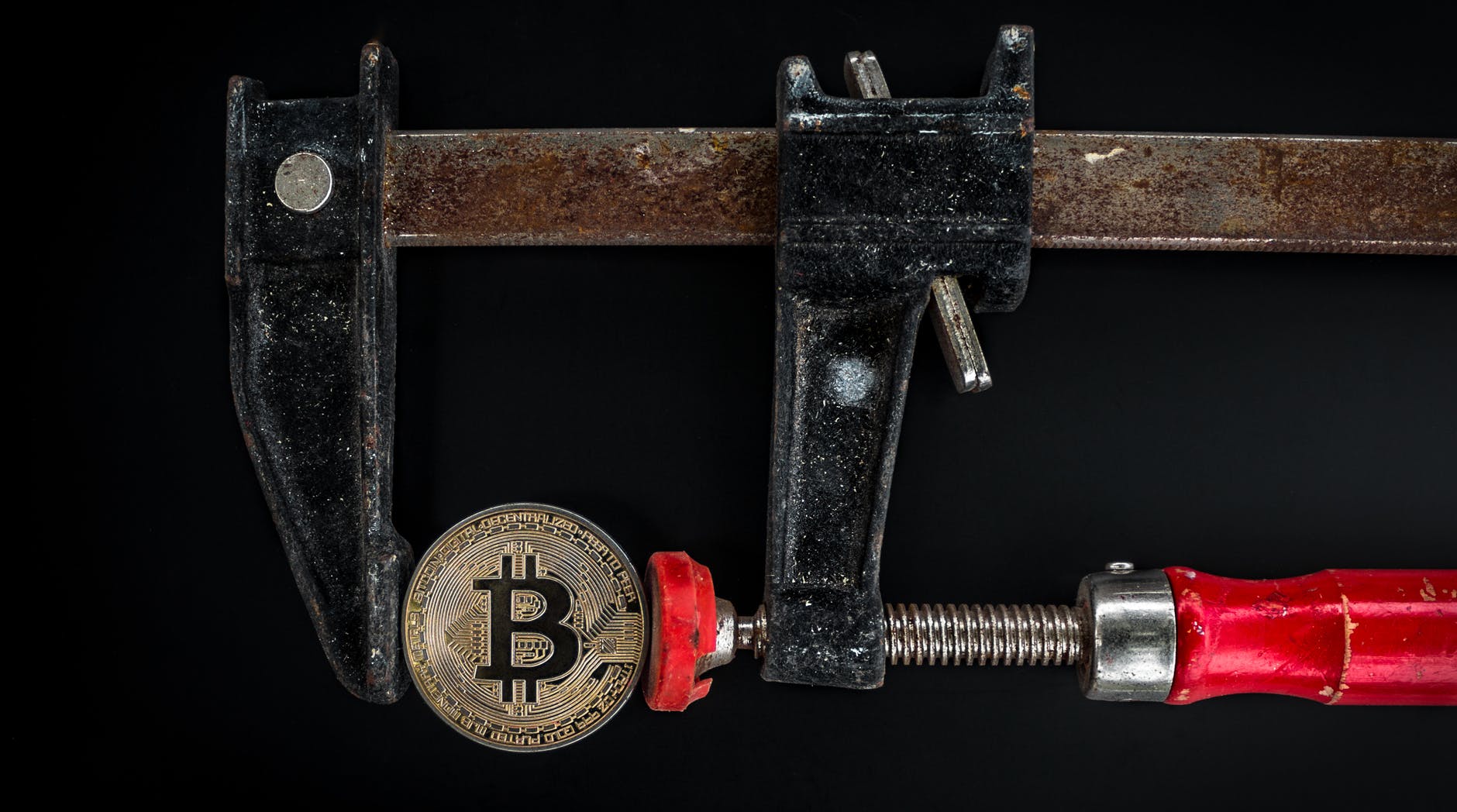
Photo by Moose Photos on Pexels.com

Crypto Reward Tokens: Which platforms perform best?

The advent of DeFi automated exchanges has brought new ways to invest and earn money with cryptocurrencies. Being already interested in investments of the sort, many crypto adopters have rushed to these – particularly those programs where money can be earned by just parking your crypto in a particular exchange and  in return, you earn a reward.

These tokens, often thought of as crypto reward tokens, are currently being advertised as great investments, since they’re low-risk propositions. They’re also helping to build the backbone of a global working blockchain economy that could eventually rival, or even replace, our current, banking-based economy.

You Must Read: The Attraction of Polkadot Blockchain And Here Is How It Is Making A Difference

How do they work?

As stated above, crypto reward tokens work in much the same way fixed-term deposits and savings accounts work with traditional banking. You give the bank (or in this case the DeFi exchange) your crypto tokens, it is to fund loans, and you get a percentage of the interest back after some time. There are no fixed terms, so your crypto isn’t stuck there – however, the longer it remains there, the higher the earnings you get in return.

That sounds good. Can I do this with any tokens?

Not with just any token, since you’ll have to use tokens that are supported by your platform of choice. While in most cases this means Ethereum-based tokens and stablecoins, some platforms do allow external tokens.

Still, there’s nothing keeping you from participating using one token and then converting the earnings to another, so if it’s plain earnings you’re looking for, then the lack of support for your token of choice shouldn’t be a problem.

Which ones are the best performers currently?

While there are dozens of possible offerings, each with its own pros and cons, and while it’s impossible for there to be a single one that’s best for everyone, we have reduced our list to three main tokens you should look out for and consider: Nexo, Celsius, and Crypto.com. The reasoning for our choice is as follows:

Read Also: The Rise and Rise of DeFi, And All You Need To Know About The 3 Leading Yield Farming Global Platforms

Core Features

The more features and services an exchange offers, the more likely it is to succeed in the long run. For reward tokens, this means more users, which leads to higher, more regular earnings.

Out of these three, Nexo is the one closest to a standard banking operation – as it is both licensed and regulated. It is backed by Deloitte, giving it the much-needed industry approval. Its main offering as a platform for customers is both savings accounts (that net you rewards) and a loaning platform. Interests are given daily and all transactions are insured. Nexo supports fiat currencies, and a few other exchanges do. same

Celsius offers much the same as Nexo, although it isn’t as tightly regulated. Celsius also offers their loans without requiring credit checks, which expands its audience at no risk to you, as all loans are insured. Interests from Celsius are awarded weekly.

Crypto .com also offers savings accounts and loans. However, their main draws are support for a large range of currencies and, more importantly, its crypto-backed debit cards that allow you to make purchases using your saved cryptocurrencies without having to go through exchanges.

Safety Features

Wherever money is handled, safety is paramount. While all three of these exchanges are considered safe, their features vary.

Nexo insures all wallets for up to $100m. Moreover, deposits are kept in cold storage under a third-party custodian, as per EU/UK regulations. Its security and management systems have been heavily audited and are considered top-of-the-line.

Celsius, like Nexo, has all wallets insured and kept in cold storage by a custodian – BitGo, the same one behind Nexo. Its mobile app offers two-step authentication. There’s no web app to speak of.

Unlike its other two competitors, Crypto.com doesn’t list third-party insurance or custodians among its features. However, the company and its holdings are insured by the FDIC and all user deposits are kept in cold storage.

Ease of Use

This is the point where there’s more variation among all three companies. Although ease of use and access should be paramount, it’s common for crypto-based companies to sometimes falter in this regard.

While Nexo offers both web presence and a mobile app, there’s no way to buy or exchange cryptocurrencies from it – with the app serving mostly as a tool to check what you already have there. It is generally simple to use and has support for different types of accounts, including business ones.

Celsius has no web presence whatsoever. It also only offers its highest interest rates if you choose to be paid using its own cryptocurrency, which can be problematic for some users.

Crypto.com, for all of its available services, has one flaw: Not all territories are supported. Most particularly, the crypto exchange and credit lines aren’t available for US residents (however, the crypto-backed debit cards are.)

Recent Performance

Since it’s not uncommon for exchanges to offer their best rates if you allow them to pay you using their native cryptocurrencies, the recent performance of said tokens is an important metric to consider.

Nexo’s performance on this regard has had its highs this year, and few lows. While the price of the NEXO token is only 30% higher than back in January, over the year it has seen peaks that have led it to over 100% ROI vs January. It also hasn’t seen huge lows – meaning it’s a relatively low risk currency.

Celsius is easily the biggest performer among these three. The CEL token has gone from $0.14 at the beginning of the year to an all-time high of $1.43 as of this writing – reporting a 1000% price increase. It’s hard to argue against a performance like this.

Crypto.com’s performance is close to that of Nexo, in that it’s had a few highs (none as high as Celsius’) and few lows. The MCO token did have a sharp price drop during March, but it recovered quickly in a bull run that had the token go from roughly $2.5 to $5.5 within a month. Its price as of this writing sits roughly 30% higher than in January.

Recommendation: Despite The Marketplace Twists,Thorns and Thistles, Here Is How USDT Has Weathered The Storm

The Attraction of Polkadot Blockchain And Here Is How It Is Making A Difference

Polkadot is making a difference in the blockchain landscape with its enhanced processes. Here are all the fine points to take note of.

harrisonglobalcapital Image

Polkadot and its parachains: All you need to know

Polkadot is one of those sudden, not too many unexpected developments that break into the blockchain scene. Back in September 2020, it gathered a lot of press after jumping into CoinMarketCap’s top 10 cryptocurrencies list by market capitalization, leading many to wonder if we were witnessing the next big thing.

All of this wondering was followed by puzzlement, as many people struggled to understand exactly what polkadot is, what a parachain is, and why it became so hugely popular – in other words, why is this particular new blockchain important?

Joining Blockchains Together

It has long been a goal in the blockchain community to attain blockchain interoperability – in other words, to allow blockchains to contact and interact with each other. This would make token exchanges much easier, by no longer needing an intermediary – if somebody wanted to exchange ETH to BTC, the blockchains themselves would perform the currency exchange.

There are other reasons to desire interoperability, though, and Polkadot aims for this too. While a blockchain supporting other, smaller blockchains in its system is nothing new (the Ethereum blockchain has done this for a long time,) allowing them to interact with each other in complex manners is still difficult. Polkadot, and its parachain services, hopes to allow for this.

Read Also: How Yield Farming Works On Uniswap

What is a Parachain?

Photo by Worldspectrum on Pexels.com

Parachain is the name the Polkadot network has given its set of blockchains running in parallel. This means exactly what it sounds like – Polkadot aims to become a blockchain of blockchains by the intelligent use of Parachains.

Parallel and Distributed programming is nothing new in the IT world – in fact, parallel programming is one of the reasons why computer CPUs like to show off having as many cores as possible. It allows computers to run several tasks at the same time, rather than having to wait in line.

A parallel blockchain is akin to, and much like a parallel CPU. Blockchains run operations of many types at the same time, often lumping them all together even when the consensus mechanisms that work for a type of operation might not work for another – for example, different operations might require heightened layers of security that come at a higher cost.

If all operations are lumped together, then they all have to be ran at this higher security, leading to an excess workload.

By running blockchains in parallel, Polkadot can create different rules to govern each of them, effectively tuning each blockchain for a specific task… and then joining them all together in a parachain, creating a single, large blockchain.

What about external blockchains?

Polkadot’s aspirations don’t stop there. Understanding that blockchain interoperability is a huge goal these days, one of Polkadot’s offerings is to allow the blockchain to interact with other blockchains, like Bitcoin or Ethereum. This would allow specialized processes running in said chains to be out-sourced to the Polkadot blockchain, where they might be easier to optimize.

There are other benefits to the parachains. In several occasions, existing blockchains have required changes to their structure that have, due to system limitations, led to forking the chain. This has most famously happened with both Bitcoin and Ethereum chains, but the problem has affected many more.

By operating via parachains, a blockchain can make changes to its own inner systems without ever needing a full fork – at most, just adding an extra chain to the system should fix most problems-as long as the contention is about approach and not governance structures.

How will this change the blockchain environment?

Polkadot and its parachains environments would be useless if they were limited to the main blockchain. Instead, Polkadot aims to compete directly with Ethereum by allowing users to create their own blockchains inside Polkadot, adding them to the parachain.

But there’s more. These blockchains would be parachains themselves, allowing them to run their own private, distributed processes. That way ,the main Polkadot blockchain would host blockchains that in turn could host their own blockchains to optimize their processes. This is a feature that didn’t exist so far in the Blockchain scene, and the main reason Polkadot rose to prominence so quickly.

What about the Polkadot token, the DOT?

The DOT token, in its base, works just like the tokens for most cryptocurrencies – it can be used for financial transactions and staking. There are two differences, however, that make it stand out:

First, DOT tokens are effectively stakes in the blockchain, and as such, those holding tokens have a say in the blockchain governance. Second, DOT tokens are set up to be the de-facto currency for interactions among parachains, and can also be used to create new parachains.

Need To See: What You Need to Know About Samsung Blockchain

Is Polkadot unique? Will it become the next big blockchain?

It’s hard to tell. Polkadot’s approach is certainly unique, and it could lead to great developments on the blockchain scene. Still, it’s too early to tell – and getting sustained attention can be difficult, even for revolutionary projects.

Moreover, there are other projects that could be competing with Polkadot for attention on the distributed blockchain front. Cosmos allows some, but not all, of Polkadot’s features, while Ethereum 2.0 is probably the largest threat. This is because, while Ethereum 2.0 won’t offer all features of Polkadot, it’s an upgrade to what is already the largest blockchain in the world – and thus, it might hinder adoption for a new one.

Must Read: Despite The Marketplace Twists,Thorns and Thistles, Here Is How USDT Has Weathered The Storm

How You Can Make Money On The 3 Leading Global DeFi Pools

DeFi liquidity pools are posting impressive ROI that will make any investor to salivate. Here are the leading pools to consider.

The 3-best performing DeFi Pools globally right now

Photo by Worldspectrum on Pexels.com

Before now, buyers of cryptocurrencies and stocks always had to wait for sellers to fix prices (order book business model), and until a consensus is reached, trading cannot proceed. Currently, DeFi pools through smart contracts and the Dapp ecosystem are challenging the inadequacies of traditional liquidity models and ripping out trade manipulations and market inconsistencies.

Consequently, exchanges could now operate smoothly independent of takers and bidders through a pool-based liquidity system. Liquidity is constantly maintained by pools and unprecedented swing in prices are reduced. The total value locked on all DeFi pools stands at about $10.9 billion with Uniswaps’s dominance at over 24%.

Hence, if you’re considering liquid market trading, here are the 3-best performing DeFi pools at the moment. However, this list is by no means exhaustive, hence, the DeFi pools covered in this post.

Must-Read: 2020 Has Been The Year of DeFi. Here’s How It Has Given Cryptocurrencies A New Lease of Life

Aave Liquidity Pool

During the year, Aave unveiled its new protocol – a shift from a blockchain-based P2P lending protocol to a pool-based system.  What does this mean?

Simply put, the Aave liquidity pool system is now a smart contract-based open financial market that allows users to either supply or borrow digital assets to initiate an autonomous, shared and open liquidity market. Lenders in the pool are incentivized through any or a combination of trading fees, platform tokens and variable interest rates.

Currently, the Aave protocol holds about $1.14 billion in total valve locked (TVL) in its pools, and it has come into view as one of the best performing DeFi lending pools globally. Every single asset available in the Aave pool has a distinct Loan-to-Value parameter that determines the collateral ratio.

This platform offers a rate switching protocol that enables borrowers to switch between variable and stable interest rates – something that comes in handy in a volatile DeFi market. Also, there’s the flash loans protocol that allows users to take unsecured without collateral. The undercollateralized loans are solely reliant on repayment timelines, and if timely repayments are not made, Aave reserves the ability to reverse the transactions.

Curve Pool on Yearn Finance

Curve is a decentralized Ethereum-based liquidity pool that offers low slippage and non-volatile stablecoin trading. The platform supports the swapping and trading of a variety of assets and stablecoins from sBTC, PAX, Y, Compound, sUSD, Ren and BUSD pools.

Curve does not have native tokens but is rumoured to be planning towards launching a CRV token. At the time of writing, Curve holds about $1.05 billion in total valve locked (TVL), and it is regarded as one of the best performing DeFi lending pools globally.

yEarn is an automated liquidity aggregator that offers yield farming strategy via several liquidity pools. The yEarn protocol moves liquidity between the best performing DeFi lending pools to offer the best returns to lenders.

Read Also: As The Crypto Spring Becomes Evident,Here Are The Top 3 DeFi Leaders In H2 2020

yEarn created Curve’s Y pool, a DeFi lending pool with a market cap of over $423 million, to maximize APY for liquidity providers. Curve pool on Yearn Finance consists of top-rated stablecoins such as DAI, USDC, USDT and TUSD. With yEarn, you can intuitively take advantage of several yield farming openings.

Simply said, when liquidity providers deposits DAI, they get yDAI and can go on to supply it to Curve. After supplying yDAI to Curve, users earn trading fees together with yield rewards.

WETH-AMPL  On Uniswap

Top of the ranking is Uniswap!

Uniswap is a completely decentralized Ethereum-based protocol that allows users to exchange Ethereum for any ERC20 token via liquidity pools, rather than order books. Uniswap does have native tokens but it also utilizes an Ethereum-based pool of tokens, basically liquidity pools, powered by smart contracts. Liquidity pairs on the Uniswap pool have a distinct ERC20 token.

Anyone can swap between any ERC20 token and Ethereum or instead, earn fees for supplying any volume of liquidity. At the moment, the total value locked on Uniswap is about $2.6 billion, and it’s widely regarded as the highest performing DeFi pool globally.

With Uniswap, users can remove or add liquidity, and also generate exchange pairs for any token in an entirely new pool, whenever they want. In other words, the Uniswap liquidity pool is completely open, and the market creator pegs the exchange rate. This rate shifts during the trading process due to the market maker mechanism adopted by Uniswap, thereby creating arbitrage opportunities and favouring more trades.

Just like the aforementioned liquidity pools, users deposit cryptos and they get a distinct Uniswap token in return. For example, when user deposit DAI, they get an equivalent Uniswap token. Uniswap comprises of several liquidity pools such as WETH-AMPL, LGO-WETH, yDAI, yTUSD, yUSDC, AD, yUSDT, and lots more.

Last Words

DeFi is in the in-thing right now on the scrypto map around the world. It will pay you to explore it further and join others as they make money.

Read Also: How Yield Farming Works On Uniswap

How Yield Farming Works On Uniswap

Providing your surplus cash for a fee in interest is a practice of old-time banking. Now, with crypto, you can get paid for depositing your tokens . This is how yield farming works.

Photo by Skitterphoto on Pexels.com

Yield Farming Tips On Uniswap

The problem with crypto trading, and how many steps and fees it can incur is one that many people have tried to tackle. Until recently, the Binance blockchain was the most successful solution on the market, since its use of pegged tokens allowed people to easily trade between select cryptocurrencies over and over without incurring huge blockchain fees.

For Ethereum and its plethora of tokens, however, there’s a new best service: Uniswap.

What is it?

Uniswap is a new, Ether-based, distributed currency exchange. Unlike centralized exchanges, that take customers’ buy and sell orders and offer prices based on them, Uniswap works without an order book, instead acting as a liquidity provider.

Your Must-Read: The Rise and Rise of DeFi, And All You Need To Know About The 3 Leading Yield Farming Global Platforms

How does it work?

Uniswap’s liquidity provider system works by allowing people who have tokens to “lend” them to the system to give it liquidity. Each time a customer buys a token from uniswap, they pay a small fee that is then distributed among all liquidity providers for that token – with larger providers obtaining a larger share.

In other words, Uniswap works in more or less the same way savings accounts in banks do. You can provide liquidity by handing in your crypto, and in return, you get a small amount of crypto, while your actual crypto might be used for other things (in this case, to sell to potential buyers.)

Unlike the practice with banks, Uniswap does have 100% liquidity, only not necessarily in the same tokens people have used to provide liquidity.

Prices in Uniswap are automatically calculated using a formula based on the current offer and demand. Sellers don’t get to decide how much to sell for, and buyers don’t get to place orders according to how much they want. They’re instead offered a price by the exchange.

How do I use it?

First things first: Uniswap is only compatible with Ethereum-based tokens using ETH and ERC-20. This means most tokens based in the Ethereum network will work, but exterior tokens can’t be traded unless there’s an equivalent, pegged token using ERC-20. This means, first of all, that Bitcoin can’t be traded on Uniswap, but Wrapped Bitcoin, which isan ERC token is traded.

As another important detail, Uniswap doesn’t allow for fiat exchanges. You can’t purchase tokens using USD, and you can’t sell tokens for USD. You can, however, use USD-tethered tokens in the Ethereum network.

Now onto how to use Uniswap: It depends on whether you plan to use it as a liquidity provider or as a buyer.

As a buyer

Buying from Uniswap is simple. Trades take place through the Uniswap website, and are done in much the same manner as other crypto exchanges: Search for your desired trading pair, look at price, click buy, proceed to make the payment, and then receive your crypto.

It’s exactly that simple, as long as uniswap has enough liquidity at the moment. If the system doesn’t have enough liquidity, then you need to wait until it does.

As a liquidity provider

Using the exchange as a liquidity provider is more complex.

The way Uniswap works, you don’t just provide liquidity in a single currency, but in a trading pair. This means you have to deposit an equal value of both currencies in the trading pair – for example if you’re providing liquidity in ETH/USDT, you’d have to deposit an amount of ETH… and an amount of USDT that is equal in value to that much ETH.

Once you make the deposit, the system will calculate how much of the current liquidity pool your deposit equals to, and keep it noted. It will also recalculate it each time anyone adds to or withdraws from it, making that percentage go higher or lower. You’ll be, at any time, allowed to withdraw that percentage from the pool.

The one small (but potentially large) drawback

Now here’s the thing – when you add to the pool, you do so in exchange for a small amount of money from fees. But there’s a drawback: the crypto you add to the pool will not appreciate in value as much as if you were HODLing it.

This is because currencies change in value often and said value changes are never uniform. So if you were to deposit, say, 1ETH and 100USDT (assuming an exchange rate of 1ETH=100USDT,) that value wouldn’t really hold for long. Perhaps by when you want to withdraw the value has tripled, and now 1ETH equals 300USDT.

This is a problem, because the system can’t give you the exact same number of tokens you gave it. Instead, the system will maintain the ETH/USDT pool, with both your deposit and that of others, balanced so there’s always an equivalent value of ETH and USDT in it. This means it will add and subtract both ETH and USDT to it to keep the balance.

This means that, if ETH tripled in price, you wouldn’t get to withdraw the 1ETH and 100USDT you put in (leading to a grand total of $400) but an amount somewhere in between. In this case, you’d own less than 1ETH, but more than 100USDT. The exact amount of each might vary depending on how the pool is handled, but you’ll always make a profit in this case – only a smaller one that if you had held onto your crypto.

The system works in both ways, however. If ETH were to lose value, the grand total of ETH+USDT you’d get to withdraw would be lower than what you put in, but larger than if you had held onto your crypto. In other words, both the risk and the reward are distributed between you and the exchange to ensure no value is lost.

Recommended: The Big Breakout of Uniswap, Justswap, Trustswap, and The Incredible ROI As DeFi Unfolds

Is this worth it? Or is Uniswap stealing from me?

It greatly depends. In both cases above (where ETH goes down and where ETH goes up) you’d also have received an extra amount of money from transaction fees over the time you were a liquidity provider. In some cases, this amount could be enough to offset the opportunity lost if ETH appreciated, and it will be a nice extra if it deprecates.

Uniswap isn’t there to necessarily make you money, although it will pay you for providing liquidity. It isn’t a replacement for crypto investments, but a different way to obtain a ROI while at the same time providing a service.

To make it clear, Uniswap makes money from fees – and thus it isn’t “taking” your earnings. Instead, while working with fluctuating prices, the system does its best to maintain a balance between trading pairs. The theoretical loss you incur isn’t Uniswap taking your money, nor is it losing money. It’s just the result of a balancing act.

Conclusion

Uniswap is still a relatively new system, and surely over time it will improve. It’s quite likely that we’ll get to see more exchanges adopt the model as the days gp by. Binance has already launched its swapping pool using its Smartchain, and other providers will do so as well.

The model behind Uniswap is likely to replace many of our current-day exchanges. Whether it is worth it for you to hop in now or not, however, is entirely up to you.

Read Also: How To Make Money In A Crypto Bull Run And The Vital Signs You Must Know

The Big Breakout of Uniswap, Justswap, Trustswap, and The Incredible ROI As DeFi Unfolds

DeFi is unfolding across the globe, and it has shown that crypto and blockchain seems to be bottomless. What can you do with ROI for DeFi projects hitting the roof?

Many people are still trying to come to grips with how the DeFi world works. To the uninitiated, it is the borderless outcome of decentralization that is yielding fruits. Blockchain has brought a new frontier to the global finance landscape, and now, the centralized banking regulators across the globe are scrambling to keep up.

Justswap, Binance Smartchain, Uniswap and Anyswap, are just a few of the major players in the unfolding world of token swap and the unfolding world of DeFi.

Enter Uniswap

Uniswap emerged as the first real proof the cryptocurrencies and blockchain are bottomless. After an amazing three year run of Bitcoin and thee altcoins, 2020 opened a new vista for investors to see first-hand, another side of the crypto revolution. Leveraged trading is an area of crypto finance that reports ROI like DeFi, but it is centralized and far more volatile.

Decentralized finance exemplified by Uniswap makes it possible for investors to access liquidity or trade the same for value when they trade against a smart contract -driven pool of assets. When an investor adds individual assets to the Unipool, they are able to earn a share of profits generated. Payouts are made possible using ether or tokens.

In simple terms, it is akin to bringing your funds to a bank, and you earn an interest for the funds deposited. And in addition, a share of the bank’s dividends. However, the reverse is also true: if the market faces a downturn, the ratio of deposited tokens to the number of requests for liquidity will be tilted, making net earnings to plummet.

Read Also: Are You Looking To Finance That Cryptocurrency Project ? Here Are The Leading IEO Options You Need To Know

In a scenario like this, the value of your pool deposits will also shrink as deposits outstrip requests within the pool. While such scenarios as above has occurred this year, they were short-lived spasms that soon gave way to positive earnings.

The Uniswap model is very much what obtains with other yield farming upstarts like Anyswap, Sushiswap and others. While there are bits of differences, they are all variants of the same thing. Liquidity pools might differ from one platform to another in terms of rates and charges. Essentially, it is important to say that there are no centralized order books like traditional exchanges.

What DeFi Platforms Trade In

Many DeFi platforms are based on the Ethereum protocol as a result of its ready-to-use smart contract functionality. Smart contracts automatically initiate and complete transactions between parties while accurately ensuring adherence to the terms of agreement.

In recent weeks, other cross platform DeFi projects have entered the fray. Tron ecosystem and the Binance Chain has also launched DeFi platforms that are resourced to seamlessly transact with Ethereum blockchain. Most tokens used are either ERC-20 based or are compliant with other recent ERCs like 223, 777 and 721.

Benefits of Decentralized Finance

What Defi has made possible for yield farmers can be itemized. There are several bright spots to the whole new world of DeFi.

Ease of transactions

Transaction ease stands out as a leading advantage here. No one has to commute or travel to a certain physical location to complete a transaction. With an internet service in place, you only need to navigate to the website, connect your ERC-20 or similar wallet, and start earning.

Seamless returns on investment

There are no bottlenecks to earning here. As the t fixed duration-pools mature, payouts are made to investors.  These payouts go directly to your wallet and whether it is midnight or noon day, you can access your wallet and swap for fiat or use the tokens as you wish.

You can also decide to remove your wallets from the pool and exit with no delays.  

Bureaucracy is eliminated

One of the leading features of the modern day is an increasing intolerance to bureaucracies. DeFi does this so well that you do not have to bother about moving from a table to the other to complete forms or authorization. Smart contracts have made life easier and dismantled bottlenecks on the pathway of productivity.

Must-Read : As The Crypto Spring Becomes Evident,Here Are The Top 3 DeFi Leaders In H2 2020

The Easier Path to Launch Newer Tokens

With DeFi, newer tokens have a short cut to fame and acceptance. For example, YFI made its mark in 2020 not as a traditional crypto like BTC, but rather as a DeFi creation. On YFI platform, the token is used to remunerate investors on the platform. Its initial issuance was done to fund the platform sustenance and governance.

Other projects like Sun crypto was created also to remunerate users of the new Tron DeFi platform which will also run like Uniswap. Binance Chain has launched its service, and this will also incentivize users with its native BNB.

Last Words

As long as there is credibility and clear governance structures, yield farming and related projects open a new frontier for investors around the globe. It is also good to note that in the world of investment, you must never put in more than what you cannot afford to lose.

Recommended: 2020 Has Been The Year of DeFi. Here’s How It Has Given Cryptocurrencies A New Lease of Life