2020 Has Been The Year of DeFi. Here’s How It Has Given Cryptocurrencies A New Lease of Life

DeFi has redefined how finance works in today’s world. With blockchain enjoying a world of its own, investors around the world have poured in hundreds of billions of USD to reap the rewards here.

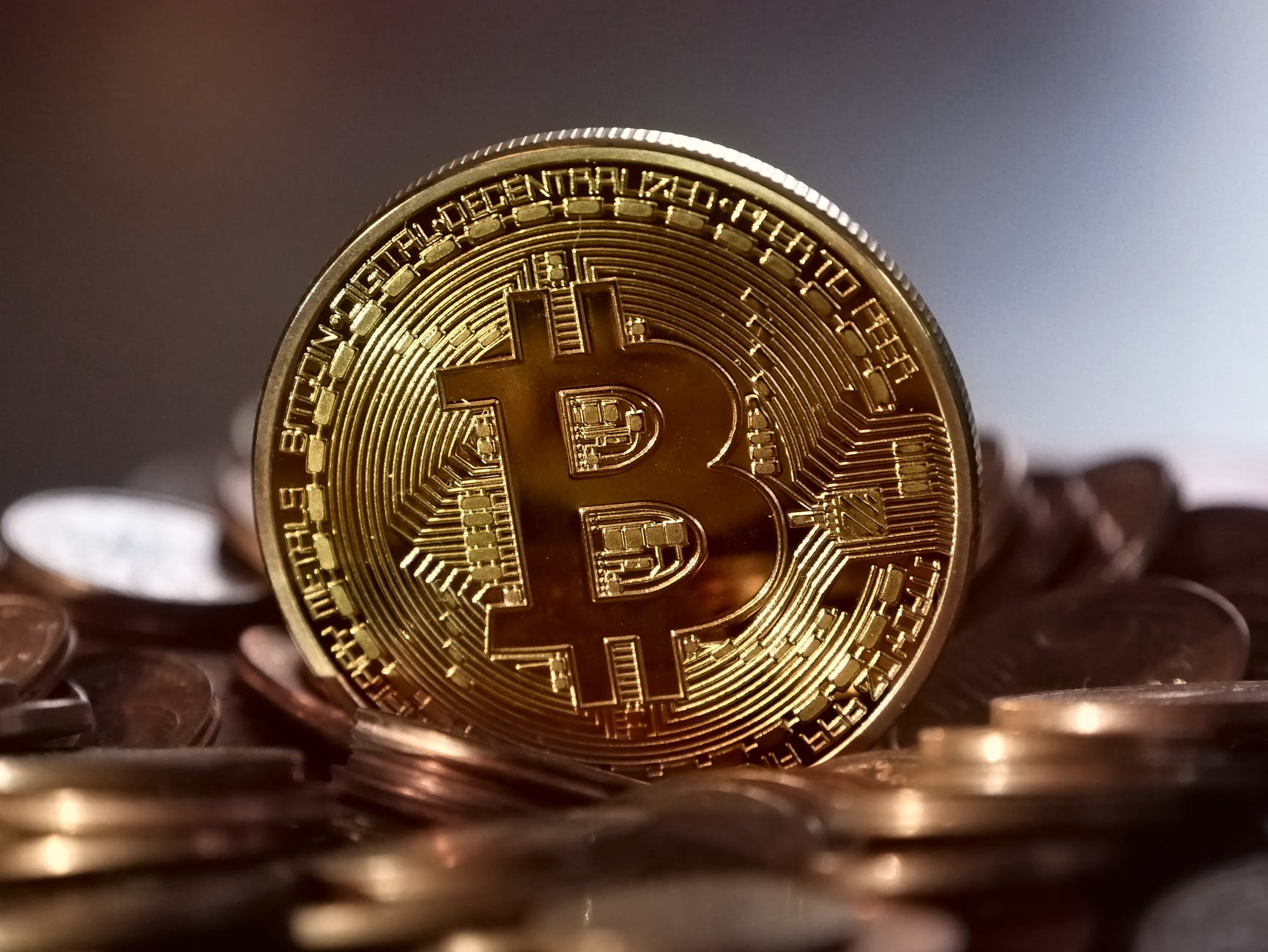
Photo by Pixabay on Pexels.com

How Decentralized Finance Works in Crypto

Decentralized Finance or DeFi for short, is an inclusive and remodelled open finance format that typifies the unification of decentralized technologies (like the blockchain) and traditional banking systems. Simply put, DeFi systems aim to provide substitutes for existing financial services in the aspects of loans, insurance, savings, asset trading and lots more.

DeFi is largely dependent on decentralized applications (Dapps) on the Ethereum blockchain, and to understand its capabilities, the concept of Dapps must be adequately understood. 

Read Also: Here Is How Cryptocurrencies Have Become The Norm For Money Transfer

How Important is DeFi?

The importance of DeFi in the evolution of financial systems as we know them, cannot be overemphasized. This open finance format offers huge prospects for the expansion of global economies, and since 2019, it has been considered one of the most significant and rapid advancements in the cryptosphere by analysts.

Recent reports have also revealed that DeFi tokens are, without cessation, outstripping their compeer, having surged by over 200% since the start of 2020.

DeFi Apps and Crypto

At the moment, DeFi apps have grown in popularity and are already securing businesses, money and time. The emergence of Decentralized Finance platforms has become evident in virtually all parts of the financial sector, inclusive of cryptocurrencies. All DeFi apps are transparent, open-source, interoperable, flexible, and permission-less, as seen in numerous Ethereum-based projects. 

In the crypto sector, decentralized exchanges are perceived as the next big thing towards achieving the desired evolution. Decentralized exchanges (DEX) will eliminate the chances of theft and exchange hacks that have plagued centralized systems.

When crypto assets are traded on a decentralized exchange, the transactions are facilitated by smart contracts rather than traditional intermediary systems in centralized exchanges.

Smart contracts protect crypto transactions on the blockchain and ensure that the entirety of the system is not vulnerable to hackers. The DeFi ecosystem isn’t just flourishing, it is quickly changing the business approach of established institutions, while also facilitating the emergence of thousands of crypto projects.

Recommended: Despite The Marketplace Twists,Thorns and Thistles, Here Is How USDT Has Weathered The Storm

Here are some of the most exciting and interesting projects, in no particular order, and of course, by no means exhaustive.

1inch

Before the emergence of tokens and smart contracts, cryptos were normally traded via exchanges. Due to this, exchanges have enjoyed massive growth and have become major players in the crypto world. The surge in the popularity of Ethereum, created Decentralized Exchanges (DEX), and ever since, more DEX projects have launched on the ETH blockchain.

1inch improves on the existing concept by taking it a little further. To be more explicit, 1inch is a DEX aggregator that scans through all the DEXs on the Ethereum blockchain to obtain the best prices for any asset as desired by the user. 1inch offers a powerful tool, especially for users who are in the market for the best price margins.

One way to get the best of crypto investments is to research and purchase yet to be launched token on major centralized EXs. Being on the ETH network, purchasing 1inch tokens before they debut in large crypto economies, would be an excellent choice.

Recommended: The 7 Must-Know Rules of Cryptocurrencies and Stock Market Investment

Curve

Having kickstarted in 2019, Curve is another amazing DeFi application in the cryptosphere. It is an exchange pool built on the ETH blockchain, that utilizes bonding curves, and specifically designed to support and boost the trading of stablecoin (DAI, USDC, USDT and TUSD), while also providing low-risk income fees for liquidity merchants.

With Curve, users do not experience price fluctuations as they normally would on DEXs, when swapping one stablecoin for the another. In the case where assets on other DeFi platforms, especially Compound, are not being traded, Curve lends the assets and return interests to providers of liquidity.

Curve is accessible on mainnet via curve.fi and it supports DAI, USDC, USDT and TUSD. Trading and depositing are facilitated by MetaMask, a web3 wallet.

Compound

At the moment, Compound is a top-rated DeFi project, and it offers users the opportunity to borrow ETH tokens and payback with interests. Liquidity providers could also come into play by providing their token for loan purposes with the aim of receiving loan profit.

This platform offers huge profits, and at a time like this, where savings in traditional banks give little annual interest or lost to inflation, Compound becomes a lucrative option. Compound is intuitive and well-designed and can be accessed via mobile wallets or online channels.

Uniswap

This is an innovative automated market-making DeFi platform with a protocol that enables ultra-swift trade settlement between parties. The Uniswap protocol ensures that, as much as possible, the closing trade value of assets reflect their real market value. You can become a liquidity provider with amazing interest rates provided via a dedicated pooling feature.

Summary

As the major sectors of the global society tend towards decentralization, the demand for DeFi applications will no doubt skyrocket in the nearest future. At the moment, DeFi continues to remarkably disrupt and dictate the pace of today’s business systems, while also dictating new standards.

You Must Read: The 10 Leading Stablecoins of 2019 and What You Should Expect

Here Is How Cryptocurrencies Have Become The Norm For Money Transfer

Crypto beats fiat as a result of its flexible governance structures. With no Central Bank to look to, these digital currencies have taken on a new life as money transfer vehicles.

Photo by Crypto Crow on Pexels.com

Is the crypto option for money transfers here to stay? Here is what you need to know

Cryptocurrencies have become the new normal of money transfers. It is gradually becoming a thing to request a cryptocurrency wallet address rather than a bank account number when trying to transfer funds between counterparties. The reasons are obvious.

Crypto payments are fast and secure due to the cutting-edge technology of the blockchain. Also, transaction costs are minimal, making it a good choice from a business perspective since both sides get to keep the part of the payments that would have gone to settling payment transfer costs in a regular wire transfer.

Crypto transfers seem to be here to stay given all their benefits. However, there are existing limitations you need to keep in mind before converting all of your cash to BTC or ETH.

Reach

Despite having been in existence for more than a decade, cryptocurrencies have still not been adopted globally by most people. As at the beginning of the second quarter of 2020, there were 50.71 million blockchain wallet users worldwide, in contrast to well over a billion regular bank accounts. At this point, one would realize that there is a huge gap to be filled.

This is something to keep in mind as most people do not have cryptocurrency wallets, and you can’t transfer to them without one. A suggested solution is to try to open the conversation with clients or suppliers or any other business counterparties, encouraging them to open a blockchain wallet and make your business transactions seamless.

Price stability

This is a major issue with cryptocurrencies. Imagine getting a transfer of say 2 BTC worth $18,000, and just before you’re able to either pay for another product with it or convert it to a fiat currency, the value drops to $12,000, which is a $6,000 loss on a single transaction.

Also Read: Despite The Marketplace Twists,Thorns and Thistles, Here Is How USDT Has Weathered The Storm

A way around this is to transact in the stable cryptocurrencies known as stablecoins. The USDtether, for example, is tied to the value of the US Dollar. Tether cryptos are not as subject to volatile swings in value as other cryptocurrencies and this makes it safer to use them for transactions.

Government regulation

Some countries have strict regulations that limit the volume or usage of cryptocurrencies by law. For example, Binance was created in China but had to move to Japan due to issues with regulators. Be sure to confirm if there are no restrictions on the use of cryptocurrencies either within your own country or that of your counterparty.

Photo by Launchpresso on Pexels.com

Platform Security

The safety of blockchain only guarantees that transactions and their history cannot be tampered with. Beyond that, your wallet is vulnerable to the extent to which you can protect your account. If malicious hackers gain access to your account passwords, your cryptocurrency funds will be lost. Hence, it is important to secure your wallet either through 2 Factor Authentication (2FA) or Authy.

As long as you keep the above factors in mind, the blockchain and cryptocurrencies ecosystem will make your experience with transferring money seamless even across borders.

Recommended: What To Expect From The Crypto Market In H2 2020

COVID-19 Has Altered The Business of Global Conferencing : Here Are The Keynotes

Global conferences have taken a hit with COVID-19 running riot across the globe. Fast-thinkers in the field have switched to online conferences to make up for the physical deficit.Here is what to know.

The raging pandemic has redefined how people perceive what might be the right way to do business around the world. What with lockdowns and shutting down of national borders? Dynamism seem to be the way to go here.

For people in the business of organizing conferences that draw participants around the world, they have had to think twice and fast.

Global Conferencing

Global conferences are platforms that provide the opportunity for a heightened level of knowledge sharing and collaboration on an international scale. Topics as far-ranging as science, art, computer programming, diseases, world economy, and virtually any other discussion point you can think about all have global conferences dedicated to them.

Beyond just sharing knowledge, collaborations and networking occur, leading to the development of new ideas and adaptations.

The traditional global conference structure has been seriously threatened by the outbreak of the Covid19 pandemic in two significant ways. The first is the travel restrictions that have grounded many flights and closed a significant number of airports around the globe.

Read Also: As COVID-19 Unsettles Global Business, Here Are 5 Client Management Tips That Can Help You Save Money

The second and perhaps most important threat is how infeasible it is to have a global conference with hundreds of people in attendance due to the risk of spreading the infection. This raises the question about what the future of global conferences is going to look like? Is it over or can we find a way around this?

The Internet to the rescue

What if global conferences were moved online and hosted over the internet? We’ll consider the pros and cons below:

Possible Drawbacks

Technology Failure: Having server downtimes or hardware problems in the middle of a presentation at an online global conference can be messy, drawing everyone back and slowing down the pace of the whole conference.

Coordination: Organizing people is always a herculean task even with in-person events. With an online global conference, it might be more difficult to get everyone to work on schedule as the urgency of face -to- face interaction is lacking.

Advantages of Online Conferencing

Lower costs: Think of all the funds that go into organizing a regular global conference: hotel bookings, centre payments, flights to and fro, and a host of other logistics.

These costs will be eliminated both for organizers and participants. Perhaps these funds can be invested in getting better and faster internet connections for participants, solving the first point under the possible drawbacks

Flexibility: Participating from home or the office might make coordination difficult. On the other hand, it also gives participants the freedom to spend more time on research and fine-tune their findings and knowledge for sharing with others from around the world.

Better Accessibility: Even before COVID-19, lots of interested people are denied the opportunity to participate due to the inability to get visas for the country in which the conference is holding.

For some others, they are unable to transport and feed themselves throughout the conference. Hosting the conference online eliminates this problem as way more people can participate remotely, which is good for everyone involved.

Conclusion

There’s a lot to be said for both sides of the argument about moving global conferences online. However, the pros seem to outweigh the cons, making it a quite an attractive option.

You Will Love: Are Hedge Funds Safe in Unstable Times? Here Are A Few Tips You Can Use

Are Hedge Funds Safe in Unstable Times? Here Are A Few Tips You Can Use

Hedge Funds tend to outperform individual stocks as a result of their diversification. There is a bit more you should know as you read on..

Nobody would have accurately predicted that a pandemic would come to change the course of activities all over the world, but smart investors are always prepared for such a time as this. Do you also want to take advantage of this COVID-19 outbreak to invest in hedge funds?

I know you feel unsafe and insecure about investing this period, and it’s perfectly normal to feel that way, mainly because stocks – even of bigger corporations – are generally depreciating, oil prices have reduced, gold is hitting rock bottom, and many more unfortunate economic events are happening.

Notwithstanding, is it safe for you to invest in hedge funds in this unstable period? I am going to share some of the properties of hedge funds with you in the following paragraphs so you can decide if investing in hedge funds is right for you this period.

1. Diversification

Hedge funds offer an array of investments such as long or short, tactical trading, events-driven or emerging markets, and managers take advantage of diversified investments to earn the highest return for the least risk.

Hedge funds focus on specific risks to reduce its risk exposure, by a large percentage, to the general market movements. This technique works because these investments react differently to the same economic event. So, hedge funds generally outperform equities with much lower volatility even in unstable times.

Read Also: What You Need to Know About Samsung Blockchain

2. Long or Short Selling of Hedge Funds

This is a killer strategy that most hedge fund managers use; it involves buying and selling stocks that are undervalued. Managers target shares that are about to hit rock bottom, and they borrow it. Then they make a gross profit by selling out the borrowed shares and buying it back when it falls.

However, there are risks associated with this if the market conditions do not go as planned. It may lead to a situation called a ‘short squeeze.’ Long term selling, on the other hand, involves buying undervalued stocks with the hope that it will appreciate with time, and then sell it when it does.

3. Transparency

Hedge funds are not regulated by the Securities and Exchange Commission, but the Dodd-Frank Wall Street Reform and Consumer Protection Act passed in 2010 requires them to be transparent. The transparency, however, does not include disclosing where investments are made.

4. Loss Reduction

Most hedge funds have highly financially intelligent workers, who do not only employ aggressive investment strategies to maximize returns as well as reduce risks but are also very good in financial management to be factual. They provide investors with the best information there is and also use selective strategies that they believe will add to the bottom-line.

5. Risks and Returns

According to the Securities and Exchange Commissions, hedge funds managers in a bid to maximize returns often engage in many risks. If things do not turn out as planned, it may lead to a bottom-out in returns. Also, the lack of a regulating body makes hedge funds prone to the risk of fraud.

Read Also: How Leverage Trading Works When You Use The Binance Cryptocurrency Exchange

Are Hedge Funds Worth It this Period? Final Words

Hedge funds are low-risk investment vehicles, which are not entirely dependent on the situation of the general economy, mainly because of how it is run. So, it is worth trying; however, losses can be incurred like every other investment vehicle.

Must Read:The Price Volatility of Bitcoin and Cryptocurrencies Explained

The Price Volatility of Bitcoin and Cryptocurrencies Explained

Bitcoin is one investment that jolts a lot of people out of their financial amnesia. Why is price volatility a feature of cryptocurrencies? Read more..

4 REASONS FOR THE VOLATILITY OF THE GLOBAL PRICE OF BITCOIN

There is no doubt that Bitcoin is the pioneering cryptocurrency , and it came to human consciousness when it was introduced in 2009 when the legendary Satoshi Nakamoto launched his whitepaper, “Bitcoin: A Peer-to-Peer Electronic Cash System.” Bitcoin was then floated and lots of successes and as minor setbacks have been recorded so far.

One of the concerns associated with the Bitcoin is its relative volatility, compared to traditional fiat currencies. This concern has further strengthened the stance of many people on Bitcoin as a risky investment and a sham; with both investors and digital currency users growing cynical despite evident massive potential benefits.

Bitcoin’s value has displayed massive volatility historically. For instance, within a three-month period from October 2017 to January 2018, the price volatility of the Bitcoin approached nearly 8%, more than double its volatility in the 30-day period from December 2019 to January 15, 2020. It is thus important to understand the several factors driving Bitcoin’s volatility.

Read Also: How To Invest In 2020

  1. Speculation

As with other investments, news reports determine the buying or selling decisions of most investors. News ranging from statements credited to luminaries in the tech or investment sphere, security breaches and new regulations by regulatory authorities and governments usually trigger responses in the Bitcoin market. This corresponds to the law of demand and supply.

It is therefore important to try not to allow emotions to lead you in making critical investment decisions. It is also important to be abreast with up-to-date market information in order not to make huge losses or miss opportunities to make a good spread.

2.Poor Management Of Exchange Platforms

This has also been seen to generally affect the market value of the Bitcoin. One example is the price instability that occurred around November 2018 when rumours of security issues and poor management plagued Mt. Gox exchange.

Prior to this, Bitcoin had reached an all-time high of around $1200 and dropping by about 39% in about three days. Many users experienced challenges withdrawing their funds at that time, resulting in widespread panic.

Another massive price crash was triggered early in February when Mt. Gox Exchange filed papers for bankruptcy in Japan. The price of Bitcoin was around $911 at the time, but it crashed to $260 in under two weeks as a ripple effect of that move.

Read: Which Cryptocurrencies Should You Invest In 2020?

3.Government Policies

Policies in support (or not) of the Bitcoin also determine the direction of the digital coin’s value.  Validation in form government recognition portends positive things for the crypto space.

Institutional parties understand that this trend is inevitable, pushing them to work on policies intended to gain as much social benefit from digital currencies as possible. This gives comfort to those who hold traditional views on financial systems; making a smoother move to an economy where digital currencies play a more critical role in global trade.

4.Lack Of Consensus In Community Governance

This has also contributed to the instability in the value of the Bitcoin. An example of this influence was observed in 2017 when an increase in block size led to a hard fork that resulted in different blocks with different rules, thereby, birthing Bitcoin cash.

These and other similar periods of uncertainty in the community on the rules of Bitcoin, as well as its future, have mostly had negative consequences on Bitcoin prices.

Conclusion

It is of utmost importance to understand the several price-determining factors allied to Bitcoin in order to take full advantage of the bull and bear periods to maximize profits.