Here is How The Cryptocurrency Landscape Has Evolved So Far In 2025

As Q1 2025 draws to a close, the cryptocurrency landscape reflects a transformative year marked by institutional adoption, regulatory progress, technological innovation, and unprecedented market growth.

Bitcoin ETF approvals in 2024 laid the groundwork for 2025’s institutional surge, with firms like BlackRock and Fidelity expanding crypto offerings. The global crypto market cap reached $2.86 trillion by March 2025, driven by Bitcoin’s rise to $94,164 and Ethereum’s climb to $2,516 following geopolitical catalysts like Donald Trump’s U.S. cryptocurrency reserve announcement.

Tokenization emerged as a transformative force, projected to unlock $16 trillion in illiquid assets by 2030, with real estate and art leading adoption. Central Bank Digital Currencies (CBDCs) advanced globally, with over 130 nations exploring integration into payment systems

 Below is an analysis of key developments shaping this evolving ecosystem:

Market Growth and Institutional Adoption

The cryptocurrency market has surged, with the global valuation projected to reach $5 billion by 2030 (CAGR of 15.4%) from $2.1 billion in 2024. Bitcoin and Ethereum remain dominant, but smaller-cap cryptocurrencies are gaining traction as institutional investors diversify portfolios. The approval of Bitcoin and Ethereum spot ETFs in 2024 laid the groundwork for broader acceptance, with traditional finance increasingly integrating digital assets.

South Africa has emerged as a key adoption hub, driven by regulatory clarity and accessibility. Payment giants and banks are developing blockchain-based solutions, while central banks explore central bank digital currencies (CBDCs) to compete with decentralized assets.

Regulatory Frameworks and Compliance

Governments worldwide are prioritizing regulatory clarity to balance innovation with investor protection. South Africa’s new exchange control regulations aim to integrate crypto into its financial system, while the U.S. is expected to finalize a comprehensive framework to address market volatility and security concerns.

Tax guidelines for crypto transactions and income

Cross-border policy implications, as nations like El Salvador embrace Bitcoin as legal tender, while others like China enforce strict bans.

Blockchain and Scalability

Ethereum’s Pectra upgrade and Bitcoin’s Lightning Network aim to address scalability and energy efficiency. Layer-2 solutions and proof-of-stake (PoS) consensus mechanisms are reducing transaction costs and environmental impact.

AI and Blockchain Convergence

Artificial intelligence is enhancing smart contracts, network security, and decentralized data marketplaces. For example, AI-driven systems enable users to monetize data while retaining control, bridging sectors like finance and healthcare.

Tokenization and NFTs

Tokenization of assets (e.g., real estate, art) continues to expand, while non-fungible tokens (NFTs) drive digital ownership in gaming and the metaverse.

Market Dynamics and Challenges

Volatility and Speculation

Despite institutional interest, price fluctuations remain a hurdle. Bitcoin’s rise toward $100,000 in 2024 highlights volatility, influenced by speculative trading, macroeconomic events (e.g., inflation), and social media trends.

Scalability and Sustainability

Proof-of-work blockchains  like Bitcoin face criticism for energy consumption, though advancements in PoS and layer-2 solutions are mitigating these issues.

Token Proliferation

Over 37 million crypto tokens exist as of March 2025, with projections reaching 100 million by year-end. While many are experimental or speculative, legitimate projects in DeFi, gaming, and supply chain management underscore blockchain’s versatility.

Emerging Trends and Innovations

Stablecoins and DeFi

Stablecoins are reducing volatility, enabling seamless cross-border payments. DeFi platforms, though facing regulatory scrutiny, continue to disrupt traditional banking by offering decentralized lending and borrowing.

Gaming and Metaverse

Cryptocurrencies like EarthMeta and Polkadot are integrating blockchain into virtual worlds, enhancing in-game economies and interoperability.

Digital Wallets and Accessibility

User-friendly wallets and payment solutions are democratizing crypto access, particularly in regions with underdeveloped banking infrastructure.

Outlook for 2025 and Beyond

As March 2025 concludes, the crypto landscape is maturing into a hybrid ecosystem blending decentralized innovation with regulatory oversight. While challenges like volatility and energy consumption persist, advancements in AI, blockchain scalability, and institutional adoption signal a future where digital assets are integral to global finance.

Key players like Ethereum, Bitcoin, and Solana will likely dominate, but smaller projects addressing niche use cases (e.g., sustainability, governance) may also thrive. Regulatory clarity and technological breakthroughs will determine whether crypto fulfills its promise of creating a borderless, inclusive economy.

In summary, March 2025 marks a pivotal moment for cryptocurrency—a sector no longer confined to speculative trading but evolving into a transformative force reshaping finance, technology, and global connectivity.

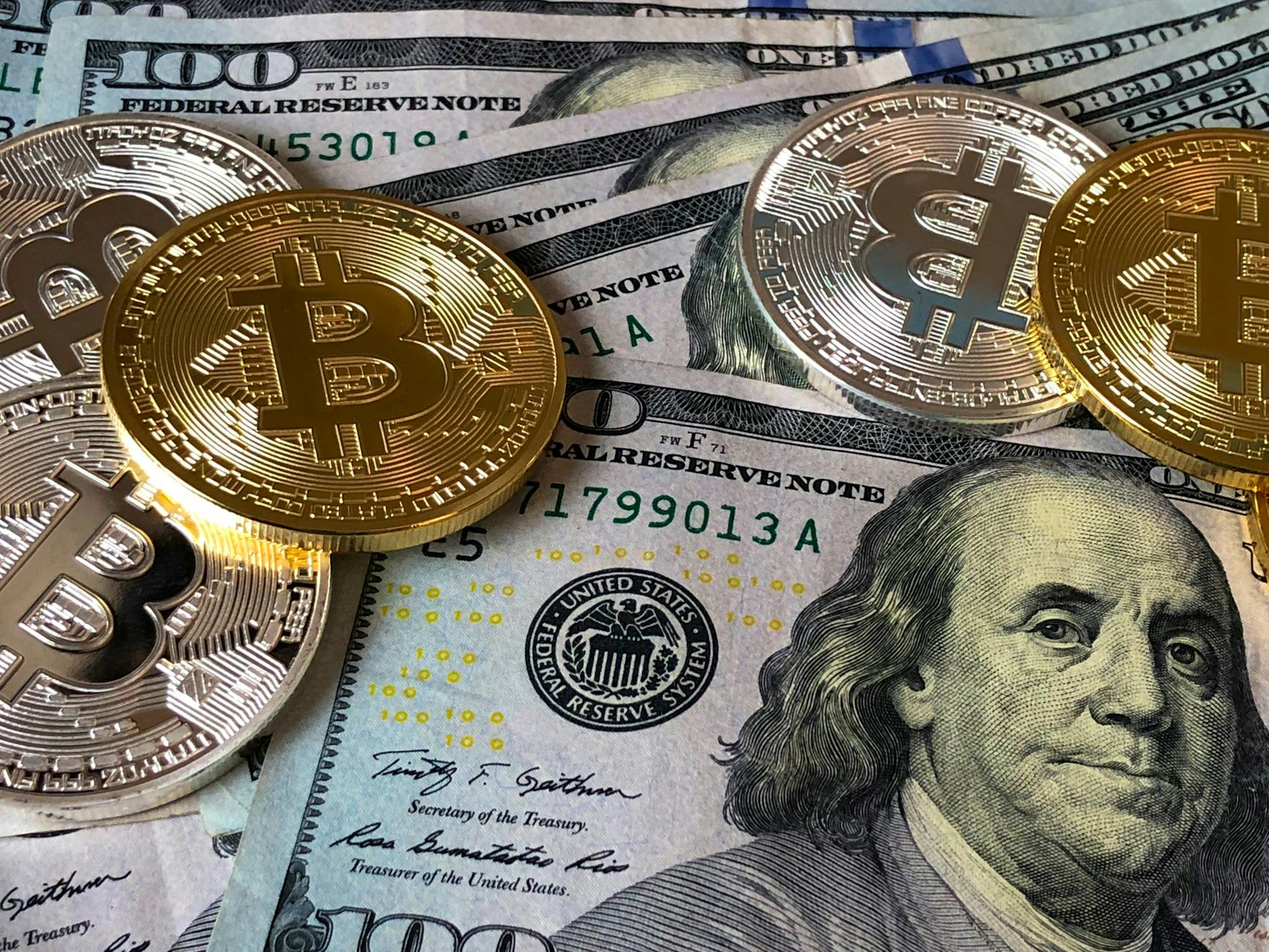
How Bitcoin Sprang Past The $100k Mark to Set A New ATH

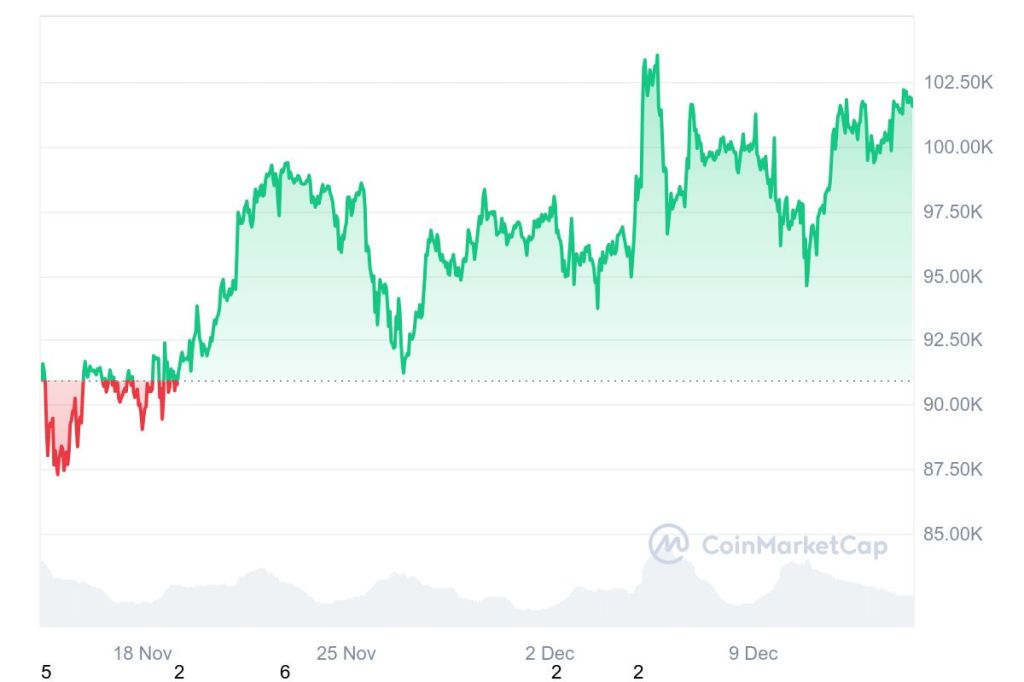
In December 2024, Bitcoin surpassed $100,000 for the first time, driven by strong demand and investor enthusiasm following the U.S. presidential election. Institutional investments and macroeconomic factors, such as concerns about inflation, further fueled this surge. The milestone signals Bitcoin’s growing legitimacy as an asset class and its potential impact on the future of finance.

Photo by David McBee on Pexels.com

Introduction

Bitcoin, the pioneering cryptocurrency, has made headlines once again by surpassing the $100,000 mark for the first time in its history. This milestone, reached in December 2024, marks a significant moment not only for Bitcoin but for the entire cryptocurrency market.

Understanding how Bitcoin achieved this remarkable feat involves examining various factors, including market dynamics, investor sentiment, and broader economic influences.

The Surge to $100,000

The journey to Bitcoin’s $100,000 price point was characterized by a rapid increase in demand and a series of events that fueled investor enthusiasm. One of the most notable catalysts for this surge was the U.S. presidential election, which saw Donald Trump emerge victorious.

DT’s victory sparked a wave of optimism among investors, leading to a significant influx of capital into the cryptocurrency market. In the weeks following the election, Bitcoin’s price soared by more than 30%, reflecting a broader trend of increased interest in digital assets 

The excitement surrounding Bitcoin was not merely a reaction to political events; it was also driven by a growing recognition of Bitcoin as a legitimate asset class.

Over the years, Bitcoin has transitioned from being viewed as a speculative investment to being considered a store of value, akin to gold. This shift in perception has attracted institutional investors, who have begun to allocate a portion of their portfolios to cryptocurrencies, further driving up demand.

Must-Read: Did You Miss Out When Notcoin Launched? Here Are 10 Winning Greenlights You Need

Market Dynamics and Investor Sentiment

As Bitcoin approached the $100,000 milestone, market dynamics played a crucial role in its price movement. The cryptocurrency market is known for its volatility, and Bitcoin’s price history has been marked by significant spikes and corrections. However, the prevailing sentiment during this period was overwhelmingly bullish. Many investors believed that Bitcoin was on the verge of a breakout, leading to a self-fulfilling prophecy where increased buying pressure pushed the price higher 

The psychological aspect of reaching a round number like $100,000 cannot be understated. Such milestones often serve as psychological barriers that traders and investors watch closely.

When Bitcoin finally broke through this level on 5 December 2024, it created a sense of euphoria in the market, encouraging even more buying activity. This phenomenon is common in financial markets, where traders react to significant price levels, often leading to further price increases.

The Role of Institutional Investment

Another critical factor in Bitcoin’s ascent to $100,000 was the increased participation of institutional investors. Over the past few years, major financial institutions and corporations have begun to recognize the potential of Bitcoin as a hedge against inflation and a means of diversifying their investment portfolios.

Companies like MicroStrategy and Tesla have made headlines for their substantial Bitcoin purchases, signaling a shift in how traditional finance views cryptocurrencies.This institutional interest has not only provided a significant boost to Bitcoin’s price but has also contributed to its legitimacy as an asset class.

As more institutions enter the market, they bring with them a level of stability and credibility that can help mitigate some of the volatility traditionally associated with cryptocurrencies. This influx of institutional capital has been a game-changer, allowing Bitcoin to reach new heights.

Global Economic Factors

The broader economic environment also played a significant role in Bitcoin’s price surge. In the wake of the COVID-19 pandemic, many governments around the world implemented aggressive monetary policies, including low interest rates and quantitative easing.

These measures have led to concerns about inflation and currency devaluation, prompting investors to seek alternative assets like Bitcoin.As traditional fiat currencies face uncertainty, Bitcoin has emerged as a potential safe haven.

Bitcoin’s limited supply—capped at 21 million coins—makes it an attractive option for those looking to preserve wealth in an inflationary environment. This narrative has resonated with a growing number of investors, further driving demand and contributing to the price increase.

Conclusion

Bitcoin’s journey past the $100,000 mark is a testament to the evolving landscape of finance and investment. The combination of political events, changing investor sentiment, institutional participation, and global economic factors has created a perfect storm for Bitcoin’s price surge.

As the cryptocurrency continues to gain traction and acceptance, it will be fascinating to see how it evolves and what new milestones it may achieve in the future.In summary, Bitcoin’s rise to $100,000 is not just a reflection of market speculation; it represents a significant shift in how investors view cryptocurrencies.

With increasing legitimacy and a growing base of support, Bitcoin is poised to play a crucial role in the future of finance.

Read Also: Bitcoin Market Summary for 2023: Navigating Volatility and Innovation

Did You Miss Out When Notcoin Launched? Here Are 10 Winning Greenlights You Need As The Next Game Coin Success Beckons

Memecoins, like Notcoin, have gained attention in 2024. Key factors when evaluating memecoin investments include community engagement, team transparency, tokenomics, use case, market position, roadmap clarity, media perception, technical indicators, security, and sentiment analysis. Due diligence, research, skepticism, and diversification are also crucial. Seek financial advice before investing.

Photo by RDNE Stock project on Pexels.com

Memecoins have made the headlines since the beginning of 2024, and it looks like they are here to stay. When Notcoin made its historic launch despite its background as a tap-to-earn crypto, only a few people gave it a chance of succeeding. The rest as they say, is history. For anyone looking to invest in memecoins today, there are indicators that should be the focus.

When picking a promising memecoin, there are several key factors to consider in mitigating risks and increasing the potential for gains.

Read: Here Are 3 Leading Gaming Cryptocurrencies That Could Yield High ROI

Here are the major factors to look out for:

1. Community and Social Media Presence

  • Community Engagement: A strong and active community can be a good indicator of potential. Check platforms like Reddit, Telegram, Discord, and Twitter.
  • Social Media Metrics: Analyze the number of followers, likes, retweets, and the overall sentiment around the coin on platforms like Twitter and Reddit.

2. Team and Development Activity

  • Anonymous vs. Known Team: Transparent and known team members often indicate credibility. Investigate the team’s background and previous projects.
  • Development Activity: Check GitHub or similar platforms for the frequency of commits and the overall activity in the codebase. Regular updates and active development are positive signs.

3. Tokenomics and Supply Mechanism

  • Total Supply and Circulating Supply: Understand the total supply and how much of it is already in circulation. Scarcity can drive demand.
  • Distribution: Examine how the tokens are distributed. A large proportion held by the team or a few wallets can be a red flag.

4. Use Case and Utility

  • Purpose: Assess if the memecoin has any real use cases or if it’s purely speculative. Utility can add long-term value as is the case with Notcoin.
  • Partnerships and Integrations: Look for any strategic partnerships or integrations that might give the coin utility or credibility.

5. Market Position and Liquidity

  • Market Cap and Volume: A higher market cap and trading volume can indicate stability. However, new coins with lower caps can offer high rewards if they grow.
  • Liquidity: Ensure there’s enough liquidity on exchanges to facilitate buying and selling without large price impacts.

Must-Read: Here Are The Biggest Five Financial Market Events

6. Roadmap and Future Plans

  • Roadmap Clarity: A clear, achievable roadmap with set milestones can indicate a well-thought-out project.
  • Progress: Check if the project is meeting its milestones and delivering on promises.

7. Media and Public Perception

  • News Coverage: Positive media coverage can increase visibility and attract new investors.
  • Celebrity Endorsements: While risky, endorsements by high-profile figures can boost a memecoin’s popularity, as seen with Dogecoin and Elon Musk.

8. Technical Indicators and Historical Performance

  • Price Patterns: Analyze historical price patterns and technical indicators for potential entry and exit points.
  • Volatility: Assess the coin’s volatility to understand potential risks and rewards.

9. Security and Regulatory Compliance

  • Audits: Check if the coin has undergone security audits by reputable firms.
  • Regulatory Compliance: Ensure the project adheres to relevant regulations to avoid future legal issues.

10. Sentiment Analysis

  • Buzz and Hype: Use tools to measure the sentiment and volume of online discussions. High levels of positive buzz can indicate growing interest.

Due Diligence Tips:

  • Research: Do thorough research and verify information from multiple sources.
  • Stay Skeptical: Be cautious of overly optimistic promises and beware of potential scams.
  • Diversify: Don’t put all your investments into one memecoin. Diversification can help manage risk.

By carefully considering these indicators, you can better assess the potential of a memecoin and make more informed investment decisions.

It is best to seek the opinion of a financial advisor before making investment decisions.

Recommended: These Are Four of The Most Promising AI Cryptocurrencies in 2024

Here Are 3 Leading Gaming Cryptocurrencies That Could Yield High ROI

The recent surge in gaming and NFT-related cryptocurrencies like Axie Infinity (AXS), Decentraland (MANA), and Enjin Coin (ENJ) has drawn attention. The prices of these tokens are influenced by factors such as platform adoption, utility within the ecosystems, and market sentiment. However, investing in cryptocurrencies requires thorough research and risk assessment due to their volatile and speculative nature.

Photo by RDNE Stock project on Pexels.com

In recent weeks, some cryptocurrencies associated with gaming and NFTs have gained attention with their rapid price gains. Projects like Axie Infinity (AXS), Decentraland (MANA), and Enjin Coin (ENJ) have been notable in the gaming and blockchain space.

However, I strongly advise conducting thorough research and due diligence before investing in any cryptocurrency, as the market is highly volatile and speculative.

Read: These Are Four of The Most Promising AI Cryptocurrencies in 2024

Axie Infinity

Yes, there have been price fluctuations in the performance of Axie Infinity (AXS). Axie Infinity is a blockchain-based game that has gained significant popularity and attention in recent years. As with any cryptocurrency or digital asset, the price of AXS can be subject to volatility and fluctuations in response to various factors.

The price performance of AXS has been characterized by periods of both growth and decline. Since its launch, AXS has experienced significant price increases, reaching all-time highs at certain points. However, it is important to note that cryptocurrency prices can be highly volatile, and past performance is not indicative of future results.

The utility of AXS within the Axie Infinity ecosystem is an important factor that can influence its price. AXS serves as the governance token of the Axie Infinity platform, allowing holders to participate in key decision-making processes and earn rewards. It is used for activities such as staking, participating in governance votes, and earning a share of the platform’s revenue.

The demand for AXS can be influenced by various factors, including the popularity and growth of the Axie Infinity game, the development of new features and updates, partnerships and collaborations, and overall market sentiment towards cryptocurrencies and blockchain-based projects.

It is worth noting that the cryptocurrency market as a whole can be influenced by external factors such as regulatory developments, market trends, investor sentiment, and macroeconomic conditions. These factors can contribute to price fluctuations in AXS and other cryptocurrencies.

Decentraland (MANA)

Decentraland (MANA) is a virtual reality platform built on the Ethereum blockchain that allows users to create, experience, and monetize content and applications within a virtual world. It aims to bring the concept of the metaverse into reality, providing users with ownership of their digital assets and a decentralized platform for social interactions and experiences.

The price levels of MANA can be influenced by various factors. One key factor is the adoption and popularity of the Decentraland platform. As more users join the platform and engage in activities such as purchasing virtual land, trading virtual goods, and participating in the ecosystem, the demand for MANA may increase, potentially leading to price appreciation.

Additionally, developments and updates to the platform, partnerships, and collaborations can also impact the price of MANA. The utility of MANA within the Decentraland ecosystem is significant. MANA serves as the native token of the platform and is used for various purposes.

Firstly, it is used to acquire virtual land parcels known as LAND. These parcels can be bought, sold, and developed by users, allowing them to create unique experiences and monetize their creations. MANA is also used to purchase virtual goods and services within the Decentraland marketplace, including avatars, wearables, and names.

Furthermore, MANA holders have the ability to participate in the governance of Decentraland through a decentralized autonomous organization (DAO). MANA holders can vote on policy updates, subsidies for new projects, and land auctions, giving them a say in the platform’s development and direction.

It is important to note that the price of MANA, like any cryptocurrency, can be subject to volatility and market fluctuations. Factors such as overall market sentiment, regulatory developments, and investor demand for cryptocurrencies can also impact the price levels of MANA.

Enjin Coin (ENJ)

Enjin Coin (ENJ) is a cryptocurrency that has been gaining popularity for several reasons. Enjin Coin is specifically designed for the gaming industry, aiming to be the most usable cryptocurrency for the sector

Enjin, the company behind the coin, is a leading gaming community platform with millions of registered gamers. The project includes software development kits (SDKs) that developers can integrate into their games and communities, allowing for the seamless integration of blockchain technology This use case has attracted attention from both gamers and investors.

Enjin Coin has found a use case in the development of non-fungible tokens (NFTs) . NFTs are unique digital assets that can represent ownership of in-game items, virtual goods, and collectibles.

With the growing popularity of NFTs, Enjin Coin’s focus on the gaming industry positions it well to benefit from this trend . The integration of Enjin’s technology by companies like Microsoft, Samsung, and BMW further validates its potential .

Some analysts and experts believe that Enjin Coin has the potential for long-term growth.. Additionally, Enjin Coin’s official website quotes a potential surge in price by the end of 2030.

However, it’s important to note that cryptocurrency investments are highly volatile and speculative, and it’s crucial to conduct thorough research and consider personal risk tolerance before investing.

Enjin Coin offers multiple use cases beyond gaming. It is built on the Ethereum network as an ERC-20 token, enabling it to be used in various decentralized applications (dApps) and platforms within the broader blockchain ecosystem. This versatility adds to its appeal and potential value.

Enjin Coin is relatively popular and widely available for trading on various cryptocurrency exchanges, including Coinbase, KuCoin, and Crypto.com. This accessibility makes it easier for investors to buy and sell Enjin Coin.

Last Lines

While the market price of any cryptocurrency cannot be accurately predicted, the bull market makes it possible for an investor to earn incredible ROI. But the Bull Run never lasts forever, and in no time, the bears will take over the scene.

Despite the fluctuations in crypto price, an investor can earn some gains by applying risk-mitigating tools like stop-limit and stop loss mechanisms.

Must-Read: Bitcoin Market Summary for 2023: Navigating Volatility and Innovation

These Are Four of The Most Promising AI Cryptocurrencies in 2024

Predicting specific cryptocurrencies that will be bullish in 2024 is highly speculative due to various factors. AI-related cryptocurrencies, such as SingularityNET (AGI), Fetch.ai (FET), Numerai (NMR), and Ocean Protocol (OCEAN), aim to democratize AI, enable autonomous economic agents, incentivize predictive models, and facilitate decentralized data sharing. These projects represent innovative integrations of blockchain, cryptocurrency, and AI technologies, offering promising solutions to industry challenges.

Photo by Negative Space on Pexels.com

2024 has so far started on a bullish note for the cryptocurrency market. For anyone to predict specific cryptocurrencies that will be outstanding in 2024 is highly speculative and subject to numerous variables. You might want to look at technological advancements, market trends, regulatory developments, and investor sentiment.

However, AI-related cryptocurrencies could potentially benefit from increased adoption of artificial intelligence technologies in various industries.

Some AI-related cryptocurrencies and projects that have garnered attention include:

1. Singularity NET (AGI)

SingularityNET is a blockchain-based platform focused on democratizing artificial intelligence (AI) by creating a decentralized marketplace for AI services and algorithms. It aims to facilitate the exchange of AI capabilities and resources among developers, organizations, and AI agents, thus accelerating AI research, development, and deployment.

SingularityNET leverages blockchain technology to ensure transparency, security, and interoperability within the platform. Smart contracts govern transactions and agreements between users, while decentralized storage solutions safeguard data privacy and integrity.

Furthermore, SingularityNET incorporates mechanisms for reputation and trust scoring to enable users to assess the quality and reliability of AI services and providers.

At the core of SingularityNET is its native cryptocurrency, AGI token, which serves as the medium of exchange within the platform. AGI tokens enable users to purchase AI services, contribute algorithms, and receive rewards for their participation in the ecosystem.

Additionally, AGI tokens are used for governance, allowing token holders to participate in decision-making processes related to platform development and upgrades.

By providing a decentralized infrastructure for AI development and collaboration, SingularityNET aims to democratize access to AI technologies, foster innovation, and create a more inclusive and equitable AI ecosystem. It represents a novel approach to harnessing the potential of AI while addressing concerns related to centralization and monopolization in the AI industry.

2. Fetch.ai (FET)


Fetch.ai is a blockchain project aiming to create a decentralized ecosystem for autonomous agents to perform tasks and exchange value efficiently. At its core, Fetch.ai combines blockchain technology with artificial intelligence (AI) to enable autonomous economic agents to interact with each other and with real-world data in a decentralized manner.

The Fetch.ai platform facilitates the creation of autonomous agents that can represent individuals, organizations, or devices. These agents can execute tasks, negotiate contracts, and exchange value autonomously, without the need for intermediaries. This decentralized approach aims to optimize resource allocation, improve efficiency, and enable new forms of economic activity.

Fetch.ai’s architecture is designed to be scalable and flexible, allowing for a wide range of use cases, including supply chain optimization, decentralized finance (DeFi), and Internet of Things (IoT) applications. The project also emphasizes privacy and security, ensuring that sensitive data remains protected throughout interactions.

Overall, Fetch.ai presents a promising vision for a decentralized future where autonomous agents collaborate seamlessly to solve complex problems and create value.

However, like any emerging technology, its success will depend on adoption, scalability, and the ability to address potential challenges and regulatory considerations in the evolving landscape of blockchain and AI integration.

3. Numerai (NMR)

Numerai is a unique blockchain-based project that combines elements of data science, machine learning, and cryptocurrency.

The platform operates as a hedge fund that incentivizes data scientists to develop predictive models using financial data. Participants submit predictions to Numerai, which aggregates and anonymizes them before using them to make trading decisions in global financial markets.

Central to Numerai is its native cryptocurrency, Numerai (NMR). NMR serves multiple purposes within the ecosystem. Firstly, it acts as a reward mechanism for data scientists who contribute accurate predictions to the platform.

Secondly, NMR is staked by data scientists to signal confidence in their models, and successful predictions result in increased holdings of NMR. Lastly, NMR is used for governance, allowing token holders to participate in decision-making processes regarding platform upgrades and changes.

Numerai’s blockchain architecture ensures transparency, security, and decentralization. The platform leverages blockchain technology to manage transactions, distribute rewards, and maintain a record of participants’ contributions securely.

Read Also: It’s A Watershed Moment With US SEC Approving 11 Bitcoin Spot ETFs

By crowdsourcing predictive models from a global community of data scientists and utilizing a blockchain-based infrastructure, Numerai aims to create a more efficient and democratized approach to quantitative finance.

Overall, Numerai represents an innovative integration of blockchain, cryptocurrency, and data science, offering a novel solution to the challenges of traditional financial markets while incentivizing collaboration and rewarding accuracy in predictive modeling.

4. Ocean Protocol (OCEAN

Ocean Protocol is a blockchain-based platform designed to facilitate the sharing, monetization, and consumption of data in a decentralized and privacy-preserving manner. It aims to address the challenges of data silos and data accessibility by creating a decentralized ecosystem where data providers can securely share their data, and consumers can access and purchase it using the native cryptocurrency, Ocean Token (OCEAN).

The protocol utilizes blockchain technology to provide transparency, immutability, and security to data transactions. Smart contracts govern the exchange of data, ensuring that data providers are fairly compensated for their contributions, while consumers can trust the integrity and provenance of the data they access.

Key components of Ocean Protocol include data marketplaces, where users can discover and access datasets, and compute-to-data services, which enable data analytics and processing without exposing the raw data itself.

Additionally, Ocean Protocol incorporates privacy-preserving technologies such as zero-knowledge proofs and federated learning to protect the privacy of sensitive data.

By enabling data sharing and monetization in a decentralized and privacy-preserving manner, Ocean Protocol aims to unlock the value of data, foster innovation, and empower individuals and organizations to leverage data assets more efficiently. It represents a promising solution to the challenges of data ownership, privacy, and accessibility in the digital economy.

Conclusion

These leading AI cryptocurrencies have identifiable use cases and have shown their relevance in the reception that they have enjoyed in the global marketplace. Their respective ROI and price performance looks promising.

Recommended: Crypto Spotlight: Dogecoin vs. dYdX