How Leverage Trading Works When You Use The Binance Cryptocurrency Exchange

Cryptocurrency trading is no longer new in many parts of the world. Leveraging on crypto is , however, just taking a foothold in the global financial markets. Here is a lead on how this works.

Leverage trading (or margin trading, as it is more often known) has hit a new high in the last two years, with companies and groups dedicated to forex selling it as a way to make money with relative ease.

While most people who are into margin trading do it on forex, there’s a booming market for it in cryptocurrencies. This market is easier to enter and less complicated than the forex market, and it effectively works 24/7/365. The crypto market is presently worth more than $320 billion.

How does leverage trading work?

Photo by energepic.com on Pexels.com

Leverage trading plays out in making short-term, usually low-earning trades using a mixture of your own money (your “leverage”) and money lent to you by the exchange.

Depending on the exchange and your own standing, you can be allowed to trade five, ten, or even a hundred times the amount of money you have as leverage. As the value you’re trading increases so do the profits – thus allowing for potentially paper-thin earnings to become sizeable.

Naturally, leverage trading doesn’t work as an actual loan – that is, you can’t actually lose the money you’re loaned. Instead, you’re allowed to invest using that money as long as your total loss is equal to or lower than your original leverage.

Let’s use an example. Say, you have $1000 and get approved for a 50x leverage, letting you invest up to $50,000. That’s great, right? You use those $50000 to buy Bitcoin, which is sitting at $5,000/token and you expect will go up.

But instead it starts going down. The way leverage systems work, you won’t be able to sit and look at those $50,000 become $40,000 then $30,000 then $20,000 and so on. The way leverage trading works is simple: As soon as you lose your initial investment (which here would be $1000,) you must sell. So the moment your BTC investment hits $49,000, it’s time to go. That way the money you’ve received can be repaid without you ending up in debt.

What role does Binance play here?

While Binance is far from the only crypto exchange offering leverage trading, it is the largest one to do so. The fact that Binance is not only large, but also trustable, makes it the best place for newcomers to margin trading or crypto to enter the market.

How does leverage trading on Binance work?

While Binance has long been criticized for being too lax on identity theft prevention and at times not following the rules established by some of the countries its clients come from, leverage trading on Binance is considerably more regulated than standard operations in the exchange.

In order to open a margin trading account, you must have completed Binance’s identity verification (KYC) process and you can’t be a resident of a certain set of countries. Specifically, residents or nationals from Iran, North Korea, Cuba, Crimea, Canada, Japan, South Korea and the United States and all its territories can’t partake on leverage trading on Binance.

Also Read: Investing in 2020: what you need to know

This scenario above follows both international rulings regarding sanctions against certain countries (Such as Iran, NK, and Cuba) and local rules and regulations regarding margin trading, as is the case with the USA.

Once you have completed KYC requirements, however, getting a leverage trading account on Binance is quite easy: Just go to your account dashboard, select your balance, then click on “margin.”

What do I do once I have an account?

Binance’s leverage trading works using your own funds already in Binance. All you have to do to fund your account is go to your wallet, and once there select the “margin” option, and then “transfer.” You’ll then be asked which currency you want to move to your margin wallet and the amount – the transfer is immediate and incurs no fees whatsoever.

Do note that Binance’s margin trading system doesn’t support fiat currencies. However, it does support stablecoins, such as Binance’s BUSD, whose values are pegged to those of fiat.

Once you have moved the funds to your margin trading account, you can start trading – however, you won’t be getting any leverage off the bat. In order to activate leverage trading, you have to go to your wallet and select the “Borrow/Repay” option. Binance offers a default 5x leverage, so the most you can get is four times what you already have.

Also Read: Which Cryptocurrencies Should You Invest In 2020?

From then on, you’ll have the money in your account to use as you see fit. You can only use the leverage money for margin trading, and you’re expected to always keep enough funds in your account to repay what you owe.

To help you with this, Binance gives you an indicator of how risky your current position is according to your total debt and the collateral you hold in your account. The indicator uses a formula that goes as follows:

Margin Level = Total Asset Value / (Total Borrowed + Total Accrued Interest)

The closer the result of this goes to 1, the riskier your position is. If your value reaches 1.1 or below, Binance will immediately liquidate all your assets to pay your debt. If this happens, you’ll be notified of it immediately – in fact, you’ll receive notifications as your position grows riskier so you can take steps to prevent further losses yourself.

Do I keep all my earnings?

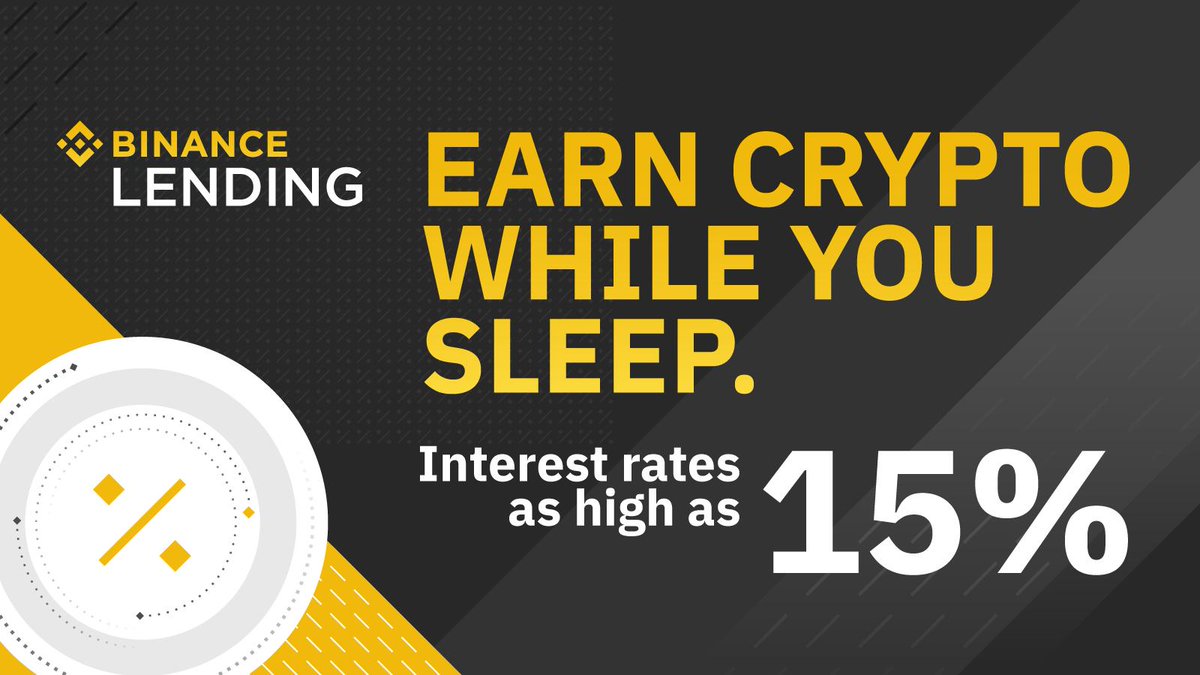
No, you don’t. While you get to keep most of what you make while margin trading (since you’re the one taking the main risk,) Binance charges an interest rate on your borrowed money. This rate varies depending on the currency and changes regularly. For updated rates, you can refer to Binance’s own interest table and Start trading with a new account.

Conclusion

Cryptocurrency trading is rated as highly volatile with the window for gains and losses swinging either way. You can make the most of your crypto gains with a bit more care, adherence to rules, and above all, continuous learning.


Investing in 2020: what you need to know

2020 is here and for investors, knowing what to do is essential to keep the winning edge. Here are some pointers to a profitable future.

It is never too soon to jump into the investment market. While many people think you need lots of capital or a degree in economics to invest, that’s far from truth. What you do need is an understanding of the market. Knowledge beats everything, particularly when it comes to investing.

So let’s say you’re ready to take the step. You want to start doing more than just saving up some money here and there. There is every need to be able to take the right decisions and be set for the future. While 2020 is already here, the market is looking great – as long as you know what to invest in.

When investing in stocks…

Stay with the big tech

This should be a no-brainer, but it’s good to always mention it. While there’s a certain expectation that the market will enter a recession in the short-to-midterm, recessions won’t necessarily harm everyone. Historically speaking, in fact, it’s the riskier investments that turn out worse during recession.

So for 2020, your best bet will be to stay with big, established, tech companies. That means you should look at giants like Google, Amazon, Disney, Netflix, Microsoft, Apple, and the like.

Even companies like Facebook could do well – they’re already established and stable and thus the risk is minimal with them even if a recession hit. Market dampeners will make stocks tumble no doubt, but it’s quite likely it will recover once the recession is over.

Locate penny stocks with potential

Now, if a recession doesn’t necessarily hit – which means there’s definitely room for growth in the market. A common investment pattern for newer, smaller investors is to look at penny stocks. These are stocks that are very cheap, usually under $1/each.

Now, penny stocks naturally won’t give you the investment returns that, say, having stake in Amazon will. But penny stocks require much less money to invest and they can surge quite quickly, at times doubling or tripling their value within months.

The plan here would be looking at a market you understand and then going for an emergent company within it. Who is innovating, and doing things that will sure become commonplace in the future? Those are your penny stock ideals.

Just as well, long-established companies that are underdogs but gearing up for major releases can be great investments. As an example, AMD’s stock quintupled its value between 2016 and 2017. A 400% ROI in a year is amazingly good, and many people obtained that (or even more – the stock sits at 1500% its 2016 value as of this writing) for a relatively low investment.

Go global and use online brokers

It used to be that investors were locked to only trading whatever stocks their regional markets had.

That’s not the case anymore.

While decades ago trading on foreign stocks meant lots of expensive, annoying long-distance phone calls, these days, there are online brokers, such as eToro, that can allow you to participate in foreign markets just as easily as you can in local ones.

As an investor, make use of it. Not all huge companies are American, and not all companies that are expected to surge in 2020 is in the US. In fact, by having stocks in different markets, you hedge your bets – after all, your Samsung stock isn’t likely to lose value if the NYC market crashes.

Diversify, not only in the companies you invest in, but also the countries and markets you use.

When investing in Cryptocurrencies…

Buy low and sell high is king

When it comes to cryptocurrencies, most people making money are doing so by buying when a token is cheap, then sitting on it as it appreciates. This is how many people made hundreds of thousands, some even millions, of dollars in Bitcoin: By buying when it was cheap (or when it released, when it was about $1/BTC) and then sitting on it until it was worth a lot – for example, when it surpassed the $10,000 mark in 2017.

While it’s unlikely anyone will ever see the massive ROI like people who bought BTC in 2009 and sold it in late 2017, that’s still the best approach towards crypto investments: Look for tokens that are likely to appreciate. Wait until they bottom out. Then buy, to sell later.

Go with margin trading

There are other methods of making money with cryptocurrencies. Short-term, or margin trading, is a common one – and the weapon of choice of many people playing the crypto market.

The trick with margin trading is learning the market and knowing what to expect in the very short term.

Some margin traders might keep a stock for a few days, but the most common type of margin trading – that is, day trading with leverage – this gets people buying and selling tokens within the same day. The profit is thin for each transaction, but the sheer amount of transactions and the volumes you’ll be buying and selling (plus the leverage money) will more than make up for it.

Locate new crypto goldmine

Lead tokens rise all the time, as older tokens fall. Not all tokens have the staying power of Bitcoin and Ethereum, and every year, we see that the tokens that once were thought to be safe bets all but disappear.

The crypto market is yet to settle. As is common with technology, every year, new implementations of blockchain (Cryptocurrency’s base technology) appear, often bringing improvements and new uses for the technology.

This makes new tokens with lots of potential appear all the time. Not all tokens with potential will make it, but some will – and a few years from now, we’ll sure have stories about a new token people bought during the IEO and sold years later at a huge profit just as we have them from BTC and ETH.

Look for what new tokens are out there, or which tokens that have been around are having their day in the sun. Then go for those. And as always, remember to buy low and sell high.

In the end…

The investment market shouldn’t scare you. Even when there’s talk of a recession, that talk has been there for year – and the recession is yet to come. It could come in 2020, but it could also come in 2022 instead.

When it comes to investing, time is money. The day to get started on investments isn’t when the economy is stable, and the future looks rosy and perfect – that just never happens.

An incoming recession means there might be an increased risk, yes, but bigger risk implies bigger rewards. Let’s not forget that, while many people lost everything during the last US recession and housing crisis, some people instead made fortunes as well.

Those people making fortunes. They were investors who knew what to look for and what to bet on.

Individual Retirement Accounts and Current Trends

IRAs are important as they undergird the future for the working class. What if your IRA company goes bankrupt? What will you do? Read on to find out more.

My Gold IRA company went bankrupt. What now?

It’s a nightmare scenario for most people, particularly those close to retirement: They’ve made investments all of their lives to secure a future, but suddenly the company keeping them says they have no money.

What happens now? Is everything going to be fine, or have you lost all your savings and have to start over again?

We’ll start with the good news: In most cases, your savings will be covered by government-mandated insurance.

Note how we say most.

How insurance works on IRAs

The US government mandates that all IRA accounts need to be covered for at least $250,000. This cover is expected to be used in cases of funds going missing, as could happened during massive disasters.

If your company closes and for some reason your investments aren’t there (but they’re in the books) you should be covered. You should also be covered if your company falls victim to a robbery that funnels its funds, including the retirement funds and investments of its clients.

The $250,000 number is also a baseline – many IRA companies have insurance for two, three, or even ten times that much. Even if it’s a gold IRA, that should cover your IRA savings. Plus, we have a small detail with gold bars: They’re physical, bullion bars that should still be there anyway.

How gold bars make it simple

Any decent IRA provider will also refuse to be the sole custodian. Instead, most gold bars are kept in secure locations under tight government regulation, such as the Delaware Depository.

As long as your gold IRA puts your bars there, you should still have your investment even if the company disappears. Gold, after all, isn’t liquid and can’t be spent by accident, nor would it be at all easy to funnel gold bars from the facilities where they’re stored.

In most cases, what would happen is that the government would contact you to arrange a transfer of funds towards different management. Another company would take over, and you would barely feel the change. Great, isn’t it?

Well, that’s only if the bankruptcy is due to lack of funds. Things can get much more complicated if there’s fraud involved.

What about IRA fraud?

Most people investing in their IRA never get to see their shares, valuables, or even savings in physical form. They just see numbers on a screen or paper representing them, and assume the company is keeping them safe.

In most cases, companies do keep those things safe and transparently. However, it’s not unheard of for the management of a company like these to get a little bit happy about how funds are managed and on occasion tap onto them. Sometimes, tapping onto them often enough to make the company go broke.

If that’s the case things get a bit more complicated, depending on your actual standing.

Is your IRA company legal?

This is the question that will drive what happens then. If your IRA company was legally registered with the IRS and followed with its regulations – that is, if the company was legal to the government’s eyes, – you’re in luck.

You should be able to retrieve your investments without more than a headache or two. If you’re a victim to IRA fraud in a company the government considered legal, government-backed insurance will kick in.

It’s more complicated if you put your money on an unregistered IRA.

Unregistered IRAs are by definition illegal, and therefore you won’t be covered by any laws that protect IRA customers in these cases. If you put your money on an unregistered IRA you have been the victim of fraud, as the money is gone and there’s no insurance to back it up – nor will there be trustable books to confirm what you had.

In this case, a very long investigation will likely take place, where the IRS will try to ascertain how much each of the victims had stolen from them and in what form. If you’re lucky, they’ll be able to salvage enough from the criminal’s assets to pay you back.

You’re not likely to get lucky.

In most cases, the criminal will have either already spent the money or funneled offshore into banks and investments that can’t be tracked or confiscated. In this case, it’s more likely than not that you will, in fact, have lost everything.

The takeaway: Avoid IRA fraud at all costs

One of the most important decisions you’ll make about your finances will be your IRA manager and custodian, precisely because of this. Your IRA money is only safe if your company is legal. As such, you must do your homework before signing up with anyone. Get references. Ask around. Investigate. Even calling the IRS to make sure the company is in the clear might be necessary.

Do all that, simply because that will give you peace of mind. Having a properly registered IRA manager will protect you against anything that could happen with that money. Don’t take risks with your future, and only put your investments in the hands of people who have the legal clearance to manage it.

The Burgeoning World of Private Equity Firms: What You Need To Know

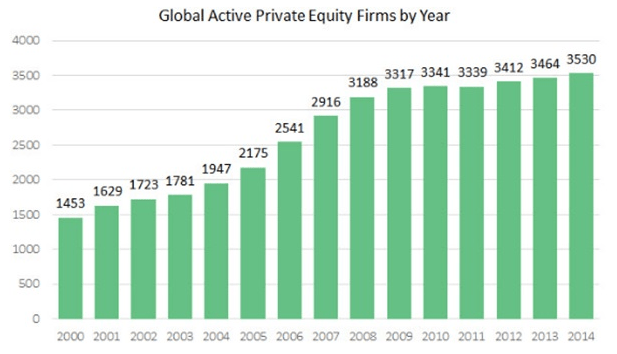
Private equity firms are growing by the numbers in today’s world. What do they do? How can they make a difference? Read on..

Private Equity Firms: What are they?

The investment market isn’t immune to trends. While most trends come in the form of specific stocks, values, or markets to invest in (for example, cryptocurrencies,) there are always outlier trends, trends that aren’t so much expectations about the market but tricks and methods to optimize investment.

Sometimes, these trends are sold as ways to make people rich quickly with a minimal amount of work.

Private equity firms are one of the trends we see currently. The concept itself has been in the news often, usually blaming them for people getting laid off or praising them for creating new jobs, with most people unable to understand just what equity firms do.

How do these firms work?

A private equity firm is, to put it simply, a conglomerate of investors who get together to purchase companies or businesses in a private manner – that is, outside the stock markets. The earnings these businesses receive (i.e., the equity) is then divided among those investors who chipped in to take over the company.

Although simplistic, that’s basically how it works: A bunch of people with money get together, pool their money into a private equity firm, and share both the risks and the proceeds of such venture.

Usually, this is done through already existing private equity firms, although it’s not uncommon for individuals to start their own.

Are they good or bad?

As with everything in business, this will depend on who you ask – and the specific private equity firm you look into. In theory, a private equity firm taking over shouldn’t be any different than having a new board of investors for publicly traded companies. After all, that’s literally what such takeovers mean.

However, the experience many workers have had with these firms is quite different. While it’s no secret that public investors often try to get the most money they can out of businesses, there are two sides to the stock market that keep these attitudes relatively in check.

First, who owns how much of each company is known. And second, the most valuable companies in the stock market (say, Amazon or Apple) are mainstays and it’s in the investors’ best interests to sacrifice short-term gain for long-term stability.

This is not necessarily true of private equity firms. The relative anonymity these firms give allows certain savagely capitalistic players to act in ways that, were they to be made public, would likely damage their images – and those of their companies.

Private equity firms effectively lessen this, because it’s often impossible to know who is behind the company.

There’s a second issue, although closely related. Private equity firms are known for often acting in extreme ways once they take over, sacrificing long-term stability for short-term earnings, often forcing companies to cannibalize themselves and their own market.

 This leads these companies that have been taken over to end up bankrupt, its employees laid off, all to fill the pockets of people who already had much more money than the company’s workers.

Is there an upside?

One might argue that the operating strategy that these firms use could lead to better economic development, as many of the pressures of public trading, such as stock price variations, don’t exist.

And that is true. A properly managed private equity firm can indeed help a company, or a whole industry, flourish under the guidance of leading experts.

However, this doesn’t always happen – partly because some of the biggest actors in the market are only in it for the money, with little interest in making things better.

Conclusion

The fact that some firms are there to drive companies to the ground doesn’t mean they all will. Some private equity firms will indeed act in ways that will better the market, and we can hope with time the good companies will outweigh the bad.

Trading ETFs: Strategies You Need To Know

ETFs belong to a growing sphere of investment that hugs the headlines in financial markets around the globe. Here are important strategies for trading in them.

ETF Strategies for Traders

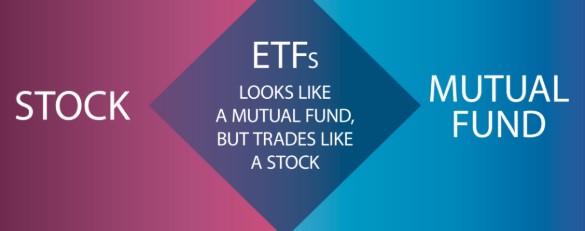
ETFs usually track the bonds, stocks or index, and other securities. These can be extensive market indexes like Nasdaq or Bloomberg Barclays US Aggregate Bond Index, targeted regional indexes, or niche indexes.

ETF might have hundreds of securities in their portfolio that tend to create prompt diversification to help in reducing the risk, as compared to owning individual stocks.

There is also some chance to further expand by structuring a basic portfolio with multiple ETFs. Each of these ETFs will hold a different type of security across asset classes.

ETF adoption is growing fast due to being a tax-efficient mode to continue with your investment ideas and through providing a low-cost and flexible mean to enter the potential of the markets.

At the start of the 21st century, the ETF assets were even less than $100 billion. Now, by 2018 the ETF assets have exceeded $4.7 trillion around the world and are still increasing its number of products.

According to an estimation by BlackRock, by 2023, ETF assets will rise to more than $12 trillion.

Let’s have a look at each of its characteristics in detail.

  • Choice

First of all, you need to determine what you are looking for. Whether you are a retiree that is shopping for funds to have some speedy source of income, or you are a Millennial who has just switched his job and now trying to find a way to roll over your assets so that they could help them after retirement.

There are almost 1800 ETFs that are enlisted in the US, and BlackRock’s ETF business, iShares have about 300 to offer just in the US, and more than 800 around the world, which represents a huge range of geographical regions and asset classes.

You have the option to select an ETF portfolio that is most suitable for you, your passion and your goals.

Do you want to reflect your value through your money? With viable iShare ETFs, you don’t need to go against your personal beliefs while investing.

 For example, if you are an environmentalist, you can always invest in companies dedicated to providing positive environmental, governance and social business practices.

Or if you want to invest in some long-term future-shaping forces, like rising technology, various ETFs are there offering collaboration with companies that work in technological advances and also working to shape our global society and economy.

  • Value

Investing in mutual funds that are being actively managed can be a bit costly as their professional asset managers and all the researching staff has to be paid for their working and the decisions they make.

iShares ETFs usually charge a very small amount of fees. It can be said that iShares ETFs charged fees in on average, one-third of an active mutual fund, and still they generate half the tax compared to the average of an active mutual fund.

The value keeps adding up. By 30 years, hypothetical investment of $10,000 made in an active open-end mutual fund with a fees of 0.96%, the monthly assistance of $1,000 and an expected compounded rate of 8% for return, will be likely to grow to an amount of $1.2 million and is going to lead to $270,000 in the fees.

Keeping every other calculation same for an ETF charging 0.34% fees, it will be likely to rise up to $1.4 million and leading to just $100,000 in fees.

  • Accessibility

Get in the game without any hassle. One of the major benefits of ETFs is that you can sell and buy them all day round, similar to stocks. What you need for that is just a brokerage account.

For a mutual fund, you need to buy and sell typically through a mutual fund broker. You will get your reimbursement three days after you place your order, but according to the net value of the asset of the day when you placed your order.

But with ETFs, you don’t need to wait that long. Markets are open all the time and you can sell out whenever you want and get you to cash at the moment.

For some mutual funds, there is a limitation of buy-in or minimum amount that you have to invest. But there is no such limitation with ETFs. Buy your shares just as you buy stocks for individual companies without any minimum share. If you can afford the share price, you can buy it without any condition.

These differences make ETFs for young investors worth considering. You can also use ETF as a modern-day gift to cherish major events in your life like wedding, graduation, communions, etc.

iShares ETFs gives you the opportunity to choose from various options and make the most suitable choice to assist in your needs, with the transparency and assurance that you are getting right value for your money and investing in the easiest way that suits you.

But look at the bigger picture, you can use the iShares ETFs not only to help you to reach the goals of your life but also assist you to keep up with your personal passions.

Risks Involved in Investing, Including the Risk of Loss

The environmental, social, and governance investment strategy restricts the form and frequency of the investment choices available to the fund. It usually results in underperformance of the fund as compared to other funds that do not focus on ESG.

The ESG strategy of fund results in major investments in the industry of security fields that lead to overall market underperformance or underperformance of other funds that are selected for ESG standards.

Those funds that tend to concentrate their investments in specific sectors, industries, asset class or market might underperform or can be more volatile compared to other sectors, industries, asset classes or markets than the general securities market.

Conclusion

Technology companies tend to be more affected by product obsolescence and excessive competition. ETFs as well as shares’ transaction lead to commissions of brokerage and ultimately generate tax. Every investment company has to distribute portfolio returns to shareholders.

The fees related to funding investment are not just borne by the investors in individual bonds and stock. The investment comparisons are only for explanation. To have a better understanding of the differences and similarities between investments one must read the product prospectuses.