As The Crypto Spring Becomes Evident,Here Are The Top 3 DeFi Leaders In H2 2020

The reign of DeFi has translated to more money in the hands of crypto hodlers. Here is how you too can join the rave.

The decentralized finance (DeFi) market has experienced a massive growth over the last several months. Anyone following blockchain trends will likely know that ICOs are a thing of the past. Now, it is all about DeFi projects.

DeFi pulse statistics shows that the sector’s total value locked (TVL) is currently at $6.71 billion and grows by $500 million weekly. This is massive growth from the previous month with a TVL of about $2 billion.

According to recent published reports, the TVL dropped to $500 million in March 2020. However, this explosive growth stems from the yield farming ecosystem and the high lending interest of DeFi projects.

Just as expected in any market, this sector has its leaders. Currently, Maker, Aave, and Curve Finance are the leading projects.

You Will Love: 2020 Has Been The Year of DeFi. Here’s How It Has Given Cryptocurrencies A New Lease of Life

1. Maker

Maker Dao is the current leading DeFi project, with more than $1.46 billion of the $6.71 billion locked within this single project. Maker outperforms other platforms in the DeFi world pretty much the same way Bitcoin tops the crypto industry.

Maker is the oldest and the most recognizable name and cryptocurrency on the list. It is a decentralized credit platform on Ethereum that supports DAI – a stable coin with a USD-pegged value.

You can open a vault with Maker, lock in collateral such as BAT or ETH, and generate DAI as a debt against that collateral. DAI debt induces a stability fee (a continuously accrued interest) paid upon repayment of borrowed DAI.

Also, Maker has a unique feature called DAI Savings Rate (DSR). The feature enables DAI holders to lock their DAI into Maker’s DSR contract and receive a variable interest rate in DAI, generated from stability fees.

Maker dominated the DeFi sector with 21.78% of the TVL.

2. Aave

Aave is an open-source, non-custodial protocol on Ethereum for borrowing and lending a vast range of cryptos using stable and variable interest rates. I should also mention that the platform is entirely decentralized.

Aave offers notable distinguishing features such as rate switching, flash loan, uncollateralized loans, and unique collateral types.

It also uses a native coin – LEND – as a bargaining chip to provide holders with discounted fees. LEND is also staked for governance and as the first line of defense for outstanding loans.

Also, Aave provides the broadest range of DeFi collateral of any lending protocol on the market and takes a large share of the DeFi lending market due to its strong liquidity and the chance to protect against smart contract risk.

Aave’s flash loan feature opens the doors for safe and secure arbitrage opportunities at virtually no cost to the user.

Unlike other lending platforms that tend to lock users into a variable or fixed interest rate, Aave’s rate-switching feature allows users to switch between two different markets and earn by arbitrage.

This enables users to get the best interest rate on their loans by choosing between “variable” and “stable” interest rates.

However, these stable rates are not fixed interest rates but a rather stable form of variable interest rate, which is constant and less susceptible to market fluctuations.

Though launched in May 2020, Aave is currently ranked second and locked at $1.26 billion.

Read Also: What To Expect From The Crypto Market In H2 2020

3. Curve Finance

The Curve is also a decentralized exchange liquidity pool on Ethereum designed for stablecoin trades. It is ranked third with a TVL of $1.04 billion.

Since its launch in January 2020, Curve enables users to trade between various stablecoins with low slippage. Its small fee algorithm was explicitly designed for stablecoins and earning fees.

The Curve is also one of the few DeFi protocols to achieve exact product-market fit by fulfilling a specific purpose that market participants have come to value.

Also, Curve serves as an alternative to trading stablecoins on general-purpose DEXes such as Uniswap, whose algorithm is not optimized.

Curve also integrates with DeFi lending and borrowing platforms like Compound, dYdX, and Aave, which allows Curve users to earn interest on top of their trading fees.

Another interesting fact about Curve and other Ethereum-based DeFi protocols in its class is that they allow anyone to provide liquidity to the market.

Unlike traditional market makers that often use exchange-provided assets to provide liquidity to a market, Curve delivers to users with assets that support its market to provide liquidity.

Recommended: Are Hedge Funds Safe in Unstable Times? Here Are A Few Tips You Can Use

Conclusion

Hopefully, the reign of DeFi will lead to a further deepening of the cryptocurrency market for the benefit of investors . There is no doubt that there is more to come in the days ahead.

Here Is How Cryptocurrencies Have Become The Norm For Money Transfer

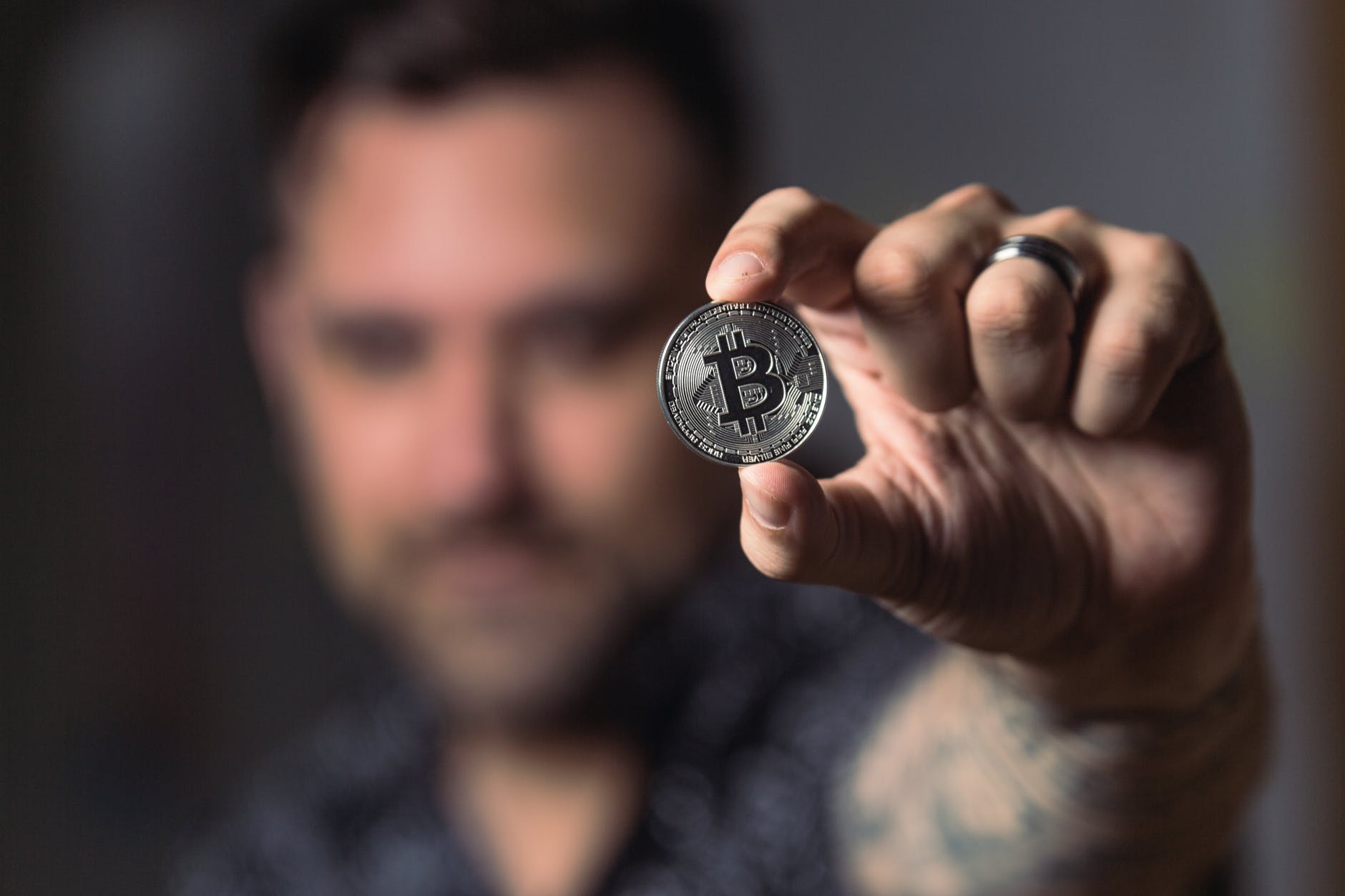
Crypto beats fiat as a result of its flexible governance structures. With no Central Bank to look to, these digital currencies have taken on a new life as money transfer vehicles.

Photo by Crypto Crow on Pexels.com

Is the crypto option for money transfers here to stay? Here is what you need to know

Cryptocurrencies have become the new normal of money transfers. It is gradually becoming a thing to request a cryptocurrency wallet address rather than a bank account number when trying to transfer funds between counterparties. The reasons are obvious.

Crypto payments are fast and secure due to the cutting-edge technology of the blockchain. Also, transaction costs are minimal, making it a good choice from a business perspective since both sides get to keep the part of the payments that would have gone to settling payment transfer costs in a regular wire transfer.

Crypto transfers seem to be here to stay given all their benefits. However, there are existing limitations you need to keep in mind before converting all of your cash to BTC or ETH.

Reach

Despite having been in existence for more than a decade, cryptocurrencies have still not been adopted globally by most people. As at the beginning of the second quarter of 2020, there were 50.71 million blockchain wallet users worldwide, in contrast to well over a billion regular bank accounts. At this point, one would realize that there is a huge gap to be filled.

This is something to keep in mind as most people do not have cryptocurrency wallets, and you can’t transfer to them without one. A suggested solution is to try to open the conversation with clients or suppliers or any other business counterparties, encouraging them to open a blockchain wallet and make your business transactions seamless.

Price stability

This is a major issue with cryptocurrencies. Imagine getting a transfer of say 2 BTC worth $18,000, and just before you’re able to either pay for another product with it or convert it to a fiat currency, the value drops to $12,000, which is a $6,000 loss on a single transaction.

Also Read: Despite The Marketplace Twists,Thorns and Thistles, Here Is How USDT Has Weathered The Storm

A way around this is to transact in the stable cryptocurrencies known as stablecoins. The USDtether, for example, is tied to the value of the US Dollar. Tether cryptos are not as subject to volatile swings in value as other cryptocurrencies and this makes it safer to use them for transactions.

Government regulation

Some countries have strict regulations that limit the volume or usage of cryptocurrencies by law. For example, Binance was created in China but had to move to Japan due to issues with regulators. Be sure to confirm if there are no restrictions on the use of cryptocurrencies either within your own country or that of your counterparty.

Photo by Launchpresso on Pexels.com

Platform Security

The safety of blockchain only guarantees that transactions and their history cannot be tampered with. Beyond that, your wallet is vulnerable to the extent to which you can protect your account. If malicious hackers gain access to your account passwords, your cryptocurrency funds will be lost. Hence, it is important to secure your wallet either through 2 Factor Authentication (2FA) or Authy.

As long as you keep the above factors in mind, the blockchain and cryptocurrencies ecosystem will make your experience with transferring money seamless even across borders.

Recommended: What To Expect From The Crypto Market In H2 2020

Despite The Marketplace Twists,Thorns and Thistles, Here Is How USDT Has Weathered The Storm

USDT has weathered the storm these past two years to soar to the third place on the list of the most capitalised crypto. Here is the journey so far for Tether this year.

Photo by David McBee on Pexels.com

The meteoric rise of USDT in 2020 H1: Everything you need to know

Predictions for what will happen in the cryptocurrency world exist at any given time, and vary wildly depending on who you ask. Long gone are the days when Bitcoin was expected to reach $100,000 “by the end of the year,” although there’s still the odd enthusiast with overtly positive expectations to come up with such claims now and then.

Still, most movements in the crypto market are predicted by at least a few people, and in some cases these crypto gurus, when predicting such market changes, end up causing them in response.

However, 2020 has seen a market change nobody ever thought, among many other things the world has seen this year. Specifically, the rise of the USD Tether (USDT) and stablecoins in general has been higher than even the most optimistic of predictions.

You Should Read: Investing in 2020: what you need to know

What’s USDT? Why is it important?

The USD Tether is the name of a specific stablecoin, USDT for short, whose value is pegged to that of the US Dollar. 1 USDT thus equals 1USD at all times. It’s one of many coins with prices pegged to those of fiat currency, and thus it is categorized as a stablecoin – because the price always remains stable.

Is it a bad coin? Why people never thought it could rise?

Stablecoins can be divisive among the community, because they imply the creation and use of blockchain as a means to move fiat instead of independent digital currencies – something some crypto enthusiasts consider against the spirit of cryptocurrencies.

However, stablecoins aren’t considered bad in general. Over the years, many crypto analysts have actually predicted they could become an entry point into cryptocurrencies for many people, and the relative safety of their prices has led several crypto exchanges, Binance chiefly among them, to adopt their own stablecoins and offer instant exchanges into them to crypto holders.

Stablecoins are, thus, quick ways for holders to jump out of the market without necessarily going through the bothersome process of turning their crypto into fiat. Since this process doesn’t involve actually exchanging tokens for fiat, but for other tokens, many of the costs – such as a bank transaction and withdrawal fees – are skipped. It’s the preferred way for holders and traders to take a step away from the market if they plan on returning to trading soon.

But why would USDT grow so suddenly? Why would it get popular? Are new people joining the market?

The reason USDT has risen in the past few months has little to do with newcomers and a lot to do with existing crypto traders, current events, and how those shape the economy.

As had been long predicted, a worldwide recession is underway, and if you believe certain predictions, we’re yet to see the worst of it. The current pandemic, along with the gross mishandling of it by many world governments, is leading the worldwide economy towards a second shutdown within a year, one that’s expected to hit much worse than the first one.

And the thing about the first one is it proved many theories about cryptocurrencies’ place in the economy, well… wrong.

Read Also: These Are The 4 Fastest Cryptocurrencies For Money Transfer Purposes

Wait, what was wrong?

One of the most commonly held beliefs among cryptocurrency enthusiasts was that crypto would rise if markets went down. Some people went as far as to call it the new gold, usually following the (not quite true) belief that gold always goes up when markets go down.

However, March and April 2020 told a much different story: As COVID-19 had markets close and stocks went down across the board… so did cryptocurrencies. Ether hit its year-long low in mid-March, having shed 50% of its value in a span of just two weeks. Bitcoin did likewise in April, hitting a year-low price of just under $5,000/BTC – less than 50% of the high reached back in September, which had the token valued at almost $12,000.

Being the main tokens in the market, they’re often used as a way to see the current trend in crypto prices. Both tokens severely underperformed when the recession first hit, and while both have also recovered since (Bitcoin partly helped by its May 2020 halving,) with a second, worse recession dip in our doors its only understandable people are trying to jump ahead of the market.

Will this rise last?

USDT isn’t much of an investment, being tied to the value of a clearly inflational currency, and therefore there’s little reason to hold it in a world where cryptocurrencies aren’t yet mainstream. But,the green light is in the fact that mnay hold it as a midpoint between investing and selling off their crypto holdings.

USDT is currently serving as a bellwether for crypto traders who fear the current economy might send token prices to the ebb. Once markets recover, however, many of them will jump back – and USDT might return to its regular trade values or yet, grow stronger.

Recommended: The 3 Trusted Global Cryptocurrency Exchanges For Futures Trading

Investing in Tough Times: 3 Lessons You Can Use for Stock Picks

In times of great peril on the earth, people embrace doomsday scenarios and let go of rationality. In these days of rage, here are tips you can use for stock picks.

Tough times are always accompanied with a hit in stock prices the world over, and the reason is that many investors tend to get uncomfortable and sell off their shares. Recession is a prolonged period of significant decline in economic activity.

However, if people can learn to forego fear and learn how to invest properly, it could turn out to be a great opportunity for high returns. Before you rush into investing your hard earned money vaunted finance experts are all for it, you should consider the following for your stock picks:

Read: The Price Volatility of Bitcoin and Cryptocurrencies Explained

1. Investing in High-Quality Stocks

Investing in high-value company stocks is one of the relatively safest things to do in tough times. Many of these companies have long business histories of strong balance sheets, which enable them to survive a prolonged period of weakness in the market.

Though many of them have also dropped in value, it is noteworthy that their decline isn’t a result of poor management but an unfortunate world catastrophe. When things return to normalcy, most will bounce back, and you’ll be a big winner if you have made long-term investments in these companies.

Some of such high-quality stocks are:

Healthcare

Medical services are always required irrespective of the economic condition, and investing in pharmaceuticals and medically related firms is one of the safest means of minimizing risks and ensuring high returns.

As the coronavirus halts the global markets and people are forced to stay at home and self-isolate, companies that produce home medical equipment like Adapt Health Corp are benefiting from the effects of the coronavirus pandemic.

Tech Companies

Over the years, tech companies have also proven to be resilient in tough times. For example, Microsoft stocks fell by 5.4% in February, this created a very rare opportunity to obtain such high-value stock at that cheap price. Next-generation technology growth catalyst companies like Intel are also a nice place to invest for unbelievable maximum returns.

Read Also: With The World Economy Lying Prostrate, The Forthcoming Bitcoin Halving Could Be Something To Cheer About

2. Non-Cyclical Stocks

These are defensive stocks that are not affected by a decline in economic growth. These stocks are from companies who produce and distribute essential goods and services needed daily, including staple foods; utilities, such as power, water, gas; and waste management.

Unlike cyclical stocks, these stocks do not have any direct correlation to the economy, and that’s why they are resistant to the effects of unstable markets. A good example of such stock is Walmart, which has recorded an ever-increasing high value despite the coronavirus outbreak.

3. Diversification

Learning how to diversify is very crucial when it comes to investing in tough times. It would be unwise to put all your eggs in one basket, and that’s why every smart investor spreads their investment over a range of investment vehicles.

It is even wiser if you spread your investments over different sectors. Many smart investors have used this management strategy that combines different investments in a single portfolio. It is aimed at yielding a higher return while minimizing risks.

You Will Love: The 3 Trusted Global Cryptocurrency Exchanges For Futures Trading

Are Hedge Funds Safe in Unstable Times? Here Are A Few Tips You Can Use

Hedge Funds tend to outperform individual stocks as a result of their diversification. There is a bit more you should know as you read on..

Nobody would have accurately predicted that a pandemic would come to change the course of activities all over the world, but smart investors are always prepared for such a time as this. Do you also want to take advantage of this COVID-19 outbreak to invest in hedge funds?

I know you feel unsafe and insecure about investing this period, and it’s perfectly normal to feel that way, mainly because stocks – even of bigger corporations – are generally depreciating, oil prices have reduced, gold is hitting rock bottom, and many more unfortunate economic events are happening.

Notwithstanding, is it safe for you to invest in hedge funds in this unstable period? I am going to share some of the properties of hedge funds with you in the following paragraphs so you can decide if investing in hedge funds is right for you this period.

1. Diversification

Hedge funds offer an array of investments such as long or short, tactical trading, events-driven or emerging markets, and managers take advantage of diversified investments to earn the highest return for the least risk.

Hedge funds focus on specific risks to reduce its risk exposure, by a large percentage, to the general market movements. This technique works because these investments react differently to the same economic event. So, hedge funds generally outperform equities with much lower volatility even in unstable times.

Read Also: What You Need to Know About Samsung Blockchain

2. Long or Short Selling of Hedge Funds

This is a killer strategy that most hedge fund managers use; it involves buying and selling stocks that are undervalued. Managers target shares that are about to hit rock bottom, and they borrow it. Then they make a gross profit by selling out the borrowed shares and buying it back when it falls.

However, there are risks associated with this if the market conditions do not go as planned. It may lead to a situation called a ‘short squeeze.’ Long term selling, on the other hand, involves buying undervalued stocks with the hope that it will appreciate with time, and then sell it when it does.

3. Transparency

Hedge funds are not regulated by the Securities and Exchange Commission, but the Dodd-Frank Wall Street Reform and Consumer Protection Act passed in 2010 requires them to be transparent. The transparency, however, does not include disclosing where investments are made.

4. Loss Reduction

Most hedge funds have highly financially intelligent workers, who do not only employ aggressive investment strategies to maximize returns as well as reduce risks but are also very good in financial management to be factual. They provide investors with the best information there is and also use selective strategies that they believe will add to the bottom-line.

5. Risks and Returns

According to the Securities and Exchange Commissions, hedge funds managers in a bid to maximize returns often engage in many risks. If things do not turn out as planned, it may lead to a bottom-out in returns. Also, the lack of a regulating body makes hedge funds prone to the risk of fraud.

Read Also: How Leverage Trading Works When You Use The Binance Cryptocurrency Exchange

Are Hedge Funds Worth It this Period? Final Words

Hedge funds are low-risk investment vehicles, which are not entirely dependent on the situation of the general economy, mainly because of how it is run. So, it is worth trying; however, losses can be incurred like every other investment vehicle.

Must Read:The Price Volatility of Bitcoin and Cryptocurrencies Explained