As AI and Green Solutions Soar, Here are 5 Global Business Opportunities You Can Explore in 2026

Leading Business Opportunities in 2026

As we navigate 2026, the global economy is shaped by rapid advancements in AI, sustainability demands, and demographic shifts. Entrepreneurs are capitalizing on these trends, with small businesses projected to drive innovation in tech, health, and green sectors.

According to industry analyses, AI integration alone is fueling a surge in startups, while clean energy and personalized services address pressing societal needs. This overview highlights key opportunities, organized by industry, with actionable insights for aspiring business owners. Focus on niches that solve real problems, leverage low-cost tech tools, and scale through digital platforms for maximum profitability.

Read Also: Here Are 3 Leading Gaming Cryptocurrencies That Could Yield High ROI

1. AI and Technology-Driven Businesses

AI continues to dominate, with ventures in automation and specialized software offering high margins and scalability. The market for AI tools is expected to exceed $230 billion by 2027, driven by small business adoption.

  • AI Implementation Agencies: Provide “human-in-the-loop” services to integrate AI into operations for SMBs, such as chatbots and predictive analytics. Low startup costs (under $10K) with recurring subscription revenue.
  • Autonomous Robotics: Develop or service self-driving tech for warehouses and logistics. Venture capital favors this sector, with applications reducing human input in everyday tasks.
  • Micro-SaaS Platforms: Create niche software for industries like real estate or e-commerce. Examples include vertical AI agents for automation, with potential for billion-dollar valuations.
  • Identity Verification Software: Build tools for secure online transactions, thriving amid rising cyber threats.

These opportunities suit tech-savvy entrepreneurs, with profit margins often exceeding 50% through SaaS models.

2. Sustainability and Green Energy Ventures

With climate goals intensifying, sustainable businesses are recession-resilient and attract eco-conscious consumers. The circular economy is a high-impact area for future-proof startups.

  • Green Energy Consulting: Advise on solar installations or energy-efficient upgrades. High demand in EV and semiconductor supply chains offers growth for small suppliers.
  • Circular Economy Services: Offer recycling tech or sustainability audits for corporations. Focus on rebuilding local production to reduce global dependencies.
  • Clean Energy Installation: Specialize in residential solar or wind solutions, benefiting from government incentives.
  • Eco-Friendly Products: Launch brands for reusable goods, tapping into consumer shifts toward zero-waste lifestyles.

Startups here can achieve quick ROI, with some reporting 30-40% margins by combining services with digital marketplaces.

3. Health and Wellness Opportunities

Aging populations and post-pandemic priorities boost HealthTech, with telemedicine and elderly care leading growth. The “Silver Tech” revolution targets boomers, creating scalable ventures.

  • Telemedicine Startups: Provide virtual health consultations, integrating AI for diagnostics. Expected to boom with remote monitoring tools.
  • Elderly Care Tech: Develop apps or devices for senior living, like fall-detection wearables or companionship bots.
  • Wellness Coaching: Offer personalized fitness or mental health programs via apps, with subscription models.
  • HealthTech Niches: Focus on biotech solutions for personalized medicine, appealing to investors.

These businesses thrive on low overheads, with many starting as home-based operations and scaling digitally.

4. Service-Based and Consulting Businesses

Traditional services evolve with AI, offering low-barrier entry points. Financial and digital services remain profitable, with demand for reskilling in AI-proof careers.

  • Financial Planning: Advise on investments and retirement, using AI for data analysis.
  • Digital Marketing Agencies: Manage social media for local businesses, incorporating AI-driven content.
  • Workforce Reskilling: Train professionals transitioning to tech roles, addressing job market gaps.
  • Virtual Assistant Services: Provide remote admin support, enhanced by automation tools.

Profitability here stems from freelance models, with many achieving 60%+ margins.

5. Industrial and Construction Sectors

Infrastructure needs create steady opportunities, especially in material handling and site services. These are financeable with equipment loans.

  • Construction Contracting: Specialize in site prep or renovations, riding housing booms.
  • Towing and Roadside Services: Offer emergency assistance, resilient in economic downturns.
  • Mobile Repair Businesses: Provide on-site fleet maintenance, with high approval rates for funding.
  • Warehouse Support: Supply equipment for logistics, boosted by e-commerce growth.

These hands-on ventures suit those with trade skills, offering stable revenue streams.

LAST LINES

In summary, 2026 favors agile entrepreneurs who blend tech with human needs. Prioritize niches like AI agencies or green consulting for quick launches. With tools like no-code platforms, barriers are lower than ever—research markets, validate ideas, and scale smartly to capitalize on these trends. 

Must-Read: How Bitcoin Sprang Past The $100k Mark to Set A New ATH
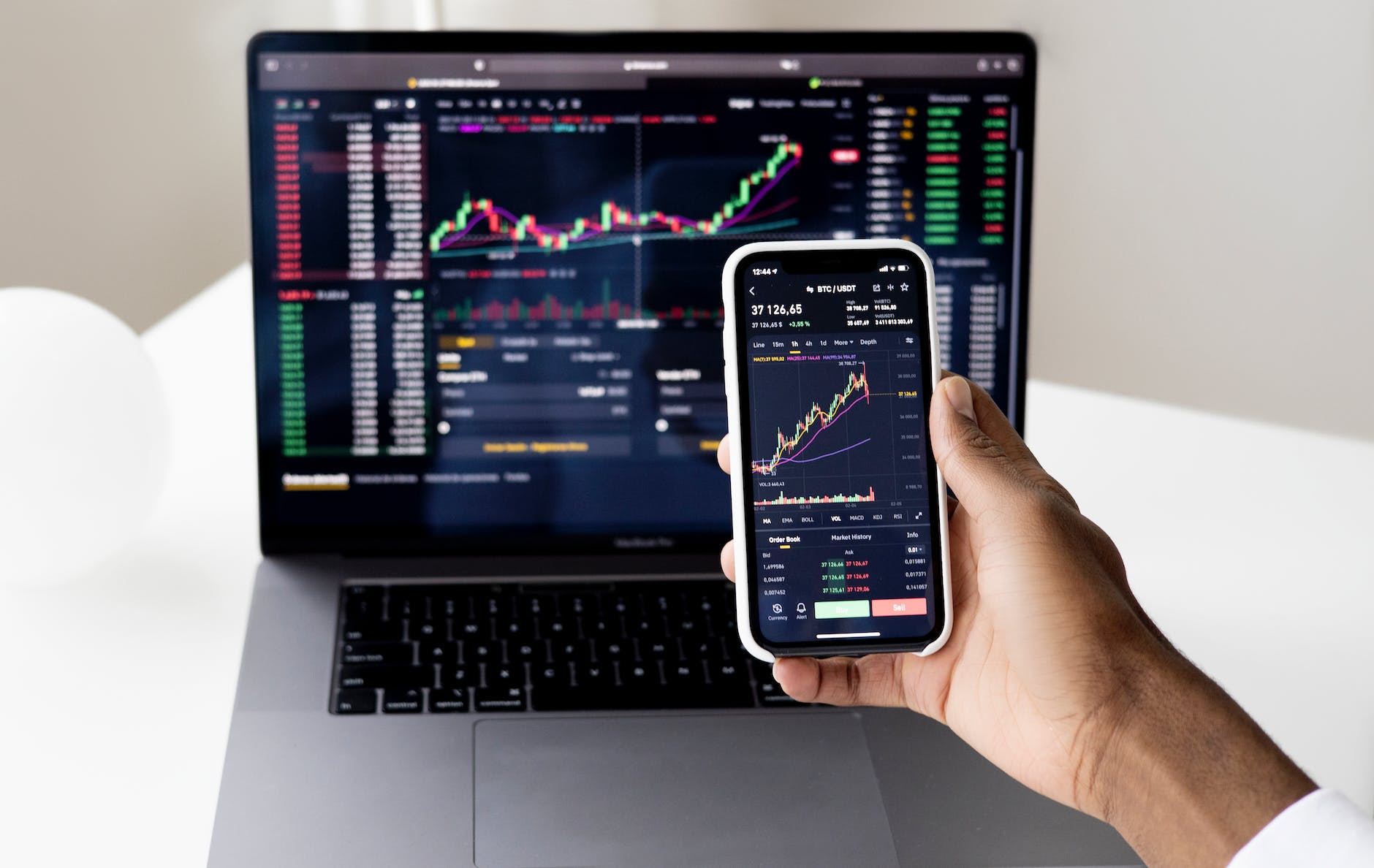
Here Are The Biggest Five Financial Market Events So far in 2023

Financial markets are shaped by non -market and market events. IN the half-year 2023, here are the events that have made the most impact.

Photo by Anna Nekrashevich on Pexels.com

The year 2023 has so far been marked by significant financial events that have reshaped the global economy and left a lasting impact on various sectors. From technological advancements to geopolitical shifts, these events have shaped financial markets and influenced investment strategies worldwide.

In this article, we will explore the five biggest financial events of 2023, highlighting their significance and implications.

Read Also: 9 Reasons To Invest In Index Funds in 2023 and Beyond

Shaping The Market

Non-market events can have a significant impact on financial markets for several reasons. Non-market events such as political developments, natural disasters, or geopolitical tensions can create uncertainty and instability. Financial markets thrive on stability and predictability, so when unexpected events occur, investors may react by selling off assets or hedging their positions, leading to increased market volatility.

Moreover, non-market events can also prompt changes in government policies, regulations, or monetary decisions, which can directly impact financial markets. For instance, changes in interest rates, fiscal policies, or trade agreements can influence borrowing costs, consumption patterns, and profitability, thus affecting asset prices and market behavior.

In the half-year 2023, these are the events that have shaped the market remarkably as we head into the third quarter.:

1.The Unending Rise of Cryptocurrencies

Perhaps the most notable financial event of 2023 has been the continued rise of cryptocurrencies. Led by Bitcoin, Ethereum, and other major digital assets, cryptocurrencies have gained mainstream acceptance and adoption.

Several countries have implemented regulatory frameworks to provide clarity and security for investors, contributing to increased institutional participation.

The market capitalization of cryptocurrencies reached new highs, with institutional investors and corporations integrating digital assets into their portfolios. This surge in popularity has raised questions about the future of traditional banking and the potential for decentralized finance to disrupt established financial systems.

2. Economic Recovery Post-Pandemic

The period under review has so far witnessed a significant rebound in the global economy following the severe disruptions caused by the COVID-19 pandemic.

Vaccination campaigns and fiscal stimulus measures adopted by various governments accelerated the recovery process. Industries such as travel, hospitality, and entertainment, which were hit hard by the pandemic, experienced a resurgence as restrictions eased.

Stock markets reached record levels as investor confidence returned, and corporate earnings rebounded. However, concerns about inflation and supply chain disruptions emerged, posing challenges to the sustainability of the recovery.

3. Green Transition and Sustainable Investing

The push for sustainability and climate action gained substantial momentum in 2023. Governments and businesses worldwide made ambitious commitments to reduce carbon emissions and transition to renewable energy sources. As a result, sustainable investing gained significant traction, with investors increasingly considering environmental, social, and governance (ESG) factors in their decision-making.

Renewable energy stocks and green bonds attracted substantial investment, and companies faced increasing pressure to disclose their environmental impact and align with sustainable practices. This shift towards a greener economy brought new opportunities for investors and compelled industries to adapt to a changing landscape.

4.Geopolitical Developments

Geopolitical events have played a crucial role in shaping the financial landscape of 2023. Trade tensions between major economies, such as the United States and China, continued to impact global markets.

Governments pursued protectionist policies, resulting in trade disputes and the imposition of tariffs. The Brexit process reached its conclusion, with the United Kingdom officially severing its ties with the European Union. This separation brought economic and financial implications for both parties, affecting trade relations and financial markets.

Geopolitical developments created uncertainties and volatility, requiring investors to carefully assess risks and diversify their portfolios.

5. Technological Advancements

Technological innovations and advancements significantly influenced the financial sector in 2023. The emergence of artificial intelligence (AI), blockchain technology, and decentralized finance (DeFi) reshaped traditional banking and financial services. AI-powered algorithms and robo-advisors gained popularity, providing personalized financial recommendations to individuals.

Blockchain technology disrupted sectors such as supply chain management, logistics, and digital identities, offering transparency, security, and efficiency.

DeFi platforms enabled peer-to-peer lending, decentralized exchanges, and yield farming, revolutionizing traditional financial intermediation. These technological advancements opened new avenues for investment and posed challenges to traditional financial institutions.

Conclusion

The year 2023 has been characterized by several significant financial events that have impacted global markets and investment strategies. The rise of cryptocurrencies, the economic recovery post-pandemic, the green transition and sustainable investing, geopolitical developments, and technological advancements have been the five most prominent events.

Each of these events has introduced new dynamics, presenting opportunities and challenges for investors, businesses, and governments. Understanding and adapting to these changes will be crucial for navigating the financial landscape as the year progresses.

Recommended: Why Cryptocurrency Markets Are Looking Very Much Like Stock Markets In 2023

This Is How Your Business Should Play The Global Markets Scenario in 2023 And Beyond

Trade wars have become commonplace as governments seek protectionist policies designed to safeguard domestic industries from foreign competition while also attempting to open up access abroad for its own interests. Thus, creating an uncertain environment.

Image by Gb Adolph Obasogie 2023

The global markets scene has changed drastically from what we know today. With the advancement of technology, globalization has allowed for a new level of interconnectivity between countries and their economies.

In the past decade, emerging markets such as China and India have become more prominent in international trade due to increased access to capital and resources. This has led to an increase in competition among businesses on a global scale with companies having access to customers across multiple countries simultaneously.

In addition, digitalization is becoming increasingly important for businesses as it allows them greater flexibility when it comes to marketing strategies and customer service offerings that can be tailored specifically towards different regions or demographics around the world.

New Markets, Newer Pathways

The push by companies to develop products quickly while leveraging big data analytics gives them an edge over traditional competitors who are unable take advantage of these opportunities without significant R & D budgets for technological infrastructure.

One major change that is likely to take place over the next few years is an increase in digitalization across all sectors. This means more companies will move away from traditional brick-and-mortar operations towards online platforms for their products or services—a trend which has been gaining momentum since 2020 due to pandemic restrictions on physical storefronts.

Likewise, environmental concerns are playing a larger role than ever before when making decisions about where products should be manufactured or sourced from which could lead some industries away from certain areas if they fail meet standards set by regulatory bodies like Greenpeace or other sustainability initiatives put forth by governments around the world.

All this taken together means that any business looking at expanding into international markets needs consider all these factors carefully if they want remain competitive in 2023’s rapidly changing landscape .

The  Forces Driving Disruption

As the world continues to become more interconnected, global markets are becoming increasingly competitive. By 2023, the realities of these markets will be even more complex and intertwined than ever before. The competition between countries for resources and capital is likely to intensify as nations strive to remain competitive in a rapidly changing economic landscape.

The most important factor driving this change is technological advancement; with new technologies being developed every day that allow companies to operate on a larger scale, it’s no surprise that global marketplaces are becoming increasingly crowded places.

Companies must now compete not only within their own country but across borders too; they must innovate quickly in order to stay ahead of their competitors or risk losing out on valuable opportunities for growth and expansion into new markets around the world.

The effect of the aforementioned can limit profit potentials significantly if not managed properly over time. As such , businesses need sophisticated strategies tailored specifically towards navigating these complexities successfully if they hope stand any chance at succeeding in what has become an incredibly demanding international marketplace today.

Looking Ahead

With advances in technology, global connectivity and new regulations, there are many changes that will shape the future of international commerce. In this essay I will explore some of these potential changes and discuss how they may impact businesses around the world in 2023.

As a result of the shifting playground, businesses must become increasingly agile when it comes to adapting their strategies for success within a rapidly changing digital landscape; those who can’t keep up risk being left behind as competitors seize opportunities created by technological advancements such as artificial intelligence (AI).

In addition, increased globalization means that firms must also consider factors beyond just local markets when making decisions about product development or pricing structures—for example, tariffs imposed by foreign governments can have significant impacts on supply chains and ultimately affect profitability margins worldwide.

Additionally, with rising environmental concerns driving consumers towards sustainable goods and services more often than before; companies need to be mindful not only of their own actions but also those taken by other industries if they want remain competitive while still maintaining ethical standards regarding labor practices or resource consumption levels. 

Overall ,the global market realities for 2023 present both challenges and opportunities alike ; however , with careful planning , strategic decision making ,and staying ahead of trends —businesses everywhere should be able adapt accordingly so long as they stay informed about what’s happening around them.

Read: Here Is How Cryptocurrencies Have Become The Norm For Money Transfer

Takeaways

The world is now a much more interconnected place, with international trade and investment playing an increasingly important role in the global economy. This has led to increased competition among countries for access to resources, technology, and capital flows – all of which are necessary for economic growth.

As a result, companies must be prepared to compete on an international scale if they want to remain competitive in the future.

One key factor that will shape how businesses operate in 2023 is digital transformation – or using data-driven technology solutions such as artificial intelligence (AI) and machine learning (ML). AI can help automate tasks at scale while ML enables organizations to gain insights from large datasets quickly and accurately.

Companies that invest heavily into these technologies will be able to better serve their customers by providing personalized services tailored specifically towards them; thereby gaining competitive advantage over those who do not make use of such systems effectively.

In addition, technological advancements have enabled us greater access than ever before when it comes accessing information about trends within specific markets across different parts of the world – allowing companies tailor their strategies accordingly so as best meet customer demands whilst staying ahead competitors based overseas.

All these factors combined mean that businesses need embrace new ways thinking if they wish would succeed amidst growing competition both domestically internationally in the years ahead.

Recommended: Investing in Tough Times: 3 Lessons You Can Use for Stock Picks

All the Reasons Why the ETH Merge Could Be a Big Deal

The ETH merge is expected to help the blockchain transition from PoW to PoS protocol. Here are all the insights you need to know in this guide.

Photo by Moose Photos on Pexels.com

Content

  1. What is the ETH merge?
  2. Why is the ETH merge important?
  3. What are the differences between Proof of Work and Proof of Stake?
  4. Will ETH fees reduce after the merge?
  5. Will Ethereum transaction speed improve?
  6. Will ETH price increase?
  7. I have ETH, what must I do after the merge?
  8. Can I be among the ETH stakeholders that approve or disapprove a block?
  9. Conclusion

Many ground-breaking developments happen in the crypto space now and then, but the proposed ETH merge may be the most revolutionary idea anyone can witness in the crypto industry.

Do you know about the ETH merge or the possibilities it brings to the blockchain world? This article will show why the ETH merge could be a big deal.


What is the ETH merge?


Before this move, speculated to hold around September 15 this year, Ethereum processed transactions using the power-expending PoW (Proof of Work) algorithm. However, the merge will see Ethereum fully transition from the Bitcoin-pioneered PoW algorithm to the PoS (Proof of Stake) algorithm.

Interestingly, Ethereum had proposed the PoS network (called the Beacon Chain) in 2020, but the team didn’t process transactions with the network. Instead, it was a staging area preparing the Ethereum ecosystem for a PoS network upgrade.

Read Also: What Is An NFT Auction? Here Are The Vital Insights


Why is the ETH merge important?


Crypto critics often come against the industry, making claims about its volatility and extreme power consumption. While the issue of volatility may need readdressing, the inflated rate of crypto power consumption is undeniable.

With the merge, crypto energy consumption will drastically reduce up to 99 percent. Moreover, this development will positively influence the energy sector, our physical environment, and the fees included in crypto transactions.


What are the differences between the PoS (Proof of Stake) and the (Proof of Work) algorithm?


The proof-of-work algorithm is the pilot method for verifying blocks in a blockchain transaction. And so, the earliest cryptocurrencies like Bitcoin and Ethereum use the PoW algorithm.


The PoW algorithm consumes large amounts of energy when processing a block. The reason for the enormous power consumption is the amount of work needed to solve complex computational or mathematical questions.


After a complex math question is solved, the block is verified, and the miner gets more tokens as a reward. On the other hand, the PoS algorithm does not rely on solving complex computational puzzles to mint coins. Instead, computers on the blockchain with the highest stakes determine whether a block is verified.


On the Ethereum blockchain, stakeholders with $50,000+ worth of ETH can participate in verifying blocks, resulting in a massive reduction of the typical computational energy required to verify blocks.


Will ETH transaction fees reduce after the merge
?


Ethereum transaction fees will remain the same, primarily because the payments do not depend on the Ethereum mainnet. Other third-party platforms have lower ETH processing fees, Arbitrum and Optimism. These platforms process ETH transactions away from the Ethereum mainnet.

With the introduction of network updates – danksharding and proto-danksharding – the Ethereum network may see a significant slash in transaction fees. However, that’s a development we may not see until 2023.


Will Ethereum transaction speed increase because of the merge?


Unfortunately, the transaction speed will only increase by a fraction after the merge. With the PoW algorithm, blocks take 13-14 seconds to process. But the merge promises 12 seconds per transaction, which is relatively insignificant.


Will ETH prices go up after the merge?


Nobody can say for sure whether ETH prices will rise or fall. The merge comes with many uncertainties that make it difficult to predict the price. A significant uncertainty is the security of the PoS system in contrast with the PoW algorithm.


However, the massive energy reduction and the change in how ether is distributed are likely positive trends that can significantly increase the price of Ethereum.


I have ETH; what must I do after the merge?

Ethereum users don’t have to do anything after the merge, as it won’t affect their holdings. The significant change the merge brings is in how the blocks are verified, which has nothing to do with existing users.


Can I be among the ETH stakeholders that approve or disapprove of a block?


Any user with ETH holdings worth $50,000 or more can participate in the PoS governance protocol. Although, your holdings won’t guarantee that you must verify the block, as the system chooses the node with the highest stake.


Conclusion

The ETH merge is revolutionary for the Ethereum blockchain and our physical environment. But more than that, it might just be the move that changes how people perceive blockchain and cryptocurrencies.

Read Also: How Yield Farming Works With MoonSwap

How To Make Money In A Crypto Bull Run And The Vital Signs You Must Know

A crypto bull run presents an opportunity for early investors to make above-normal profits. Here are the vital signs that you need to know.

Photo by Pixabay on Pexels.com

3 unmistakable vital signs of a crypto bull run

Cryptocurrencies in general aren’t yet general-use currencies, or at least not for most people. While the account of investors who own and trade them grows every day, they’re still mainly used as speculative currencies and fast money moves.

The direct result of this is that the crypto market behaves more closely to the stock market than the currency flip– with regular, often long, bull and bear runs that can make or destroy fortunes. For traders, this means that they need to keep an eye on the prices of cryptocurrencies and also for signs that a token might be entering a bear or a bull run.

Read Also: The Big Breakout of Uniswap, Justswap, Trustswap, and The Incredible ROI As DeFi Unfolds

How to spot a bull run

The earlier a trader can identify a bull run, the better. Being able to tell when a bull market starts means having a headstart on profitable investments, thus maximizing profit. Luckily for many traders, decades of stock market trading and observation have armed us to know when a cryptocurrency is entering a bullish market. Several of the signs for this are:

A sharp drop followed by immediate recovery

Photo by Pixabay on Pexels.com

The first step in learning how to make money in a crypto bull run is to know the vital signs. Crypto prices, just as stock prices, sometimes see sudden variations. These sudden price changes are often caused by external factors or unexpected news that lead people to suddenly lose trust in the cryptocurrency. The disenchanted then dump their crypto immediately, causing an offer overflow against a steady or dwindling demand that brings prices down.

The thing is, the despair that leads crypto investors to immediately sell all they have isn’t necessarily shared by everyone else. Spurred by the sudden price drop, other traders might see opportunity and decide to buy – turning a sudden, sharp decline into a steep rise.

When this happens, a bull run is likely – as quite often prices recover in the short-term to at least the same levels they had before the crash. In many cases, the post-crash prices can even go higher than pre-crash threshold, leading to even higher profits for those who recognized the opportunity.

Unstable prices can breed bull markets

A more common type of bull run is often dictated by short to mid-term pricing data: A currency whose price goes up, then down, then up again might be entering a bull market.

This follows the same logic as above, to some degree: Before prices start to go high, they first go low, although not necessarily as suddenly as in the previous example. Chart analysts usually refer to “M patterns” and “W patterns” to signal expected behavior in a cryptocurrency.

An M pattern is a bad one – it’s the pattern drawn in the graph when a price rises, then lowers, then rises… only to then lower again and continue its way down. An M pattern is a sign of a likely, but not assured, bear run.

For bull runs, it’s the W pattern you want to see: A downward trend switches direction, the price hike is short-lived before it starts going down again, and then before long it goes up – that’s a sign of a likely bull market. The W is created by market forces (offer/demand and prices) stabilizing over a period of time, and then the proper bull market begins.

Do note that an M pattern can give way to a W pattern and otherwise, so it’s always good to keep an eye out on market behavior – as these patterns don’t guarantee a bull or bear market. They’re just predictors.

Large gaps in the order book

All cryptocurrencies – and stocks, and valuables – are traded via order books. Sell orders are placed by people who own crypto and want to sell it at a certain price, while buy orders are placed by people with money, hoping somebody will sell them crypto at specific prices too.

Read Also: The Price Volatility of Bitcoin and Cryptocurrencies Explained

There’s always a gap between buy and sell orders, which is usually where offer and demand meet, giving place to the standardized price for a cryptocurrency at any given moment.

The gap, however, is usually very small. When this gap looms large, it can be a sign of an incoming bull run.

Essentially, a large gap between the prices of sell and buy orders means there’s a hole in the market – for example, if the lowest sell order sits at $10,000 and the highest buy order sits at $9,000, then it’s easy to tell the market is due for a correction somewhere in between. This correction often comes in the form of a bull run.

The bull runs caused by large gaps can be short-lived, but they can be extremely valuable for those who learn to spot said patterns, as they can then make decent to large ROIs over a short time.

Other indicators

The above are only a few of the more obvious indicators of incoming bull runs for cryptocurrencies. There are more, and there are some that can only be predicted by looking outside the market: External events and news.

It’s not uncommon for a cryptocurrency to have its price go up when large developments are announced – but the detail here is, those large developments often have been on the cards. Just as well, an external event that drops the price of a token due to, for example, political reasons, could well drive down the prices of others in the short run.

In truth, the best way to predict the market falls somewhere in between the charts and the news. Charts tell pricing story independent from the market itself. News tell you what’s going on, but not how prices are acting at that moment. Know what’s going on in both sides, however, and you might be able to predict the future of the market.

Must-Read: How Leverage Trading Works When You Use The Binance Cryptocurrency Exchange