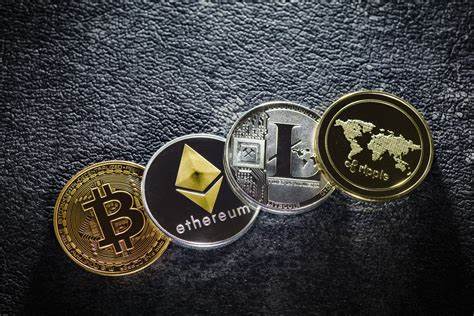
The Price Volatility of Bitcoin and Cryptocurrencies Explained

Bitcoin is one investment that jolts a lot of people out of their financial amnesia. Why is price volatility a feature of cryptocurrencies? Read more..

4 REASONS FOR THE VOLATILITY OF THE GLOBAL PRICE OF BITCOIN

There is no doubt that Bitcoin is the pioneering cryptocurrency , and it came to human consciousness when it was introduced in 2009 when the legendary Satoshi Nakamoto launched his whitepaper, “Bitcoin: A Peer-to-Peer Electronic Cash System.” Bitcoin was then floated and lots of successes and as minor setbacks have been recorded so far.

One of the concerns associated with the Bitcoin is its relative volatility, compared to traditional fiat currencies. This concern has further strengthened the stance of many people on Bitcoin as a risky investment and a sham; with both investors and digital currency users growing cynical despite evident massive potential benefits.

Bitcoin’s value has displayed massive volatility historically. For instance, within a three-month period from October 2017 to January 2018, the price volatility of the Bitcoin approached nearly 8%, more than double its volatility in the 30-day period from December 2019 to January 15, 2020. It is thus important to understand the several factors driving Bitcoin’s volatility.

Read Also: How To Invest In 2020

  1. Speculation

As with other investments, news reports determine the buying or selling decisions of most investors. News ranging from statements credited to luminaries in the tech or investment sphere, security breaches and new regulations by regulatory authorities and governments usually trigger responses in the Bitcoin market. This corresponds to the law of demand and supply.

It is therefore important to try not to allow emotions to lead you in making critical investment decisions. It is also important to be abreast with up-to-date market information in order not to make huge losses or miss opportunities to make a good spread.

2.Poor Management Of Exchange Platforms

This has also been seen to generally affect the market value of the Bitcoin. One example is the price instability that occurred around November 2018 when rumours of security issues and poor management plagued Mt. Gox exchange.

Prior to this, Bitcoin had reached an all-time high of around $1200 and dropping by about 39% in about three days. Many users experienced challenges withdrawing their funds at that time, resulting in widespread panic.

Another massive price crash was triggered early in February when Mt. Gox Exchange filed papers for bankruptcy in Japan. The price of Bitcoin was around $911 at the time, but it crashed to $260 in under two weeks as a ripple effect of that move.

Read: Which Cryptocurrencies Should You Invest In 2020?

3.Government Policies

Policies in support (or not) of the Bitcoin also determine the direction of the digital coin’s value.  Validation in form government recognition portends positive things for the crypto space.

Institutional parties understand that this trend is inevitable, pushing them to work on policies intended to gain as much social benefit from digital currencies as possible. This gives comfort to those who hold traditional views on financial systems; making a smoother move to an economy where digital currencies play a more critical role in global trade.

4.Lack Of Consensus In Community Governance

This has also contributed to the instability in the value of the Bitcoin. An example of this influence was observed in 2017 when an increase in block size led to a hard fork that resulted in different blocks with different rules, thereby, birthing Bitcoin cash.

These and other similar periods of uncertainty in the community on the rules of Bitcoin, as well as its future, have mostly had negative consequences on Bitcoin prices.

Conclusion

It is of utmost importance to understand the several price-determining factors allied to Bitcoin in order to take full advantage of the bull and bear periods to maximize profits.

The 3 Trusted Global Cryptocurrency Exchanges For Futures Trading

Futures trading in the cryptocurrency space has expanded in the last 12 months with several platforms now offering this investment window. Here are the leading exchanges making their marks.

Futures trading for Bitcoin, other cryptocurrencies, or financial assets, generally, is a contract to buy or sell a particular financial asset at a fixed price after a period in the future. The goal is to prevent negative changes in the prices of such financial assets in the market.

But as simple as this sounds, knowing the right platform to carry out this kind of trade is essential, mainly because the right platform will help to regulate the contracts that have been made, and help to prevent conflicts from happening in the future.

There are reliable and regulated platforms for futures trading of cryptocurrencies, which should a relief for people who are sceptical about the decentralized and unregulated nature of cryptocurrencies.

Two big regulators overseeing cryptocurrency futures trading in America, and these are Chicago Board Options Exchange, CBOE; and Chicago Mercantile Exchange, CME. However, these two bodies are strictly regulated by American laws and may not directly apply to you.

So, in this article, I will exclude those CBOE and CME and talk about the other three best exchanges that apply more to you irrespective of your current location. The best 3 global exchanges for futures trading include the following:

1. Bitmex Exchange

BitMEX was launched in 2014 and is known for its beautifully designed platform. In addition to being an impressive platform, it also contains many useful tabs. However, it has a difficult user interface in my opinion.

Many cryptocurrency futures are served on the platform. But to start with, Bitcoin Futures are traded in perpetual contracts, which implies that the contracts don’t have an expiry date. Also, the offers have a leverage of about 1:100.

Other crypto future contracts traded on this platform are Cardano (ADA), Bitcoin Cash (BCH), EOS, Ethereum (ETH), Litecoin (LTC), Ripple (XRP) and TRON (TRX).

2. Kraken Exchange

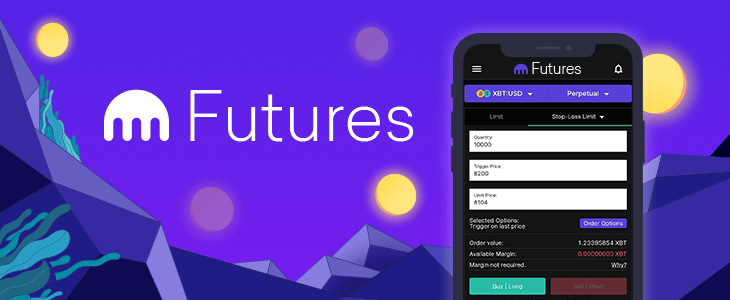
Ethereum, Litecoin, Bitcoin Cash, Ripple, and Bitcoin futures are served on the Kraken exchange. On this platform, futures are incredibly useful with respect to capital and require less money to open positions, unlike spot trading or margin trading which are 1:1 and (3:1 – 5:1) respectively.

Also Read: How Leverage Trading Works When You Use The Binance Cryptocurrency Exchange

In spot or margin trading, you may have to commit between 20-100% of your cryptocurrency, which can make you afraid of a big loss. But this platform offers a leverage of 50:1 and allows you to entrust only 2% of your money to the exchange.

3. Binance Exchange

Binance cryptocurrency exchange announced the official launch of its two platforms for trading cryptocurrency futures that were previously in test mode in September 2019.

Platform A, also called Binance Futures, is already being used by the code owners who have tested and voted for the site as credible and capable, but it’s also available in beta mode for users who have a referral code.

Also Read: Investing in 2020: what you need to know

The platform distributes about 200 codes daily to intending users who participate in Binance social media (Twitter, Weibo, etc) activities or by contacting support.

Platform B is now known as Binance JEX, which will make it possible to do many amazing things in futures trading. For example, it will be possible to transfer funds from the main exchange to Binance JEX.

Other crypto futures that are served on the platform are EOS/USDT and ETH/USDT contracts.

Conclusion

While several platforms are now offering futures trading to their users, these ones above clearly have the integrity and reputation that users around the world can trust.

How Leverage Trading Works When You Use The Binance Cryptocurrency Exchange

Cryptocurrency trading is no longer new in many parts of the world. Leveraging on crypto is , however, just taking a foothold in the global financial markets. Here is a lead on how this works.

Leverage trading (or margin trading, as it is more often known) has hit a new high in the last two years, with companies and groups dedicated to forex selling it as a way to make money with relative ease.

While most people who are into margin trading do it on forex, there’s a booming market for it in cryptocurrencies. This market is easier to enter and less complicated than the forex market, and it effectively works 24/7/365. The crypto market is presently worth more than $320 billion.

How does leverage trading work?

Photo by energepic.com on Pexels.com

Leverage trading plays out in making short-term, usually low-earning trades using a mixture of your own money (your “leverage”) and money lent to you by the exchange.

Depending on the exchange and your own standing, you can be allowed to trade five, ten, or even a hundred times the amount of money you have as leverage. As the value you’re trading increases so do the profits – thus allowing for potentially paper-thin earnings to become sizeable.

Naturally, leverage trading doesn’t work as an actual loan – that is, you can’t actually lose the money you’re loaned. Instead, you’re allowed to invest using that money as long as your total loss is equal to or lower than your original leverage.

Let’s use an example. Say, you have $1000 and get approved for a 50x leverage, letting you invest up to $50,000. That’s great, right? You use those $50000 to buy Bitcoin, which is sitting at $5,000/token and you expect will go up.

But instead it starts going down. The way leverage systems work, you won’t be able to sit and look at those $50,000 become $40,000 then $30,000 then $20,000 and so on. The way leverage trading works is simple: As soon as you lose your initial investment (which here would be $1000,) you must sell. So the moment your BTC investment hits $49,000, it’s time to go. That way the money you’ve received can be repaid without you ending up in debt.

What role does Binance play here?

While Binance is far from the only crypto exchange offering leverage trading, it is the largest one to do so. The fact that Binance is not only large, but also trustable, makes it the best place for newcomers to margin trading or crypto to enter the market.

How does leverage trading on Binance work?

While Binance has long been criticized for being too lax on identity theft prevention and at times not following the rules established by some of the countries its clients come from, leverage trading on Binance is considerably more regulated than standard operations in the exchange.

In order to open a margin trading account, you must have completed Binance’s identity verification (KYC) process and you can’t be a resident of a certain set of countries. Specifically, residents or nationals from Iran, North Korea, Cuba, Crimea, Canada, Japan, South Korea and the United States and all its territories can’t partake on leverage trading on Binance.

Also Read: Investing in 2020: what you need to know

This scenario above follows both international rulings regarding sanctions against certain countries (Such as Iran, NK, and Cuba) and local rules and regulations regarding margin trading, as is the case with the USA.

Once you have completed KYC requirements, however, getting a leverage trading account on Binance is quite easy: Just go to your account dashboard, select your balance, then click on “margin.”

What do I do once I have an account?

Binance’s leverage trading works using your own funds already in Binance. All you have to do to fund your account is go to your wallet, and once there select the “margin” option, and then “transfer.” You’ll then be asked which currency you want to move to your margin wallet and the amount – the transfer is immediate and incurs no fees whatsoever.

Do note that Binance’s margin trading system doesn’t support fiat currencies. However, it does support stablecoins, such as Binance’s BUSD, whose values are pegged to those of fiat.

Once you have moved the funds to your margin trading account, you can start trading – however, you won’t be getting any leverage off the bat. In order to activate leverage trading, you have to go to your wallet and select the “Borrow/Repay” option. Binance offers a default 5x leverage, so the most you can get is four times what you already have.

Also Read: Which Cryptocurrencies Should You Invest In 2020?

From then on, you’ll have the money in your account to use as you see fit. You can only use the leverage money for margin trading, and you’re expected to always keep enough funds in your account to repay what you owe.

To help you with this, Binance gives you an indicator of how risky your current position is according to your total debt and the collateral you hold in your account. The indicator uses a formula that goes as follows:

Margin Level = Total Asset Value / (Total Borrowed + Total Accrued Interest)

The closer the result of this goes to 1, the riskier your position is. If your value reaches 1.1 or below, Binance will immediately liquidate all your assets to pay your debt. If this happens, you’ll be notified of it immediately – in fact, you’ll receive notifications as your position grows riskier so you can take steps to prevent further losses yourself.

Do I keep all my earnings?

No, you don’t. While you get to keep most of what you make while margin trading (since you’re the one taking the main risk,) Binance charges an interest rate on your borrowed money. This rate varies depending on the currency and changes regularly. For updated rates, you can refer to Binance’s own interest table and Start trading with a new account.

Conclusion

Cryptocurrency trading is rated as highly volatile with the window for gains and losses swinging either way. You can make the most of your crypto gains with a bit more care, adherence to rules, and above all, continuous learning.

Which Cryptocurrencies Should You Invest In 2020?

Cryptocurrencies have altered the landscape of investment in recent years. Should you invest in them in 2020? Read on.

Are you looking for the best way to invest your hard-earned money so that you can get maximum returns from it? Do you want to invest in cryptocurrencies but don’t know which will be the best to invest in this 2020?

Cryptocurrencies took the world by storm in 2017 with a whopping 1500% increase in bitcoin price, and this has led to an increased number of investors. However, because of the price volatility of cryptocurrencies, you need to know the right cryptocurrency to invest in, and that’s why this article is written.

Below are 2 cryptocurrencies to watch out for if you considering exploring the new frontier in 2020:

1. Bitcoin (BTC)

Bitcoin is the largest cryptocurrency on the crypto market. Since the creation of Bitcoin, it has grown through much criticism and disdain to become the most valuable cryptocurrency all over the world. The current price of Bitcoin is something to write home about, but more than that, it promises to break more grounds in the future, and 2020 will probably kick-start a new progress.

Bitcoin has a maximum supply of 21 million Bitcoins; presently, over 85% of the cryptocurrency has been mined with only about 3 million left to be mined. This already sets the tone for scarcity with the world’s population teeming to nearly 8 billion people. As the fight for a decentralized system rises more and more, there is an expected steady growth in the adoption of Bitcoin as a mode of payment.

In 2020, Bitcoin will still be the most dominant cryptocurrency and first choice for any investor seeking for a safer investment in the cryptocurrency ecosystem. More so because Bitcoin will undergo “halving – a situation in which the Bitcoin block reward is halved.”

When Bitcoin halved in 2012, it moved significantly from $11 to $1,100 within a year; the second halving in 2017 birthed an unbelievable $700 to over $20,000 rise at the end of 2017. It may be hard to precisely determine what Bitcoin may rise to this year, but it will be massive with an expected 1000% increase.

Read Also: Investing in 2020: what you need to know

2. Ethereum (ETH)

Ethereum was created by Vitalik Buterin in 2014 as a support for building crypto-based decentralized applications. Ether is the cryptocurrency of the Ethereum blockchain.

Ethereum peaked towards the start of 2018 when 1 ETH was worth over $1,400. Ether, today, is worth about $200 despite the many negative comments the technology has faced since its inception. As a strong support for creating many other cryptocurrencies, Ethereum will surely be a sought-after cryptocurrency in 2020, especially for those who are seeking to offer decentralized services.

Its smart contracts can encourage activities that will assist organizations to perform better and optimize their business processes effectively.  Ethereum transactions are quick with transaction time as low as 15-20 seconds. This makes Ether cash an ideal instrument for exchanging cash, and this will help to foster more adoption in the coming months.

Ethereum also intends to launch the Ethereum 2.0 in 2020 to improve security and empower significantly faster transactions. All of these make Ethereum a viable cryptocurrency to invest in 2020.

Read Also: Investing in 2020: What You Must Know

Final Words

Cryptocurrency or the blockchain tech is a big deal which has not been fully unveiled.

As technological innovations such as machine learning, cognitive automation, and artificial intelligence are growing, the crypto tech will also gain ground by fixing the security issues common to those technological innovations. Eventually, investments on cryptocurrencies would yield very high ROIs.

Investing in 2020: what you need to know

2020 is here and for investors, knowing what to do is essential to keep the winning edge. Here are some pointers to a profitable future.

It is never too soon to jump into the investment market. While many people think you need lots of capital or a degree in economics to invest, that’s far from truth. What you do need is an understanding of the market. Knowledge beats everything, particularly when it comes to investing.

So let’s say you’re ready to take the step. You want to start doing more than just saving up some money here and there. There is every need to be able to take the right decisions and be set for the future. While 2020 is already here, the market is looking great – as long as you know what to invest in.

When investing in stocks…

Stay with the big tech

This should be a no-brainer, but it’s good to always mention it. While there’s a certain expectation that the market will enter a recession in the short-to-midterm, recessions won’t necessarily harm everyone. Historically speaking, in fact, it’s the riskier investments that turn out worse during recession.

So for 2020, your best bet will be to stay with big, established, tech companies. That means you should look at giants like Google, Amazon, Disney, Netflix, Microsoft, Apple, and the like.

Even companies like Facebook could do well – they’re already established and stable and thus the risk is minimal with them even if a recession hit. Market dampeners will make stocks tumble no doubt, but it’s quite likely it will recover once the recession is over.

Locate penny stocks with potential

Now, if a recession doesn’t necessarily hit – which means there’s definitely room for growth in the market. A common investment pattern for newer, smaller investors is to look at penny stocks. These are stocks that are very cheap, usually under $1/each.

Now, penny stocks naturally won’t give you the investment returns that, say, having stake in Amazon will. But penny stocks require much less money to invest and they can surge quite quickly, at times doubling or tripling their value within months.

The plan here would be looking at a market you understand and then going for an emergent company within it. Who is innovating, and doing things that will sure become commonplace in the future? Those are your penny stock ideals.

Just as well, long-established companies that are underdogs but gearing up for major releases can be great investments. As an example, AMD’s stock quintupled its value between 2016 and 2017. A 400% ROI in a year is amazingly good, and many people obtained that (or even more – the stock sits at 1500% its 2016 value as of this writing) for a relatively low investment.

Go global and use online brokers

It used to be that investors were locked to only trading whatever stocks their regional markets had.

That’s not the case anymore.

While decades ago trading on foreign stocks meant lots of expensive, annoying long-distance phone calls, these days, there are online brokers, such as eToro, that can allow you to participate in foreign markets just as easily as you can in local ones.

As an investor, make use of it. Not all huge companies are American, and not all companies that are expected to surge in 2020 is in the US. In fact, by having stocks in different markets, you hedge your bets – after all, your Samsung stock isn’t likely to lose value if the NYC market crashes.

Diversify, not only in the companies you invest in, but also the countries and markets you use.

When investing in Cryptocurrencies…

Buy low and sell high is king

When it comes to cryptocurrencies, most people making money are doing so by buying when a token is cheap, then sitting on it as it appreciates. This is how many people made hundreds of thousands, some even millions, of dollars in Bitcoin: By buying when it was cheap (or when it released, when it was about $1/BTC) and then sitting on it until it was worth a lot – for example, when it surpassed the $10,000 mark in 2017.

While it’s unlikely anyone will ever see the massive ROI like people who bought BTC in 2009 and sold it in late 2017, that’s still the best approach towards crypto investments: Look for tokens that are likely to appreciate. Wait until they bottom out. Then buy, to sell later.

Go with margin trading

There are other methods of making money with cryptocurrencies. Short-term, or margin trading, is a common one – and the weapon of choice of many people playing the crypto market.

The trick with margin trading is learning the market and knowing what to expect in the very short term.

Some margin traders might keep a stock for a few days, but the most common type of margin trading – that is, day trading with leverage – this gets people buying and selling tokens within the same day. The profit is thin for each transaction, but the sheer amount of transactions and the volumes you’ll be buying and selling (plus the leverage money) will more than make up for it.

Locate new crypto goldmine

Lead tokens rise all the time, as older tokens fall. Not all tokens have the staying power of Bitcoin and Ethereum, and every year, we see that the tokens that once were thought to be safe bets all but disappear.

The crypto market is yet to settle. As is common with technology, every year, new implementations of blockchain (Cryptocurrency’s base technology) appear, often bringing improvements and new uses for the technology.

This makes new tokens with lots of potential appear all the time. Not all tokens with potential will make it, but some will – and a few years from now, we’ll sure have stories about a new token people bought during the IEO and sold years later at a huge profit just as we have them from BTC and ETH.

Look for what new tokens are out there, or which tokens that have been around are having their day in the sun. Then go for those. And as always, remember to buy low and sell high.

In the end…

The investment market shouldn’t scare you. Even when there’s talk of a recession, that talk has been there for year – and the recession is yet to come. It could come in 2020, but it could also come in 2022 instead.

When it comes to investing, time is money. The day to get started on investments isn’t when the economy is stable, and the future looks rosy and perfect – that just never happens.

An incoming recession means there might be an increased risk, yes, but bigger risk implies bigger rewards. Let’s not forget that, while many people lost everything during the last US recession and housing crisis, some people instead made fortunes as well.

Those people making fortunes. They were investors who knew what to look for and what to bet on.