What To Expect From The Crypto Market In H2 2020

The crypto scene has been abuzz with upbeat signals as 2020 H1 came to a close. What does the H2 hold? Let us delve in here.

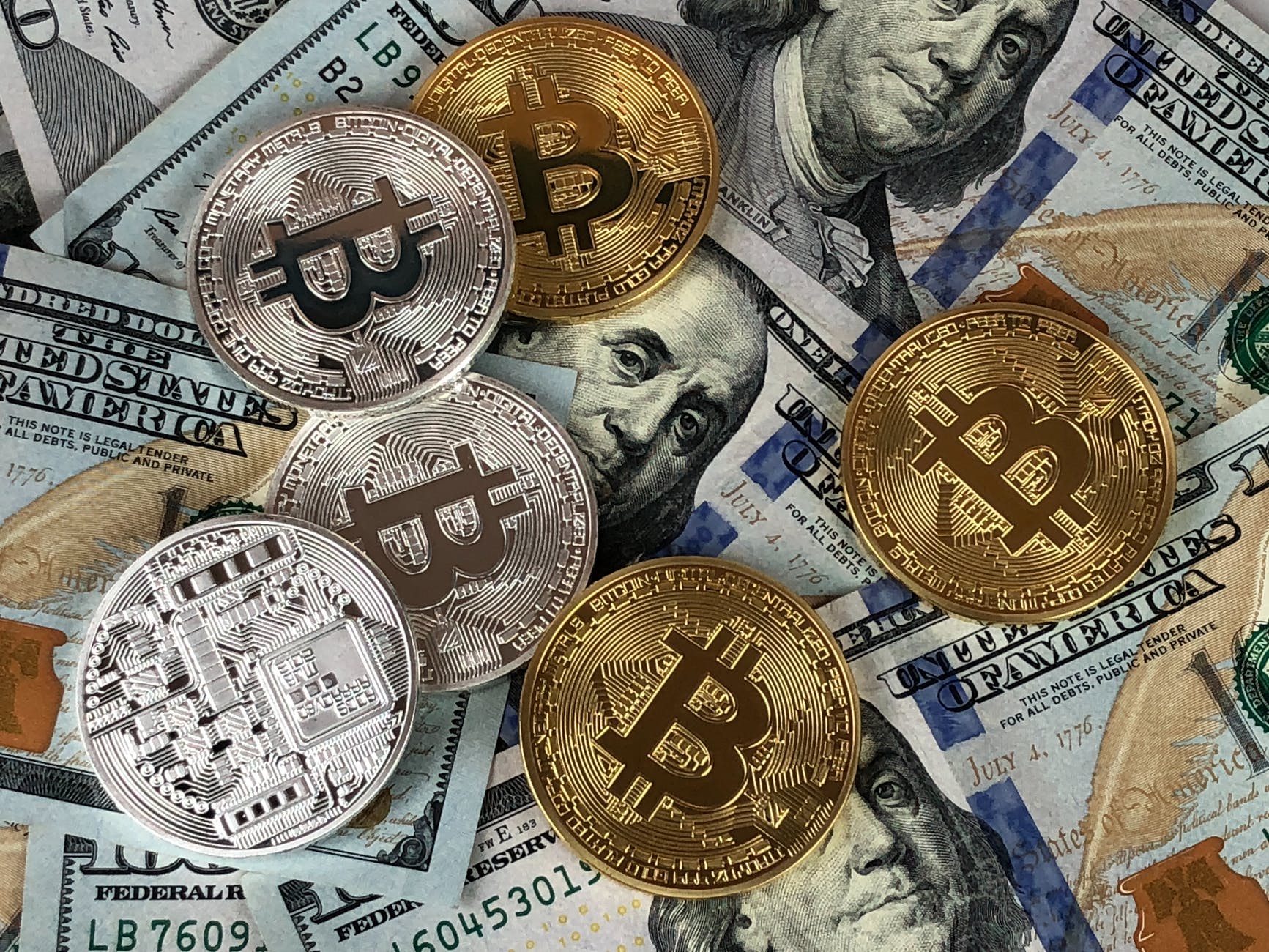
Photo by David McBee on Pexels.com

2020 has been an eventful year with lots of events having ripple effects on the financial markets and cryptocurrencies by extension occurring in rapid succession.

From the threat of world war 3 to the pandemic, these events have triggered wild movements in stock and commodities prices and cryptocurrencies have not been left out of these price actions as well.

Read Also: Despite The Marketplace Twists,Thorns and Thistles, Here Is How USDT Has Weathered The Storm

Going into the second half of the year, what can we expect to see? Below are some speculations:

Increased Adoption

Cryptocurrencies have come a long way from being considered a fringe technology. Just in the first half of the year, there was an additional 5 million blockchain wallets created, increasing the global number of cryptocurrency users from about 45 million to just over 50 million.

These wallets are held across various exchanges like Remitano and others. It is predicted that this figure will rise even more sharply as we commence H2. The utility, speed, security and seamlessness of cryptocurrencies and blockchain technology will attract even more people to sign up and get involved in the ecosystem.

Penetration into emerging economies

Emerging economies hold a lot of potential for the expansion of the cryptocurrencies market. Remitano, a crypto exchange created in 2014, seems to have realized this and have tailored its operations to capitalize on the possibilities in these markets.

With operations in countries like Nigeria, Cambodia, Vietnam, Cote d’Ivoire, Thailand, Tanzania and Zimbabwe, among others, it can take advantage of reaching a great number of unbanked or underbanked people.

Crypto markets will offer them the technology-enabled ease of transacting with cryptocurrencies rather than the regular fiat currencies. Remitano is also introducing an NGN wallet, based on the Nigerian fiat currency – the naira. This will make it even easier for citizens to purchase cryptocurrencies, and it is expected that this will be extended to other emerging economies before the end of 2020.

Launch of Facebook’s Libra

Despite all the controversy surrounding it, Facebook still seems on track to launch its cryptocurrency, Libra, by the second half of 2020. There has been a mixed reception to the idea with some people considering it a good idea and lots of other parties opposing it. Whichever side you’re on, Libra’s launch is something to look out for in the second half of the year. It will be interesting to see how it all plays out.

Adoption by more countries

China is said to be close to completing the creation of a national digital currency – an unprecedented step that will make cryptocurrencies even more popular, and perhaps, drive its adoption among other countries. The Chinese digital currency will likely be launched by the second half of 2020, and it is surely another event to look forward to.

Finally, we expect that the usual volatility in the crypto markets will continue into the second half of 2020, as major events like reopening and the American elections will swing market sentiments in different directions.

Recommended: You Can Improve The Profitability of Your Business With Accurate Records. Here Is How To Do So

These Are The 4 Fastest Cryptocurrencies For Money Transfer Purposes

In today’s world, pace and reliability are highly valued. This explains the search for the fastest crypto for money transfer proposes. Read on…


Transfer times are one of the biggest issues when it comes to internet transactions, as they represent both how long until a transaction can be confirmed and the amount of time before the seller receives the money.


While one would assume digital transaction times would be instant, that’s actually never the case. Even for the fastest payment processors there are waiting times and, on occasion, even extra added times before the person receiving the payment actually gets the money as opposed to a transaction confirmation.

As it stands, cryptocurrencies in general aren’t quite an improvement over already existing systems, both for payments (Visa, Mastercard) or quick transactions (PayPal,) as they’re slower than those. Many blockchain transactions take minutes to process, with particularly congested networks reporting wait times of several hours.


However, not all cryptocurrencies suffer from this. There are several currencies that have been created specifically to solve the transaction time problem. They may not be the biggest ones in the market (not Bitcoin – sorry!) but they’re still great options if you’re looking for speed, particularly as an alternative to costly, slow wire transfers.

Read Also: Are Hedge Funds Safe in Unstable Times? Here Are A Few Tips You Can Use


Ripple

Out of all large cryptocurrencies, Ripple boasts the fastest transaction speed – a speed that, as it turns out, is second only to that of credit card providers. The drawback is that Ripple works mainly with institutions, particularly banking. Still, its speed, low cost, and ease of use is primed to replace wire transfers as more and more banks adopt the cryptocurrency.

EOS

Not as big as Ripple, but openly available, EOS boasts an absurdly fast transaction speed – which is currently claimed to be above 50,000 TPS.

While these claims are difficult to confirm since the network’s load is nowhere near that much (even large, worldwide payment processors like VISA rarely surpass 2000 TPS,) EOS’s speed is easily the top among cryptocurrencies even if its adoption rate isn’t the biggest around.

NEO

Originally launched as Antshares, NEO is another not-so-big, yet not tiny cryptocurrency focused on tackling the blockchain scalability problem.

As many modern blockchains, NEO runs on a proof-of-stake consensus mechanism that allows it to authenticate transactions much faster and at a fraction of the price when compared to the old proof-of-work (ie, mining) mechanism.

NEO claims to be able to handle over 10,000 transactions per second, although as with EOS said claims are yet to be proven as the network has never reached such high levels of congestion. However, it is known that the backend is solid – so at least in paper these claims are thought to be true.


Read: With The World Economy Lying Prostrate, The Forthcoming Bitcoin Halving Could Be Something To Cheer About

Bitcoin Cash

Because even when we said Bitcoin wouldn’t be here (and it isn’t,) this little offshoot warrants mentioning.

Bitcoin Cash is one of many Bitcoin forks launched with the intention of addressing some of Bitcoin’s design problems, chiefly the scalability one. In Bitcoin Cash’s case, it uses a larger block size than Bitcoin, meaning that each batch of transaction authentications contains more transactions without requiring much extra work.

This move has its detractors, particularly among security proponents who believe this makes the blockchain less secure, although so far it has never seen any hacks as a result of the change.

That said, while Bitcoin Cash is much faster than Bitcoin, it’s still extremely slow since Bitcoin’s reliance on proof-of-work algorithms make quick processing of transactions almost impossible without resorting to external networks. While other fast blockchains boast thousands of transactions per second, Bitcoin Cash currently sits at a theoretical maximum of about 116 TPS – a notably smaller limit than that of other currencies.

Conclusion

Cryptocurrencies are used for a number of purposes and as a money transfer vehicle, they fulfill a gaping need across the globe.

Read Also: What You Need to Know About Samsung Blockchain

Investing in Tough Times: 3 Lessons You Can Use for Stock Picks

In times of great peril on the earth, people embrace doomsday scenarios and let go of rationality. In these days of rage, here are tips you can use for stock picks.

Tough times are always accompanied with a hit in stock prices the world over, and the reason is that many investors tend to get uncomfortable and sell off their shares. Recession is a prolonged period of significant decline in economic activity.

However, if people can learn to forego fear and learn how to invest properly, it could turn out to be a great opportunity for high returns. Before you rush into investing your hard earned money vaunted finance experts are all for it, you should consider the following for your stock picks:

Read: The Price Volatility of Bitcoin and Cryptocurrencies Explained

1. Investing in High-Quality Stocks

Investing in high-value company stocks is one of the relatively safest things to do in tough times. Many of these companies have long business histories of strong balance sheets, which enable them to survive a prolonged period of weakness in the market.

Though many of them have also dropped in value, it is noteworthy that their decline isn’t a result of poor management but an unfortunate world catastrophe. When things return to normalcy, most will bounce back, and you’ll be a big winner if you have made long-term investments in these companies.

Some of such high-quality stocks are:

Healthcare

Medical services are always required irrespective of the economic condition, and investing in pharmaceuticals and medically related firms is one of the safest means of minimizing risks and ensuring high returns.

As the coronavirus halts the global markets and people are forced to stay at home and self-isolate, companies that produce home medical equipment like Adapt Health Corp are benefiting from the effects of the coronavirus pandemic.

Tech Companies

Over the years, tech companies have also proven to be resilient in tough times. For example, Microsoft stocks fell by 5.4% in February, this created a very rare opportunity to obtain such high-value stock at that cheap price. Next-generation technology growth catalyst companies like Intel are also a nice place to invest for unbelievable maximum returns.

Read Also: With The World Economy Lying Prostrate, The Forthcoming Bitcoin Halving Could Be Something To Cheer About

2. Non-Cyclical Stocks

These are defensive stocks that are not affected by a decline in economic growth. These stocks are from companies who produce and distribute essential goods and services needed daily, including staple foods; utilities, such as power, water, gas; and waste management.

Unlike cyclical stocks, these stocks do not have any direct correlation to the economy, and that’s why they are resistant to the effects of unstable markets. A good example of such stock is Walmart, which has recorded an ever-increasing high value despite the coronavirus outbreak.

3. Diversification

Learning how to diversify is very crucial when it comes to investing in tough times. It would be unwise to put all your eggs in one basket, and that’s why every smart investor spreads their investment over a range of investment vehicles.

It is even wiser if you spread your investments over different sectors. Many smart investors have used this management strategy that combines different investments in a single portfolio. It is aimed at yielding a higher return while minimizing risks.

You Will Love: The 3 Trusted Global Cryptocurrency Exchanges For Futures Trading

What You Need to Know About Samsung Blockchain

Blockchain has gained some grounds in the last two years, and the big tech companies have moved in. Here is what Samsung is up to with its initiative.

Blockchain is a life-changing technology and it’s been making its way into many sectors of the world such as in business, communication, agriculture, supply chain management, health, and lots more. However, did you ever imagine that leading tech companies like Samsung will also implement blockchain in their devices?

The creation of the Samsung blockchain is a huge development, and there are lots of benefits attached to this development. Though the tech gadgets company stated that they built a blockchain because they are in support of decentralized services, there’s so much to learn about the Samsung blockchain. In this article, you’d find brief but concise facts that you need to know about the Samsung blockchain.

Blockchain and Tech Gadget Companies

Many tech giants have been silently developing and announcing their plans for deploying the blockchain technology in their products. Apple, for example, has reportedly claimed to be following cryptocurrency and the blockchain technology as a whole, tipping it as a sector with massive potentials in the future.

Apple has also been building protocols and has even launched the iPhone CryptoKit. Other tech companies like LG has also declared that they have completed their research on the blockchain ecosystem; so, the blockchain tech will soon find a strong footing in the tech gadgets industry.

More About the Samsung Blockchain Ecosystem

Samsung has equipped its flagship smartphones with decentralized applications and blockchain service providers. Although it is still in its early phase and is only compatible with flagship models like Samsung Galaxy S10, Samsung Note 10, Note 10+, and some other variations of the S10-series.

The company’s intent was stated along with the release detailing the fact that they are in full support of a decentralized system, which is secure, transparent, and with proper detailing of transactions among multiple registers of all computers involved in the block.

Samsung launched its pioneer blockchain flagship, the Galaxy Note 10 variant, known as the KatlynPhone, which has the same features as the regular Galaxy Note 10 but with tweaks to include software containing decentralized applications and a cryptocurrency wallet. That much for smartphones.

The testing phase has been underway since early 2019 with significant improvements in the DApps created with the inclusion of new apps for each stage of the test. Though the company claims to have just begun to scratch the surface of the blockchain ecosystem, they have made a huge statement of commitment with the release of their second blockchain phone.

The company’s team has started to create systems to store private keys for Stablecoins, Enjin Coin, Ethereum, Binance Coin, and, more recently, Bitcoin. The company has also been pushing for intricate variations of the blockchain, which will aid the development of cutting-edge technology for storing cryptocurrency and building decentralized applications (DApps).

Samsung has also announced that moving forward, it will expand the range of models that the blockchain technology is compatible with. In the company’s own words, “DApp browser is a tool for developers to set things in motion and for allowing web-based blockchain applications to work on mobile phones.

CONCLUSION

Safe to say that blockchain is the future of tech. With Samsung making inroads in this sector, we are likely to see more innovations show up in the days ahead.

With The World Economy Lying Prostrate, The Forthcoming Bitcoin Halving Could Be Something To Cheer About

Bitcoin halving last happened in 2016, and it led to a 10-fold spike in price. Will it happen again in 2020? Read on to know more..

The Three Likely Outcomes from Bitcoin Halving

Bitcoin halving refers to the process in which the Bitcoin networks’ issuance rate is cut in half, and this happens about every four years or after every release of 210,100 blocks.

Usually, new Bitcoins produced by miners who use expensive electronic equipment to mine them enter into circulation as block rewards. However, after every 210,000 blocks or about four years, the total number of Bitcoin that miners can win is halved – this is referred to as Bitcoin halving.

Since the inception of Bitcoin, there have already been two halvings: the first one was in 2012, and the second one was in 2016.

Following the halving event, the block reward will be reduced from 12.5 to 6.25 BTC (Bitcoin mining started with 50BTC as its mining reward and halved to 25BTC by 2012, and then 12.5BTC by 2016).

During those times, there were apparent implications on the financial market and the digital world of cryptocurrencies. Read on to find out the likely outcomes from the upcoming Bitcoin halving event:

1. Bitcoin Miners Have A Reward Knock

Firstly, the Bitcoin halving event will cost miners by cutting their reward in half, but with the additional loss of the sudden fall in reward burden, damages could be twice as bad for miners.

Miners, not expecting a sudden fall in BTC price, had been accumulating Bitcoin, waiting for the value to rise during the halving.

2. A Decline in Bitcoin Hashrate

The hash rate, which is the operation speed of a cryptocurrency mining machine, is essentially a measure of the miner’s performance.

There is an agreement that the hash rate on the Bitcoin network, which currently stands at 1.54 exahashes per second, will experience a slight decline.

The total network hash rate will decrease by approximately 10% after halving since older equipment that is no longer economically viable will leave the network. Later-generation machines will pick up some of the slack.

The most important thing is that even with a decline in the hash rate, the security of the Bitcoin network will not be compromised.

But after the halving, eventually, some miners will leave, everything will settle down, and the system will grow again – this upcoming halving event will not be the first, and it will go on once every four years until all 21m BTC are mined.

3. The Most Important Effect: The Price Leap

There is a price leap effect expected in May 2020 as a result of Bitcoin Halving. This is comparable to what happened the last time there was a halving in 2016, there was a ten-times leap in price. So, it expected that something of the sort will happen again this year.

The underlying argument is that with the halving of bitcoin reward, less supply of BTC will occur from mining. In keeping with the tenets of Economics, a reduction in supply almost always will lead to a price spike.

Conclusion

In 2020, should we expect more of what happened in 2016? If that is the case, profiteers will likely start taking positions now for the expected windfall.